
Piano And Modern Lifestyle
Why the Piano is not yet Dead in a Digital Age of Music.
In an age dominated by streaming platforms, algorithms, and instant music creation, the piano continues to hold meaningful value. Rather than competing with digital technology, the piano offers depth, physical engagement, and intentional creation. This article explores why the piano remains relevant today, how it fits into modern lifestyles, and why people continue to choose it as a personal and creative anchor in a digital world.

The way people listen to music nowadays has made a tremendous shift in the recent decades. Streaming services offer real-time access to millions of songs, algorithms suggest new tracks in the minute, and the artificial intelligence is now able to create music in a few seconds. In this dynamically digitalized world, one might readily have thought that the old and conventional tools such as the piano have been phased out. But a reverse is taking place. Modern life also has a significant role of the piano that is not a thing of the past, but rather an instrument of opposition to the digital rush and automation.
In the new age competitive context, the piano no longer has any value to compete with the technology, but it has what the technology cannot match: depth, presence, life-of-the-body and personal contact. The pivot in favor of the digital music is making it more and more effortless; the piano is an embodiment of intent. It encourages individuals to take a pause, engage and in a physical manner readjust to sound.
The Transition between Creation and Consumption
The platform of digital music has changed the way music is being experienced. Listening has now become passive, portable and ubiquitous. Music is something that is played in the background of day to day activities, when one is working, travelling or even when one is sleeping. Although this access is a strong one, it has displaced many individuals in the active participation in music.
The piano works on the opposite side of this trend. It is not something that can be passively eaten. It needs to be attended to, touched, and involved. Music is a performative thing when one is seated in a piano.
This distinction matters. Music interaction gives a relationship with sound. It recovers the concept that music is not something one hears, but something people do.
The resistance of Piano to Digital Replacement
Numerous digital instruments are trying to imitate the sound of piano, but it is not the meaning of the piano only. The connection between fingers and keys in a physical way forms a feedback loop that is difficult to substitute with the digital interface.
This experience is both physical and emotional as it is possible through the resistance of keys, the vibration of strings and the light control of touch. Even digital pianos, of the high quality, are to imitate this interaction and not redefine it.
It is this physicality that makes the piano difficult to completely replace with a digital piano. It involves both mind and body, thus it also creates the feeling of presence that cannot be fully recreated by the screens.
The Piano in Reaction to the Speed Culture
The contemporary lifestyle is focused on speed. Communication is fast, content is brief and the concentration is fast. Although this efficiency is good, it tends to be at the expense of depth.
The piano slows time. Progress is gradual. It is brought on by practice and patience. The shortcut to expression does not exist. It is this slowness that has rendered the piano useful specifically in that it does not feel like the majority of digital experiences.
A lot of individuals go back to the piano to have some sort of balance. It provides a platform, where the hard work is compensated in the long run instead of in the short run. As such, it brings back rhythm in life.
The Playing the Piano like a Ritual
Personal rituals are grounding in a world where there is a lot of connectivity. One of such rituals is often piano playing. It can either be performed on a daily basis or at times, it forms a personal domain of concentration and contemplation.
Contrary to the digital entertainment, the playing the piano is not multitasked most of the time. It encourages full presence. With time this presence is meaningful. The piano becomes a friend and not an instrument.
This ritualism is one of the reasons why people still devote time on learning piano even in the contemporary world of distraction.
The Piano and Creative life in the Modern World
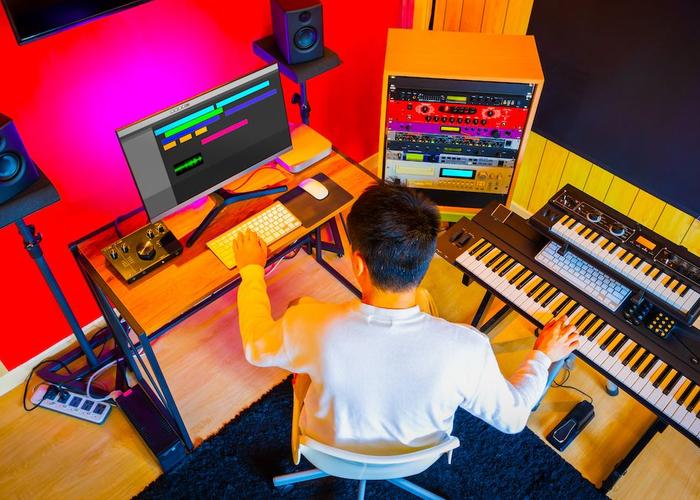
Although technology has revolutionized the production of music, piano still plays the key role in creativity. Piano remains a starting point of ideas in many composers, producers, and songwriters of our time.
The tool enables the ideas to grow in an organic manner. One can be conducted with harmony, melody, and rhythm. This renders the piano a good instrument in molding musical thinking and then converting it into digital media.
Instead of the piano outcompeting technology it will be complementary to technology. It can give a backbone of purpose and framework by which digital tools can be constructed.
The reason why piano skills are still relevant today
There is an argument that there is no need to learn to play the piano, when it can be produced immediately by software. But skill has an extra meaning that is not about output. Piano playing builds up of listening, coordination, discipline, and sound sensitivity.
These abilities lead to a more general creative literacy. Pianists have a feel of musical organization. They are aware of patterns, balance and contrast. This knowledge enhances the appreciation of both music, either produced or consumed.
Human mastery brings reality in a digitalized world that is full of generated sounds.
The Piano as a Sign of Authenticity
It is hard to find authenticity in the online world. Auto generated materials, filters and fake production can easily confuse between real and fake.
The piano symbolizes sincerity since it unveils hard work. Mistakes are audible. Expression is transparent. Performance is a demonstration of state of mind of the player.
This sincerity is very well heard in contemporary society. The piano music is as much an indicator of sincerity, whether it is in movie, social media and in the performance.
The Revival of the Acoustic Experiences
Although it is convenient in a digital way, people are turning towards the acoustic experience. Live concerts, vinyl records and unplugged performances are again popular. The piano is a natural part of this movement.
Sound in acoustic piano is deep and warm and a digital reproduction is not able to reproduce this sound completely. The physical space of the resonance of strings gives an immersive experience.
This resurgence is indicative that individuals are not abandoning technology, instead, they are balancing technology with real, physical experiences.
The Piano in domestic Interiors today

In modern houses, the size and functionality are smaller but pianos can still be found in the living rooms. The piano may be a central point whether this is acoustic or digital.
Its existence is an indication of intent. It is a symbol of creativity, education and self development. The piano is symbolic even in cases where it is not played every day: people are welcomed to interact.
This position is beyond adornment. The piano influences the mood of a household in such a way that it does not stimulate someone, but makes him or her think.
Why the Piano is Appealing to Adults of to-day
The use of the piano by adult learners is increasingly on a late basis. Learning the piano is a rich experience as opposed to the rush of other activities. Development is not competitive.
The piano gives the adults a sense of continuity during their busy lives. It makes them be able to invest in a skill that builds gradually and significantly in the long run.
This request is part of a more general cultural move towards deliberate education as opposed to fast success.
The Piano and Emotional Grounding of Digital life
Online worlds tend to divide mind and feeling. Physical contact and organized music provide a sense of stability in playing the piano.
Although it is not focused on emotional analysis, the piano, of course, contributes to emotional balance. Plays coordinate movement, sound and attention, which form a soothing rhythm.
This is one of the grounds that make the piano still pertinent in a world of mind clogging.
The Piano Lives and Trends Go By
Trends rely on novelty. The piano relies on depth. Its functionality has not changed much since the design is already serving the purpose of its existence fully.
Piano is flexible to accommodate style, style and technology without being distorted. This is what renders it eternal as opposed to obsolescent.
The piano will not go out of use as long as there are people who cherish substantive interaction more than immediate outcomes.
The Piano A Bridge between the Past and the Present
Piano bridges the gap between the past and the present. A composition composed many centuries ago can be performed currently on the same type of instruments, whereas the contemporary compositions are enlarging its vocabulary.
This continuation enables human beings to experience time by sound. It strengthens the position of piano as a living object and not a historical artifact.
There is very little equipment available to make this transition between the epochs as spontaneously.
The reasons why the piano is worth preserving today
The piano is important as it solves problems that cannot be solved by technology: purpose, physical presence, ability, and realness. The piano provides richness in a world where people have been optimized to act fast.
It helps people think that the process of creating is long and challenging, expression is demanding, and meaning is developed in the process of interaction.
Instead of wearing out, the piano becomes more relevant with the digital life becoming faster.
Conclusion
In the digital music era, the piano is not being sidelined by technology; rather it is due to technology that it is so close to the heart of the world. It also provides what can never be granted by digital systems: a physical connection, a deliberate creation and permanence.
The piano maintains the value of participation as music becomes more accessible to people. It challenges human beings to be more patient and attentive and to make with intention.
The piano has not assumed a nostalgic position in the life of modernity--it is fundamental.
More from the blog
Keep exploring new ideas
Piano: Psychological Development.
How Piano Learning Improves Memory Over Time
The process of learning, adaptation, and growth of people is mainly driven by memory. Learning Piano has emerged as one of the effective techniques of memory reinforcement via formal repetition, auditory, coordination and recalling over time. This article discusses the process by which practicing piano develops various forms of memory, reasons why these advantages become increasingly more effective, and how the benefits of learning a piano help to retain in the minds of non-musical areas.
Piano & Skill Development
How Piano Practice Builds Consistency and Self-Discipline
Self-discipline and consistency are crucial personal qualities in the contemporary life but are becoming more challenging to master. The learning of piano provides a natural and effective method of developing both in a structured form of learning, in a progressive manner and through long term commitment. This paper will examine how practice in the piano will develop the consistency over the time, why the self-discipline will develop naturally at the instrument and the applicability of these abilities far beyond music in the life.
Piano & Lifelong Learning
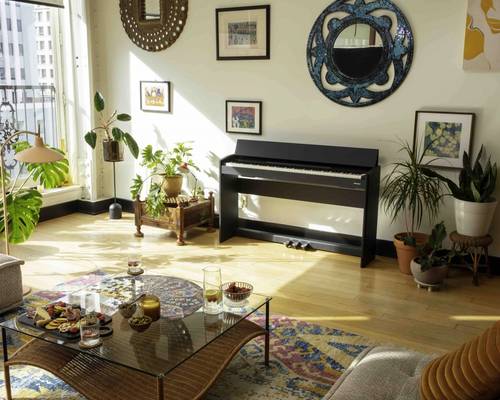
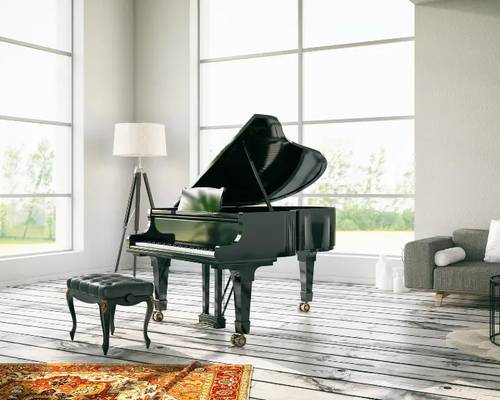
The Reason behind the Rise of Piano Learning among Mature Beginners in the world.
The world has witnessed a potent surge in piano learning among adult learners. More individuals are learning the piano later in their lives and this is due to the flexibility of digital tools, lifestyles and now people are more focused on their personal development. The article discusses the reasons why this trend is being experienced, how adult learners treat piano differently, and why this trend is transforming the contemporary culture of the piano.
Piano & Modern Skills
The reason Learning Piano Is Better than Multitasking in a Distracted World.
Piano learning is becoming an effective tool to reconnect attention and deep thinking in a day and age where we are bombarded with notifications and do not spend enough time in deep contemplation. The mental clarity ensured by years of discipline in the practice of the piano may be that which is afforded by very few activities because it demands constant focus, physical coordination and active listening. This paper discusses the connection between learning the piano and attention, the level of cognitive and mental discipline and the reason why more and more individuals are turning to the piano to overcome distraction in the modern world.
The Culture of Piano and Contemporary Music.
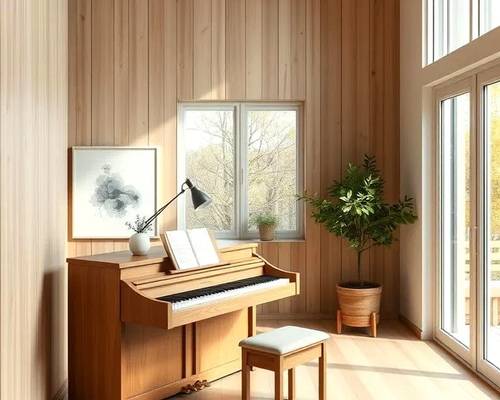
The reason why Minimalist Piano Music is becoming a sound of this decade.
The minimalist piano music has come out as one of the most effective sounds of the modern age. The style is marked by its simplicity, repetition, and restraint, and they are defining the manner in which individuals listen, create, and relate to piano music nowadays. This paper delves into the reasons behind the growth of minimalist piano in popularity all over the world, its reflection of the contemporary life, and why it is a simply a new voice of this decade.
Piano & Future Learning
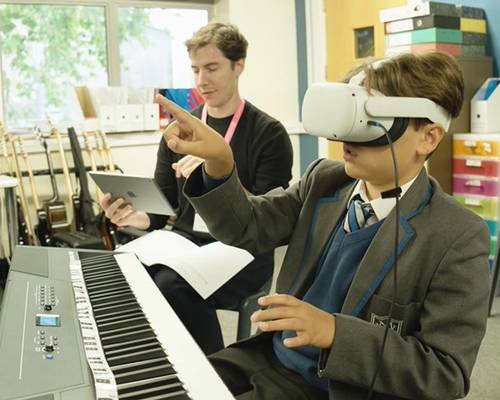
The Way AR is beginning to transform Piano Learning.
The concept of augmented reality is gradually presenting itself in the business of piano study, providing a fresh interpretation of music, technique, and practice. AR is transforming the interaction between pianists and the keyboard by combining digital guidance and physical instruments to create a new approach to playing the piano. This paper discusses the reasons behind the growing interest in augmented reality learning of piano, its functionality as well as its potential future impact on the teaching of piano.The concept of augmented reality is gradually presenting itself in the business of piano study, providing a fresh interpretation of music, technique, and practice. AR is transforming the interaction between pianists and the keyboard by combining digital guidance and physical instruments to create a new approach to playing the piano. This paper discusses the reasons behind the growing interest in augmented reality learning of piano, its functionality as well as its potential future impact on the teaching of piano.