
Piano & Skill Development
The Power of Learning Piano to develop Long-term Consistency and Self-discipline.
Self-discipline and consistency are crucial personal qualities in the contemporary life but are becoming more challenging to master. The learning of piano provides a natural and effective method of developing both in a structured form of learning, in a progressive manner and through long term commitment. This paper will examine how practice in the piano will develop the consistency over the time, why the self-discipline will develop naturally at the instrument and the applicability of these abilities far beyond music in the life.
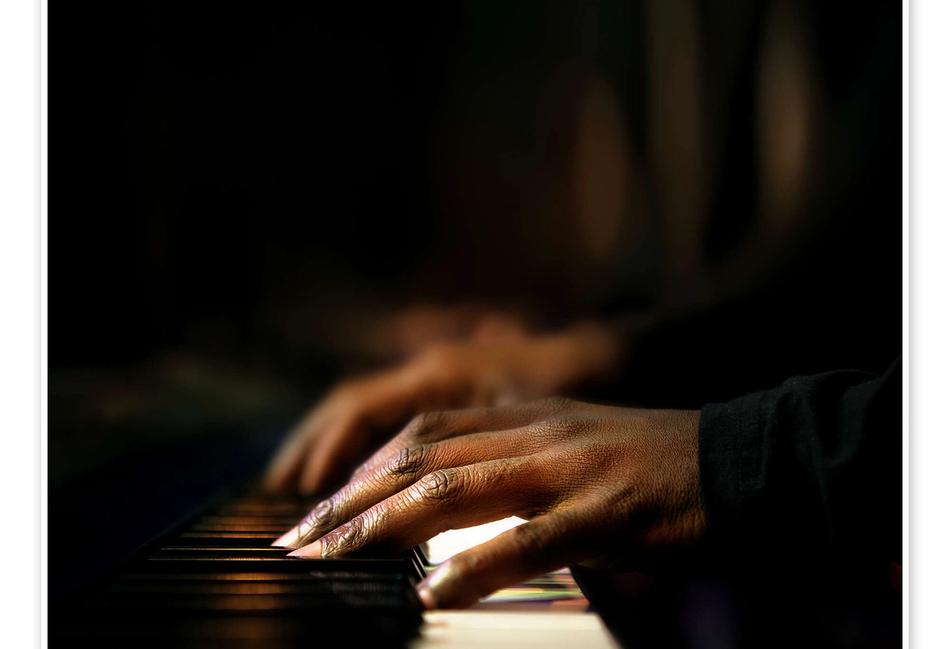
One of the most desirable things that one can acquire is consistency. It also affects the learning, work performance, individual goals, and the long-term development. However, in the world, where there is continuous stimulation and immediate payoff, remaining stable has become even more difficult. Most individuals start off well during their projects but fail to go through with it as the project becomes slow.
The learning of piano gives a strong contrast to this trend. Advancement in the piano is not based on intensity, but in constant practice. Repetition, attention and patience do not have any short cuts. The art of improvement only comes with consistent practice as opposed to drastic discoveries.
This fact renders the process of learning the piano to be presented in a unique way capable of instilling consistency and self-discipline. These are not qualities that are taught in a straight forward manner. They are made with experience, reinforced with each repetition of the instrument by a learner.
The inability to maintain consistency is very difficult nowadays
The contemporary culture tends to appreciate short-term outcomes. There are numerous activities where immediate feedback, quick results, or results achieved with minimal effort are possible. Although this environment is convenient, it may undermine the capacity to invest in sluggish and cumulative processes.
Motivation usually declines when an improvement is not evident. This results in high rates of restarts, abandoned ambitions and frustrations. Inconsistency is habitual with time.
There must be consistency and such an activity must be marked by patience and not pace. It is that structure which is provided by piano learning.
The reason why Piano Progress Insists on Practice
The development of piano is directly connected with frequent practice. Brief drills are much more effective than occasional and heavy practice. This connection is evident at a very fast rate.
Students can perceive that after several days off, they become more rigid or hesitant, whereas after coming back, they move easier and have better sound. The tool is capable of providing sincere feedback.
This cause and effect relationship increases consistency. Strenuousness used habitually is visible to improve. Apply irregular effort does not.
The role of Piano Learning in generating natural accountability
In contrast to abstract goals, the learning of piano has concrete indications of progress. A passage sounds smoother. A transition feels easier. Timing becomes steadier.
These make internal accountability. The learners are aware of the times when they have exercised and when they have not. External pressure is not needed.
Responsibility is not forced but instead is a personal responsibility, which enhances long-term commitment.
The Value of Drilling in Piano Practice
Routine is also useful in maintaining consistency through decreasing decision fatigue. When the practice takes place regularly, the beginning is less laborious.
Routine is promoted naturally in the learning of piano. Quite a lot of learners train at almost the same time every day, at least in brief. Such repetition develops the strength of habit.
With time, practice becomes a routine in life and not something to be motivated every time.
The reason why Self-Discipline is built up.
Discipline of self does not come about by coercion. It is built upon a process of follow through.
Learners also practice even when there is a slow progress at the piano. They remain active as a result of practicing and enhancing. The returning habit is strengthened by each session.
This positive reinforcement is gradual and there is no pressure. Discipline is seen to strengthen the learner instead of limiting him or her.
The Dilemma of Motivation and Discipline
Motivation fluctuates. Discipline endures. This distinction is evident in learning piano.
Some days feel inspiring. Others feel routine. Growth requires the ability to turn up in spite of bad mood. In the long run, learners become less motivated and more habitual.
This change is the beginning of self-discipline.
Why Piano teaches us to be committed with small things
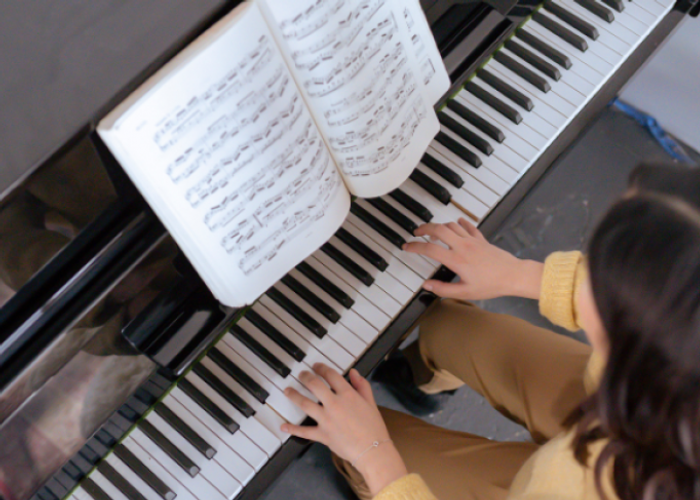
The learning of the piano focuses on minute changes. A cleaner chord. A steadier rhythm. A smoother hand transition.
These gradual improvements will help the learners to appreciate stability rather than revolution. Determination gets accumulative as opposed to determined.
This attitude contributes to the long-term development in most spheres of life.
The reason why practice is missed is noticeable
The ability to identify inconsistency is one of the most effective in terms of the speed of learning the piano. Hands feel less coordinated. Listening feels less sharp.
This instant feedback creates the importance of practicing often without condemnation or blame. The tool merely represents present involvement.
The significance of consistency is learned by experience and not preached by the teacher.
The practice of Piano to Strengthen the Follow-Through
Delivery of promises creates trust. Learning music through piano provides very many chances to learn follow-through.
The consistency of the instrument by repetition increases reliability. Students learn to have confidence in themselves to present.
This confidence enhances self discipline and helps in the attainment of long-term objectives.
Practicing the piano teaches many people to be patient in their progress
There is slow development at the piano. Students should embrace the fact that it takes time to master it.
Such an acceptance decreases frustration. Learners do not hurry but take their time. The patience is incorporated into the process.
Ultimate discipline becomes the most powerful when one is not in a hurry.
The Mental Stasis Effected by Continued Exercising
Stability is brought about by consistency. Practicing piano on a schedule gives one some form of anchor in everyday life.
It is emotionally balanced through this stability. The practice has been referred to by the learners as being stable and reassuring.
Discipline is enhanced by stability as it lessens resistance to engagement.
The ability of Consistency to Build Confidence
Credibility is based on evidence. The learning of the piano is a clear indication of improvement by consistency.
Students listen to progress and have a more sense of control. The confidence is founded on experience as opposed to belief.
This confidence has its feet in the ground which conducts disciplined conduct outside of the music.
The reason why Piano Learning trains the mind to think long-term is explained
Long-term thinking is rewarded in the learning of piano. The hard work today will help the absence of hard work in a few weeks or months.
Students start thinking long term. This school of thought makes one persevere and helps in being less impatient.
Thinking in the long term is made a habit.
The Transfer of Discipline at the Piano in Other Places
The skills that are acquired during piano practice may be manifested in other spheres. Students get more regular in learning, working or creative tasks.
The tendency to turn up regardless of the changes in motivation is transferred automatically.
Discipline is incorporated in identity and not imposed behavior.
The reasons why Piano Learning is a contributor to sustainable growth
Piano learning does not have a time limit as opposed to short-term problems. The development persists without an end.
This non-competitive quality promotes long-term habits as opposed to short spurts of work. Discipline does not wear out but rather gets adjusted.
One of the reasons why learners are not phased out in the long run is sustainability.
The Reflection in Enhancing Discipline
Thinking enhances learning. The progress and pattern are regularly evaluated by the pianists and revision of practice is made.
The self-regulation is enhanced through this reflective process. Rational decisions are made by learners and not impulsively.
Reflection helps in disciplined improvement.
The Reinforcement of the Consistency by Teachers and Platforms
Recent training in the field of the piano is now more focused on practice rather than acceleration.
Lessons are arranged such that they encourage constant participation. Social media promote everyday rather than infrequent intensity.
This congruence helps to sustain growth.
The reason why Piano Practice Leads to the Reduction of Avoidance Behaviors
The avoidance is seen as a common occurrence whenever tasks seem overwhelming. The learning of piano simplifies the complex.
Students do not concentrate on complete works but on tiny parts. This minimizes opposition and facilitates interaction.
Avoidance is substituted with consistency with clarity.
The Emotional Benefit of Being Faithful
The sense of satisfaction, which comes about through sticking to it, cannot be substituted by fast outcomes. Piano students have a feeling of pride in their persistence.
Discipline is supported by this emotional reward. Devotion is rewarding as opposed to being heavy.
The piano informs that work is not in vain.
The reason why consistency increases creative confidence
Skills become reliable and result in creative confidence. This reliability is facilitated by piano learning by way of repetition.
Students have faith in the fact that they can get better over time. Creativity is not sensitive but empowered.
Uniformity develops a platform on expression.
The Culture of the Skills of Discipline
Society is realizing the need to have discipline in an unpredictable world. Skills that endure matter.
Learning the piano conforms to this value by instilling discipline in a learner through experience and not theory.
This topicality gives it relevance to this day.
The Uniqueness of Piano in Discipline Building
The piano is full of structure, feedback and progression. In every aspect, there is the support of disciplined behavior.
Sound responds immediately. Enhancement manifest itself slowly. Effort compounds.
No sporting activity can guide better than this one.
The Long-Term Effect of Practice Discipline
The self is also transformed over time through self-perception upon disciplined practice in piano. Students consider themselves to be able to commit to the long-term.
This self helps in development in most aspects. Punishment is instinctive instead of coercive.
The effects are much deeper than music.
The Reason This 1. Skill is a Pivotal One
With the immediacy of the world, discipline helps in making significant advancement. This skill is reliably trained by learning Piano.
Success in the complicated environment is characterized by consistency, patience, and follow-through.
These qualities are trained in the piano.
Conclusion
There is a lot more than music talent in learning piano. It offers an orderly way of progression to uniformity and self-control in terms of gradual practice, and prolonged involvement.
Piano learning enhances daily work, patience and follow through, which are applicable in daily life. These advantages increase at a slow pace and stay constant.
It is priceless to be able to remain steady and disciplined in a rapidly developing world. Such qualities are developed not by a teaching approach to piano learning, but by experience. That is why its influence is so persistent.
More from the blog
Keep exploring new ideas
Piano: Psychological Development.
The Benefits of Learning Piano in Enhancing Memory and Retention of Learning over Time.
The process of learning, adaptation, and growth of people is mainly driven by memory. Learning Piano has emerged as one of the effective techniques of memory reinforcement via formal repetition, auditory, coordination and recalling over time. This article discusses the process by which practicing piano develops various forms of memory, reasons why these advantages become increasingly more effective, and how the benefits of learning a piano help to retain in the minds of non-musical areas.
Piano & Lifelong Learning
The Reason behind the Rise of Piano Learning among Mature Beginners in the world.
The world has witnessed a potent surge in piano learning among adult learners. More individuals are learning the piano later in their lives and this is due to the flexibility of digital tools, lifestyles and now people are more focused on their personal development. The article discusses the reasons why this trend is being experienced, how adult learners treat piano differently, and why this trend is transforming the contemporary culture of the piano.
Piano & Modern Skills
The reason Learning Piano Is Better than Multitasking in a Distracted World.
Piano learning is becoming an effective tool to reconnect attention and deep thinking in a day and age where we are bombarded with notifications and do not spend enough time in deep contemplation. The mental clarity ensured by years of discipline in the practice of the piano may be that which is afforded by very few activities because it demands constant focus, physical coordination and active listening. This paper discusses the connection between learning the piano and attention, the level of cognitive and mental discipline and the reason why more and more individuals are turning to the piano to overcome distraction in the modern world.

The Culture of Piano and Contemporary Music.
The reason why Minimalist Piano Music is becoming a sound of this decade.
The minimalist piano music has come out as one of the most effective sounds of the modern age. The style is marked by its simplicity, repetition, and restraint, and they are defining the manner in which individuals listen, create, and relate to piano music nowadays. This paper delves into the reasons behind the growth of minimalist piano in popularity all over the world, its reflection of the contemporary life, and why it is a simply a new voice of this decade.
Piano & Future Learning
The Way AR is beginning to transform Piano Learning.
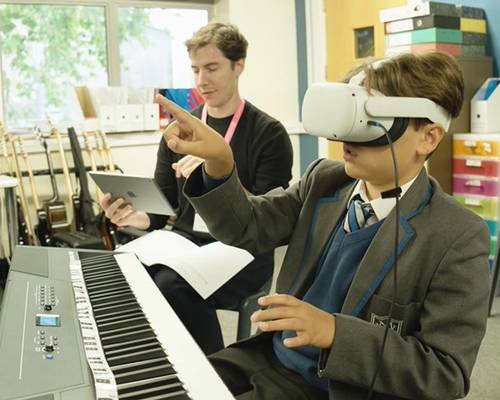
The concept of augmented reality is gradually presenting itself in the business of piano study, providing a fresh interpretation of music, technique, and practice. AR is transforming the interaction between pianists and the keyboard by combining digital guidance and physical instruments to create a new approach to playing the piano. This paper discusses the reasons behind the growing interest in augmented reality learning of piano, its functionality as well as its potential future impact on the teaching of piano.The concept of augmented reality is gradually presenting itself in the business of piano study, providing a fresh interpretation of music, technique, and practice. AR is transforming the interaction between pianists and the keyboard by combining digital guidance and physical instruments to create a new approach to playing the piano. This paper discusses the reasons behind the growing interest in augmented reality learning of piano, its functionality as well as its potential future impact on the teaching of piano.
Piano & Music Industry
Why Artificial Intelligence-Composed Piano Music Is Overwhelming Streaming Services.
Piano music generated by AI is quickly spreading through the streaming platforms, and it is often hard to distinguish between the music written by humans and the music created by AI. Artificial intelligence is slowly transforming the nature of the creation, distribution, and consumption of piano music, whether it be ambient playlists or movie piano sounds. In this article, the author examines the reasons behind the trend of AI piano music, its impact on actual pianists, and what this change could imply on the future of piano art.