
Piano & Cognitive Growth
Why Piano Cements Mental Citability and Adaptability of thought.
The capacity of the brain to deal with the change in situations is known as mental flexibility. This is an important skill nowadays in a world where routines are continuously broken. The art of learning piano is flexible in the mind as a result of coordination, listening, adjusting and solving problems. The paper examines that practice in the piano transforms the adaptive thinking and why the effects extend far beyond music to the daily decision-making and learning.
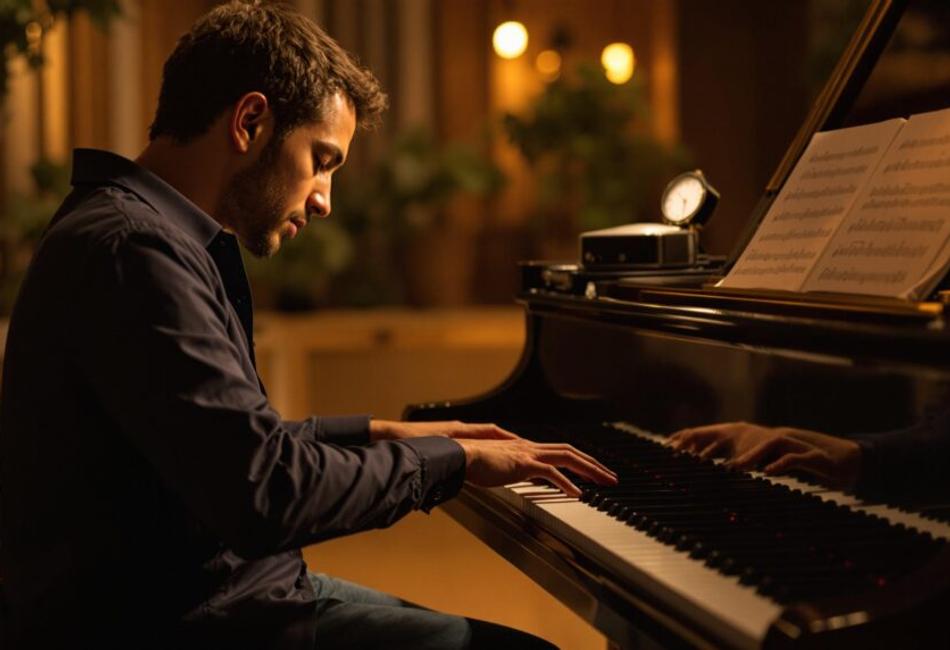
Life does not have a very predictable script. Strategies shift, things go wrong and adaptability usually is the key to winning rather than knowledge per se. Mental flexibility enables individuals to react and not to respond instinctively. It helps to learn, be creative, and balanced.
This flexibility is acquired silently through experience and not teaching of piano. Situations involved in each practice session need adjustment. Timing modulation, coordination becomes more refined, sound is adversely responsive to touch and intent.
It is through this constant interaction that the brain becomes involved in continuous learning. Flexible thinking is an outcome of piano learning.
The reasons why Mental Flexibility is More than Ever
The contemporary world is volatile. New tools, systems, expectations emerge on a continuous basis. Such situations are challenging to the rigid thinking.
Mental ability enables individuals to update strategies, learn through feedback and open to alternatives. In its absence frustration builds at a very fast rate.
This skill is enhanced during piano learning when learners are subjected to conditions where adaptation is no longer a choice. Progress depends on it.
The introduction of Continuous Adjustment by Piano Learning

There is no piano text that is untouched every time it is read. Any little variation in the position of the hand, the timing or pressure changes the outcome.
The students soon come to understand that a similar strategy is not always effective. They vary the movement of fingers, reduce the tempo or change emphasis. These changes are not unplanned.
This continuous requirement to perfect the method exercises the brain to be stretchy and receptive.
The correlation of Listening and Adaptation
Piano learning revolves around listening. Learners do not just hear correctly, but also hear well, in balance, and clearly.
Sound gives us the feed-back. When something is not right, it is immediately detected by the ear. The learners react to it by altering movement or timing.
Such a feedback mechanism between listening and action enhances adaptive thinking. The brain becomes trained to react to the information as opposed to hanging on plans.
The reason why Piano Learning promotes open-minded thinking
Rigid thinking is based on a single solution. Learning of piano evidences that there is more than one solution.
A text may be taken in varying fingerings, tempos or meanings. Students test and select the most effective to the hands and musical objectives.
Such candor fosters psychological flexibility. Students learn to be comfortable in exploring the possibilities instead of finding the correct answers.
The way in which Follies are changed into Adaptation
Errors in the piano are inevitable. They do not stop, but lead the way.
It tells something in every error. Timing may need adjustment. Movement might require streamlining. With every correction, the level of awareness goes higher.
By reframing, fear of making a mistake is minimized and experimentation is promoted. Adaptive thinking works well where errors are educative and not disheartening.
Why Piano Learning creates Comfort with Change
The process of learning the piano is unceasingly changing. Techniques change, tempo changes and pieces become more complicated with time.
Students become accustomed to the adaptation of expectations. The things that were challenging yesterday are not hard today, and new challenges arise.
This cycle creates a feeling of comfort with change as opposed to obstruction to change.
Why Co-ordination Empowers The Power of Elasticity of Thinking
Piano learning involves hand movements which are independent, but coordinated. The hands may have various patterns at the same time.
Such coordination makes the brain trained to handle a variety of streams of information without stiffening. The concentration moves back and forth.
Complex thinking is also favored by such flexibility in non-musical situations.
The reason Piano Learning promotes Strategic Adjustment
Strategy is a significant aspect in good practice. When to slow down, repeat or change focus, is made by the learners themselves.
When one strategy fails to make progress, another is tested. This strategic change puts in its place the obstinate repetition.
As time passes, the learners develop the culture of reflectively gauging and adjusting strategies.
The way Tempo Control Builds Cognitive Flexibility
The control of tempo is the practice of patience and restraint. Faster is not always better.
Learners read passages slowly to enhance accuracy, which is then builds up gradually. This manipulated difference makes the mind more adaptable.
The brain is able to adapt speed according to the situation and not the urge.
Why Learning Piano Is the Antidote to All-or-Nothing Thinking
Black and white thinking restricts development. This is countered by learning piano where improvement is done in stages.
An extension is not immediately better but becomes better in stages. Partial progress is valued.
This attitude encourages circumventing judgment and embracing the flexible assessment.
The Musical Transfer of Flexibility
The ability to be flexible mentally acquired in the piano can be manifested in everyday life. Students solve problems with interest and not with anger.
When things change, they make adjustments, reformulate expectations and they react intelligently.
Learning piano is practising in reality.
The Strength of Adaptive Capacity by Repetition
At the piano there is no repetition that is the same. Every effort presents something new.
Learners are sensitive to minor differences and change. This change increases the ability to adapt.
The brain gets to know that repetition is not the time to stop.
The Piano Learning Approach to Pre-reflection before reaction
Generalization: Reflection substitutes a reaction in the course of practice. Students stop, tune in and tune up.
The habit does not just stop at music. The reactions are more deliberate.
Reflection before action is good in adaptive thinking.
The Backing of Flexibility in Favor of Creativity
Flexibility is a power of creativity. When learning piano, creative thinking is promoted because it can be interpreted and explored.
Phrasing, dynamics, and tone are adjusted by the learners depending on the intention and emotion.
Such a characteristic allows the expression of creativity in various fields.
The way Piano Learning Strikes a Balance between Order and Freedom
Stability is offered by structure. Freedom allows exploration. Learning of piano balances it.
Familiarity is achieved by scales and patterns. Interpretation brings in a difference.
This equilibrium enhances malleable thinking devoid of havoc.
Why Piano Learning Will Help You Find Confidence in Adaptation
When there is improvement as a result of adaptation, confidence increases. The study of piano presents good indicators of this relationship.
Students believe they can change and become better.
Such trust facilitates faith in managing change in other places.
The Comfort of Being Psychologically Adaptable
Flexibility eliminates anxiety. Uncertainty becomes manageable when learners are aware that they can make some changes.
The study of piano enforces this comfort several times.
Mental flexibility is the reason of stability, and not stress.
Reason Why the Skill is Necessary in Lifelong Learning
Learning never truly ends. The mental flexibility enables individuals to go on developing.
Learning of piano becomes a lifetime adaptation. The skills are dynamic and learning goes on.
This attitude encourages the lifelong growth.
Adaptive Thinking, Culturally Significant
The contemporary culture appreciates flexibility. Permanent skills go obsolete after a short time.
The acquisition of Piano conforms to this requirement by making the thought process more flexible through experience.
Its topicality is increasing.
The reason why piano is particularly effective to mental flexibility
Piano incorporates sound, motion, time, and hearing. This integration requires a continuous adaptation.
It is difficult to think of more activities that need to be adapted on a regular basis.
Piano is the most productive when it comes to the development of flexibility in thought.
Long-term effects on the thought patterns
With time, piano students think more creatively. They seek alternatives as opposed to oppose change.
Patterns of thoughts are not fixed but flexible.
This change helps in the daily resilience and innovations.
Conclusion
Playing the piano enhances the flexibility of the mind by making the brain adapt and reflect as well as respond in a manner that is thoughtful. Learners are able to build up adaptive thinking through listening, coordination and strategic practice that is not limited to music.
Instead of running away, the learners encounter change in a relaxed and creative manner in piano. The skill facilitates problem solving, emotional stability as well as lifelong learning.
Learning the piano is more than learning how to play music in a world that keeps on changing. It develops the ability to be flexible in order to live a clear and confident life.
More from the blog
Keep exploring new ideas

Piano: Psychological Development.
How Piano Learning Improves Memory Over Time
The process of learning, adaptation, and growth of people is mainly driven by memory. Learning Piano has emerged as one of the effective techniques of memory reinforcement via formal repetition, auditory, coordination and recalling over time. This article discusses the process by which practicing piano develops various forms of memory, reasons why these advantages become increasingly more effective, and how the benefits of learning a piano help to retain in the minds of non-musical areas.

Piano & Skill Development
How Piano Practice Builds Consistency and Self-Discipline
Self-discipline and consistency are crucial personal qualities in the contemporary life but are becoming more challenging to master. The learning of piano provides a natural and effective method of developing both in a structured form of learning, in a progressive manner and through long term commitment. This paper will examine how practice in the piano will develop the consistency over the time, why the self-discipline will develop naturally at the instrument and the applicability of these abilities far beyond music in the life.
Piano & Lifelong Learning
The Reason behind the Rise of Piano Learning among Mature Beginners in the world.
The world has witnessed a potent surge in piano learning among adult learners. More individuals are learning the piano later in their lives and this is due to the flexibility of digital tools, lifestyles and now people are more focused on their personal development. The article discusses the reasons why this trend is being experienced, how adult learners treat piano differently, and why this trend is transforming the contemporary culture of the piano.
Piano & Modern Skills
The reason Learning Piano Is Better than Multitasking in a Distracted World.
Piano learning is becoming an effective tool to reconnect attention and deep thinking in a day and age where we are bombarded with notifications and do not spend enough time in deep contemplation. The mental clarity ensured by years of discipline in the practice of the piano may be that which is afforded by very few activities because it demands constant focus, physical coordination and active listening. This paper discusses the connection between learning the piano and attention, the level of cognitive and mental discipline and the reason why more and more individuals are turning to the piano to overcome distraction in the modern world.

The Culture of Piano and Contemporary Music.
The reason why Minimalist Piano Music is becoming a sound of this decade.
The minimalist piano music has come out as one of the most effective sounds of the modern age. The style is marked by its simplicity, repetition, and restraint, and they are defining the manner in which individuals listen, create, and relate to piano music nowadays. This paper delves into the reasons behind the growth of minimalist piano in popularity all over the world, its reflection of the contemporary life, and why it is a simply a new voice of this decade.
Piano & Future Learning
The Way AR is beginning to transform Piano Learning.
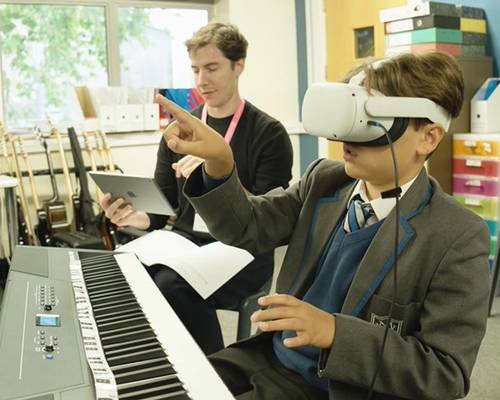
The concept of augmented reality is gradually presenting itself in the business of piano study, providing a fresh interpretation of music, technique, and practice. AR is transforming the interaction between pianists and the keyboard by combining digital guidance and physical instruments to create a new approach to playing the piano. This paper discusses the reasons behind the growing interest in augmented reality learning of piano, its functionality as well as its potential future impact on the teaching of piano.The concept of augmented reality is gradually presenting itself in the business of piano study, providing a fresh interpretation of music, technique, and practice. AR is transforming the interaction between pianists and the keyboard by combining digital guidance and physical instruments to create a new approach to playing the piano. This paper discusses the reasons behind the growing interest in augmented reality learning of piano, its functionality as well as its potential future impact on the teaching of piano.