
Piano And Education
Why Learning Piano remains a very important issue in the contemporary education.
Piano education continues to play an essential role in modern learning, offering benefits that extend far beyond music. By developing discipline, musical literacy, creative thinking, and emotional expression, piano study supports holistic growth across all ages. This article explores why learning piano remains relevant in today’s education systems and how it complements modern teaching methods in a rapidly evolving world.
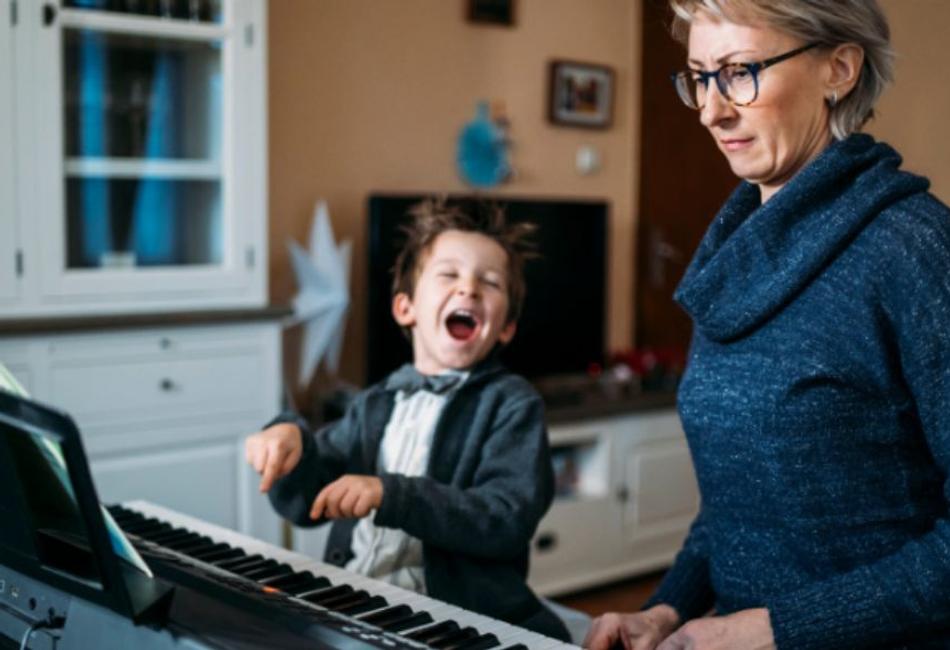
The development of education has changed significantly during the last several decades. Classrooms are getting more technologically inclined, education is more about technical skills and learning can be gauged based on speed and efficiency. Some topics, which focus on patience, depth and long time development are even doubted in such an atmosphere. However, piano studies remain a significant part in all schools, individual learning centers, and homes worldwide.
Piano is not an ordinary object of music. It serves itself as a system of education--one which builds discipline, literacy, order, and expressiveness all together. The piano is not outdated as the modern education adjusts to the fast change since it promotes the skills that cannot be taught by the technology itself.
Piano as a Foundation of Musical Literacy
A major educative function of the piano is that the instrument can help in the teaching of musical literacy. Piano shows music visually and logically in the initial stages unlike most of the instruments when students take years before they can grasp the musical structure fully.
Pitch relationships are well indicated on the keyboard layout. There are notes that go upwards, right to left, intervals can be seen, and harmonic frameworks can be explained spatially. This renders the piano a perfect instrument to provide the students with an exposure to reading music, grasping rhythm, and being aware of harmony.
Due to such clarity, the study of piano tends to be the cornerstone over which a more extensive musical knowledge is created.
The Piano as a Teaching Tool (Why It is used in the World)
The piano is a common instructional tool in most cultures and educational systems. This uniformity is not a chance thing. Piano enables the students to use melody, harmony, and rhythm simultaneously.
In ensemble, the students can emphasize on one musical line. Students get to feel the interaction of musical parts on the piano. They get to know the role of bass in sustaining melody, chords in determining mood, and rhythm in linking structure.
This is built-in exposure and this is what makes piano education the exclusive ingredient in the creation of full-fledged musicianship.
The Piano and Cognitive Skills Development
Education is not so much about information- it is about the thinking of students. The development of cognition through piano learning is based on the fact that the process demands attention, identification of patterns, and problem-solving.
Students are required to decode notation, learn to coordinate hands and time and change time. This involves the use of memory, logic, as well as perception. Learners get used to complicated tasks that involve divided attention with time.
These cognitive abilities aid the learning process in mathematics, language, and analytical studies and therefore the study of the piano can be useful even without music.
Home Discipline and Responsibility by Study of Piano
Discipline is one of the most neglected education values of learning piano. The advance of the piano is not made by short cuts. It takes time, discipline and perseverance.
The students soon get to know that the effort and outcome are directly related. Lack of practice will result in stagnation. Frequent interaction brings about development. This cause-effect correlation is a practical lesson on responsibility.
Piano learning helps to reaffirm the importance of the long-term investment in the educational environment of a society where instant feedback is the norm.
The Piano Education in the Emotional Expressions
Although in education today the high importance is usually given to measurable results, the emotional growth should not be disregarded. Piano teaching offers an organized method of engaging the students to discover their expression without using any speech.
The students learn communication using the feeling through sound, tempo, and articulation. These procedures promote emotional awareness and sensitivity without the need to elaborate on them.
Piano, in the case of many learners, has served as a confiding place of expression, particularly at their developmental stages when their emotions are complicated and hard to explain.
The Benefit of Piano Learning in Depth Learning
Deep learning is time consuming, thoughtful, and reiterated. The learning of piano facilitates this process. Studies of pieces are made in weeks or months, not in minutes. Errors are evaluated, rectified as well as perfected.
This is more in-depth than surface learning which is involves the consumption and forgetting of information. Piano students are taught to sit in an awkward position, to go back to what is difficult to learn, and to accumulate knowledge slowly.
These habits are transferred to the academic learning process where persistence and reflection result in mastery.
The Piano and Early Childhood Education

The piano aids in developmental milestones in early education. Structured musical interaction helps the young learners to develop coordination, listening skills and attention.
The learning of piano brings the element of routine and structure with a creative aspect. Children are taught to act according to instructions and demonstrate personalities using sound. This equilibrium favors good cognitive and emotional development.
Exposure to piano at an early age usually leads to a good relationship with learning in itself.
Piano Education among the teenagers
Education gets high and emotional pressure is experienced during adolescence. Piano studies bring stability at this time of the year. It provides a steady challenge that does not compare but compensate hard work.
The teenage students tend to express their identity through the use of piano. The way of musical interpretation enables them to seek individuality in structure. This experience is in favor of confidence and self direction.
Teenage-time piano education tends to enhance toughness and self-control.
Adult Piano Education and Lifelong Learning
Children are not the only to be taught piano. Piano is gaining more and more acceptance as a lifelong learning activity among adult learners. In adults, learning the piano provides the mind with a workout and relieves stress as well as leads to personal satisfaction.
As compared with short term skills courses, the learning of the piano contributes to the long term development. Adults learn not in a competitive environment but at their pace with an emphasis being on progress and development.
This strategy is consistent with the current schooling philosophies of appreciating lifelong learning.
The role of the Piano in Formal Music Education
The piano still holds the centre stage in conservatoires and music educational institutions. Piano is a secondary learning even by students majoring in other instruments.
This is necessary because piano can be used to help people understand music. Piano skills are essential to composers, conductors, and educators, who study music, practice it as an ensemble, and exchange ideas.
The piano is a universal language of music in the formal education.
Technology and Piano Education in the Present Day
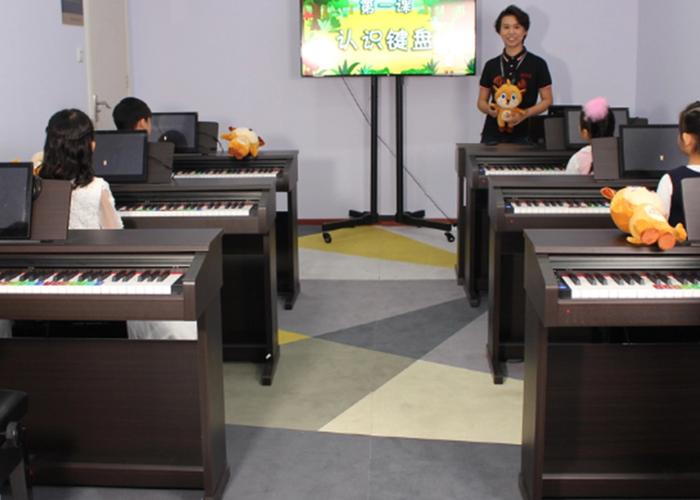
Technology has made the education of piano more available. Digital tools and online lessons, as well as interactive platforms, enable students to study irrespective of the location.
Technology is a complement to traditional instruction as opposed to the replacement of instruction. The use of digital tools allows giving feedback, using recordings to aid in practice, and conducting lessons on the global level with teachers.
The piano is adjusted to the current educational devices and still retains its pedagogic worth.
The rationale behind the importance of studying Piano in stimulating creativity
Piano education helps a student to think in a creative manner within limitations. The interpretation of music involves choice: whether to play loudly or softly, whether to move quickly or slowly, whether to form phrases or not.
Such a compromise between regulations and liberty stimulates deliberate imagination. Students are taught that creativity has flourished under structure, a fact that applies in all fields.
Innovation in art, science and solving problems are aided by creative thinking that was acquired at the piano.
Piano Learning Evaluation and Development
Piano progress, as opposed to standardized testing, is experiential. The better is heard, felt and seen. This type of assessment stimulates self as opposed to comparison.
Students are taught to identify improvement not only by grades but also with the help of sound and control. This achieves self awareness and intrinsic motivation.
Such learning conditions favour healthier achievement-oriented relationships.
The reason why Piano Education Cultivates Confidence Over Time
The belief in the piano teaching is based on diligence. Students feel challenged, frustrated and end up successful. This is a confidence-developing process that is based on skill and not praise.
Gradually, the learners have faith in their ability to change. This trust is usually spilled over to academics and personal ventures.
Piano lessons explain that one learns to be confident with persistence.
Piano as Educational Equalizer
The teaching of piano is flexible. It may be delivered either one-on-one, in groups or formally or informally. It can support varied learning styles and speeds.
This plasticity enables education of the piano to access a wide range of learners. The piano is a common tool of education whether at schools, at the community center or even at homes.
It is flexible and hence remains relevant in education systems.
The importance of Piano Education in the XXI Century
In a culture that is speedy, automated and wants immediate outcomes, education about the piano strengthens the values that are still important; patience, structure, expression, and depth.
It contributes to the overall growth intellectual, emotional, and creative. Instead of being in a competition with the modern education, the learning of the piano complements it.
The piano does not only teach what to learn, but also how to learn.
Conclusion
Education in piano is important as it instills the skills that cannot be substituted by the modern education. The piano helps in balanced development through musical literacy, discipline, emotional expression, and deep learning.
With the transformation of educational systems going on, the piano is one of the things that reminds that significant learning takes time, effort, and involvement. The reason it is still in the contemporary curriculum is not a question of tradition, but necessity.
More from the blog
Keep exploring new ideas
Piano: Psychological Development.
How Piano Learning Improves Memory Over Time
The process of learning, adaptation, and growth of people is mainly driven by memory. Learning Piano has emerged as one of the effective techniques of memory reinforcement via formal repetition, auditory, coordination and recalling over time. This article discusses the process by which practicing piano develops various forms of memory, reasons why these advantages become increasingly more effective, and how the benefits of learning a piano help to retain in the minds of non-musical areas.
Piano & Skill Development
How Piano Practice Builds Consistency and Self-Discipline
Self-discipline and consistency are crucial personal qualities in the contemporary life but are becoming more challenging to master. The learning of piano provides a natural and effective method of developing both in a structured form of learning, in a progressive manner and through long term commitment. This paper will examine how practice in the piano will develop the consistency over the time, why the self-discipline will develop naturally at the instrument and the applicability of these abilities far beyond music in the life.
Piano & Lifelong Learning
The Reason behind the Rise of Piano Learning among Mature Beginners in the world.
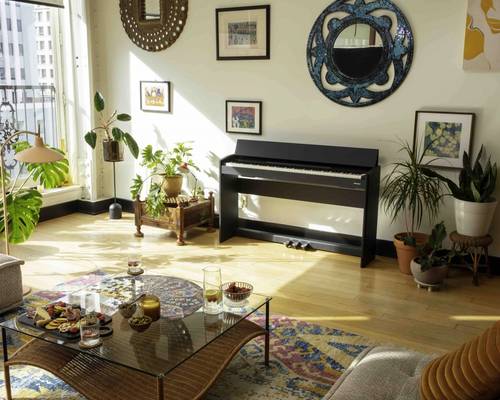
The world has witnessed a potent surge in piano learning among adult learners. More individuals are learning the piano later in their lives and this is due to the flexibility of digital tools, lifestyles and now people are more focused on their personal development. The article discusses the reasons why this trend is being experienced, how adult learners treat piano differently, and why this trend is transforming the contemporary culture of the piano.
Piano & Modern Skills
The reason Learning Piano Is Better than Multitasking in a Distracted World.
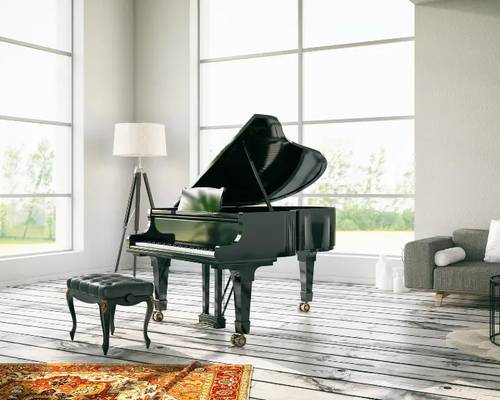
Piano learning is becoming an effective tool to reconnect attention and deep thinking in a day and age where we are bombarded with notifications and do not spend enough time in deep contemplation. The mental clarity ensured by years of discipline in the practice of the piano may be that which is afforded by very few activities because it demands constant focus, physical coordination and active listening. This paper discusses the connection between learning the piano and attention, the level of cognitive and mental discipline and the reason why more and more individuals are turning to the piano to overcome distraction in the modern world.
The Culture of Piano and Contemporary Music.
The reason why Minimalist Piano Music is becoming a sound of this decade.
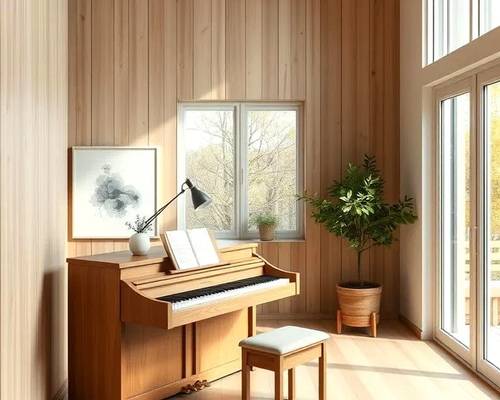
The minimalist piano music has come out as one of the most effective sounds of the modern age. The style is marked by its simplicity, repetition, and restraint, and they are defining the manner in which individuals listen, create, and relate to piano music nowadays. This paper delves into the reasons behind the growth of minimalist piano in popularity all over the world, its reflection of the contemporary life, and why it is a simply a new voice of this decade.
Piano & Future Learning
The Way AR is beginning to transform Piano Learning.
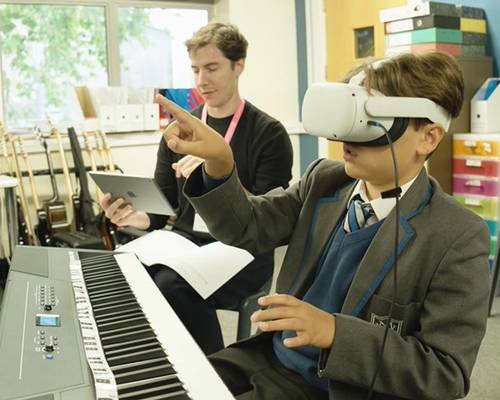
The concept of augmented reality is gradually presenting itself in the business of piano study, providing a fresh interpretation of music, technique, and practice. AR is transforming the interaction between pianists and the keyboard by combining digital guidance and physical instruments to create a new approach to playing the piano. This paper discusses the reasons behind the growing interest in augmented reality learning of piano, its functionality as well as its potential future impact on the teaching of piano.The concept of augmented reality is gradually presenting itself in the business of piano study, providing a fresh interpretation of music, technique, and practice. AR is transforming the interaction between pianists and the keyboard by combining digital guidance and physical instruments to create a new approach to playing the piano. This paper discusses the reasons behind the growing interest in augmented reality learning of piano, its functionality as well as its potential future impact on the teaching of piano.