
Piano & Cognitive Habits
The way Learning Piano Alters the Daily Thinking Patterns with Time.
Repeat, habit, and environment are the factors that influence daily thinking patterns. The very art of learning piano indirectly, yet strong, determines the ways in which individuals think, plan and react to day to day events. With a system of practice, hearing, and slow advancement, the piano assists in forming clearer thought, enhanced organization of the mind and more purposeful reactions. This paper discusses the ways in which learning the piano alters the way of thinking everyday and the reasons as to why the effects of such changes go way beyond music.

The way their thinking patterns develop is hardly noticed by most of the people. Ideas keep resorting to the same thoughts, actions to the same patterns, and behaviors condition decision making without taking a conscious decision. These trends determine the way individuals deal with difficulties over time, time management, and information processing.
The study of piano brings about a new rhythm of thinking. It also slows the mental responses, promotes contemplation and instead of acting on impulse, it leads to deliberate action. The practice sessions enforce the practices of attention, patience, and systematic thinking.
These habits slowly find their way into everyday life. The piano is even more than an instrument. It is an unspoken exercise ground on healthier ways of thinking.
The importance of daily thinking patterns
The day-to-day thinking patterns influence productivity, emotional balance and decision making. Even basic tasks are tiresome when thoughts are disorganized or stimulative. Complexity can be addressed by having the thought process in order and calm.
Contemporary settings tend to stimulate quick response instead of the considered reply. This may blur the planning abilities and mental clarity.
Re-training activities of thought pattern need to be long term and actively adjusted. This is naturally provided by the piano learning.
The introduction of Structured thinking by Piano Learning

Practice on the piano is organized. Pieces unfold in sequence. Movements follow patterns. The continuation of progress requires knowledge of order and relationship.
Students have to be looking into the future and at the same time be present. They do not only wait until they get the note but they coordinate movements and also actively listen to outcomes. This juggling between the planning and presence redefines the way the mind works.
With time, thinking becomes more systematic. Activities are tackled one by one as opposed to tackling them at once.
The Transition between the reactive and intentional thinking
Reactive thinking is an immediate response that is not usually thought over. This tendency is inhibited by the study of piano.
In case of an error instant response is not very helpful. Students take a break and reflect and revise. This pause becomes habitual.
Progressively, this reflexive practice is applied to everyday life. The responses are measured as opposed to automatic.
The reason why Piano Learning Pushes towards Mental Order
The information that is systematically arranged leads to mental order. The piano music is constructed on rhythm and repetition.
Learners are aware of patterns, information in groups and know the relationship among sounds. This is an organization that enhances mental acuity.
When the state of mind gets better, non-musical tasks do not seem as daunting.
The way Repetition Tightens the Patterns of thought
Practice at the piano is not meaningless. The repetitions provide feedback and welcome improvement.
Repetition is not reinforcing of mindless habits, but makes it acute. Students become sensitive to minute variations and make changes consciously.
The brain is conditioned to hone thoughts and not repeat them mindlessly during this process.
The reasons behind why Piano Learning is a better way to improve planning
Effective thinking involves planning. Learning of piano must be planned all the time.
Students choose where to concentrate, how to split the time on practice and where to slow down or accelerate. The outcomes of these decisions enhance efficiency.
Planning also becomes more natural and considerate in the daily activities over time.
Listening and Thinking: The Role of Listening
Listening trains awareness. Learners also listen attentively to balance, clarity and timing at the piano.
Such listening attentiveness leads to being sensitive to detail. The thoughts are clearer as the attention is made clear.
Listening first then acting has spilled over to conversations and decision making.
The rationale behind why Piano Learning Lessons alleviate Mental Clutter
Mental clutter is a resultant occurrence that happens when the thoughts are in conflict. Learning of the piano brings concentration.
When practising, the focus is made on sound and movement. Competitive thoughts dissolve on their own.
This clarity usually persists after practice making the state of mind more relaxed.
The role of Piano Learning in promoting the ability to think sequentially
Sequential thinking has to do with knowing of order and progression. Piano music relies on sequence.
Students abide by phrases, parts and transitions in a logical manner. Missing a step affects flow.
This step by step mentation enhances the management of tasks and out of music problem-solving.
The reason why thinking is more patient
Learning of the piano provides patience as an experience. Hurrying can hardly make things better.
Students take their time, practice repeatedly and give the learning time to develop slowly. This forbearance reinvents modes of thought.
This impatience in everyday life tends to mellow.
The Project Application How Mental Consistency is Constructed by Piano Learning
Coherence in thinking helps in lucidity and sticking to it. Habitual practice on the piano is a reward.
There are direct correlations of consistency and improvement to learners. This is a reinforcement of the disciplined thinking.
In the other places, mental consistency is easier to uphold.
The Pros of Piano Learning by Reflection
Thinking of a meaningful kind cannot be achieved without reflections. Practice is an implicit way of reflection in piano.
Learners take a step to evaluate sound, movement and progress. Guesswork is substituted with reflection.
This is a reflective learning practice that enhances deliberate actions.
Connection of Thinking and Acting
The study of piano brings thinking and doing into close relationship. Sound is immediately responsive to will.
In cases of unclear intention, there is poor outcome. Sound is enhanced when the mind is accurate.
This is a lesson in the need to think clearly first before acting.
The Reduced Overthinking with Piano Learning
Lack of direction usually leads to overthinking. The learning of piano offers organization.
Students are preoccupied with concrete objectives as opposed to philosophical concern. The focus shifts to the actual.
Such transition makes mind noise less.
The reasons why Piano Learning teaches self-trust
The repetition of problem solving instills confidence in the reasoning powers.
Students understand that critical practice is worth some change. Trust is based on the experience.
Clear thinking is supported by self-trust in general.
The Question of transfer of the thinking patterns outside music
The reasoning patterns formed during the playing piano are manifested elsewhere. The learners are more organized and rational when approaching tasks.
They decant issues and change the strategies carefully.
The effect of the learning of piano on everyday thinking is subtle yet stable
Why a Processed Thinking Favors Emotional Stasis
Emotional stability is backed by clear thinking. This relation is enhanced by learning piano.
Emotional responses become manageable when the thoughts are arranged.
Balance is supported by the piano using clarity, but not control
The Long-Run Effect on the Cognitive Style
With time, the learners of the piano become more deliberate in their thoughts. They pause, listen, and plan.
The mind is not as pressured and is more intentional.
This mental approach endorses life-long learning and flexibility
The Reason Piano Learning is in Accordance with the Contemporary Cognitive Requirements
The contemporary people require clarity, focus, and flexibility in life. All three are reinforced by learning piano.
It provides a realistic means of re-educating the non-abstractive way of thinking.
This applicability has been the reason behind its increasing popularity.
The Special Effectiveness of Piano in Training the Thought
The piano incorporates form, time and feedback. Such a combination makes the thought provoking.
Hardly any activity is more likely to influence the type of thought.
The piano is still a potent instrument of thought.
Conclusion
Studying piano transforms everyday ways of thinking with structure, contemplation and willful action. The practice sessions strengthen the state of clarity, patience, and clarity of thought.
These habits do not just stop with music, and over time, they carry over into the way individuals plan, respond and reflect in their daily life. The mind is less anxious, and more focused and conscious.
Piano education is a silent yet productive path to bringing some sanity, purpose, and clarity to our thinking in a world that is usually based on the promotion of mental anarchy.
More from the blog
Keep exploring new ideas
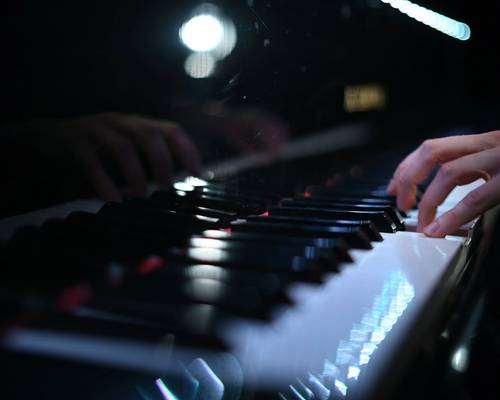
Piano: Psychological Development.
How Piano Learning Improves Memory Over Time
The process of learning, adaptation, and growth of people is mainly driven by memory. Learning Piano has emerged as one of the effective techniques of memory reinforcement via formal repetition, auditory, coordination and recalling over time. This article discusses the process by which practicing piano develops various forms of memory, reasons why these advantages become increasingly more effective, and how the benefits of learning a piano help to retain in the minds of non-musical areas.
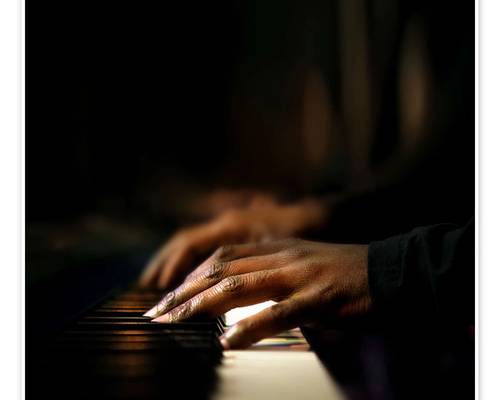
Piano & Skill Development
How Piano Practice Builds Consistency and Self-Discipline
Self-discipline and consistency are crucial personal qualities in the contemporary life but are becoming more challenging to master. The learning of piano provides a natural and effective method of developing both in a structured form of learning, in a progressive manner and through long term commitment. This paper will examine how practice in the piano will develop the consistency over the time, why the self-discipline will develop naturally at the instrument and the applicability of these abilities far beyond music in the life.
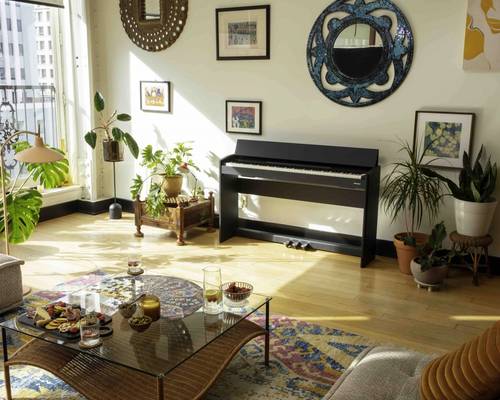
Piano & Lifelong Learning
The Reason behind the Rise of Piano Learning among Mature Beginners in the world.
The world has witnessed a potent surge in piano learning among adult learners. More individuals are learning the piano later in their lives and this is due to the flexibility of digital tools, lifestyles and now people are more focused on their personal development. The article discusses the reasons why this trend is being experienced, how adult learners treat piano differently, and why this trend is transforming the contemporary culture of the piano.
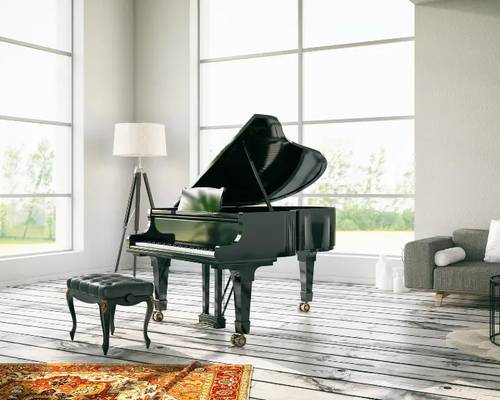
Piano & Modern Skills
The reason Learning Piano Is Better than Multitasking in a Distracted World.
Piano learning is becoming an effective tool to reconnect attention and deep thinking in a day and age where we are bombarded with notifications and do not spend enough time in deep contemplation. The mental clarity ensured by years of discipline in the practice of the piano may be that which is afforded by very few activities because it demands constant focus, physical coordination and active listening. This paper discusses the connection between learning the piano and attention, the level of cognitive and mental discipline and the reason why more and more individuals are turning to the piano to overcome distraction in the modern world.

The Culture of Piano and Contemporary Music.
The reason why Minimalist Piano Music is becoming a sound of this decade.
The minimalist piano music has come out as one of the most effective sounds of the modern age. The style is marked by its simplicity, repetition, and restraint, and they are defining the manner in which individuals listen, create, and relate to piano music nowadays. This paper delves into the reasons behind the growth of minimalist piano in popularity all over the world, its reflection of the contemporary life, and why it is a simply a new voice of this decade.
Piano & Future Learning
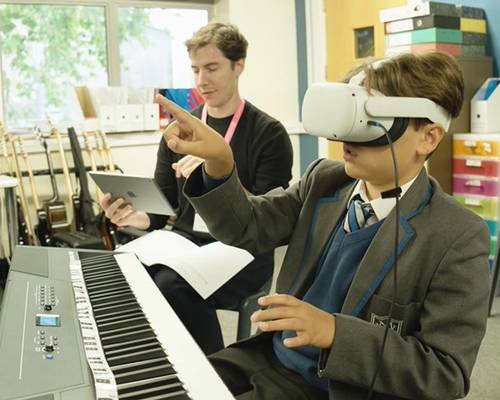
The Way AR is beginning to transform Piano Learning.
The concept of augmented reality is gradually presenting itself in the business of piano study, providing a fresh interpretation of music, technique, and practice. AR is transforming the interaction between pianists and the keyboard by combining digital guidance and physical instruments to create a new approach to playing the piano. This paper discusses the reasons behind the growing interest in augmented reality learning of piano, its functionality as well as its potential future impact on the teaching of piano.The concept of augmented reality is gradually presenting itself in the business of piano study, providing a fresh interpretation of music, technique, and practice. AR is transforming the interaction between pianists and the keyboard by combining digital guidance and physical instruments to create a new approach to playing the piano. This paper discusses the reasons behind the growing interest in augmented reality learning of piano, its functionality as well as its potential future impact on the teaching of piano.