
Piano & Creative Trends
The reason Why Piano Improvisation Is Making a Major Comeback.
Piano improvisation is undergoing a mighty resurgence since contemporary players are abandoning strict notation and into creative freedom. Out of the chord-based performance to improvisation, the pianists are revisiting the art of improvisation as an individual and expressive art. This paper discusses the reasons why improvisation is trending once more, how improvisation reinvents piano education and the implication of improvisation to the future of piano music.
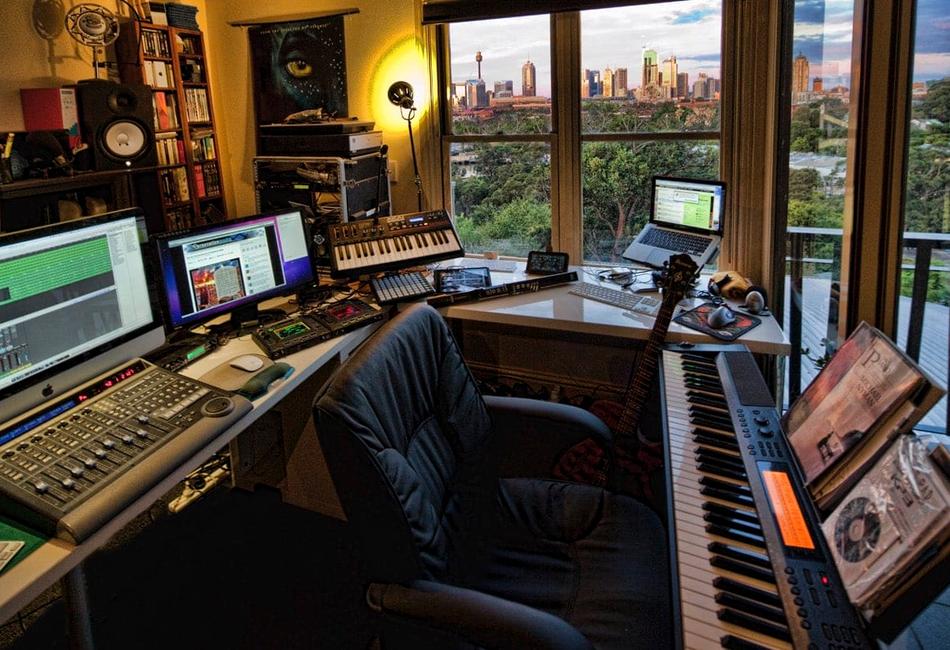
During the major part of the previous century, the education about piano was paid much attention to interpretation instead of the creation. Pianists had been taught to read, memorize and reproduce precise and respectable music that was written by others. Although this tradition resulted in great performers, it silently alienated a number of players to improvisation. That division is breaking up nowadays.
There is a global resurgence of improvisation as one of the fundamental musical practices by pianists. It is not only jazz that makes this revival, neither is it restricted to just advanced musicians. Novices, amateur and professional players are venturing into playing by chords, improvising, and improvising, as well as playing anywhere around the piano.
This change is not merely a change of style. It is indicative of a more longing creative proprietorship and emotional sincerity in music-making.
The reason why Improvisation was lost in the traditional piano training
Improvising was a basic art of keyboard players at some time. The piano was a laboratory of creativity used by the historical composers, as they were fluent improvisers. Formal education systems have over time given priority to written repertoire and standardized assessment.
This led to the fact that many pianists became accustomed to taking orders and not to creating music on their own. Improvisation was linked to peril, errors and formlessness.
This changed education produced generations of piano players that were able to read and perform complicated pieces perfectly but were afraid to let themselves come up with their own musical concepts.
The Change in the Modern Piano Culture
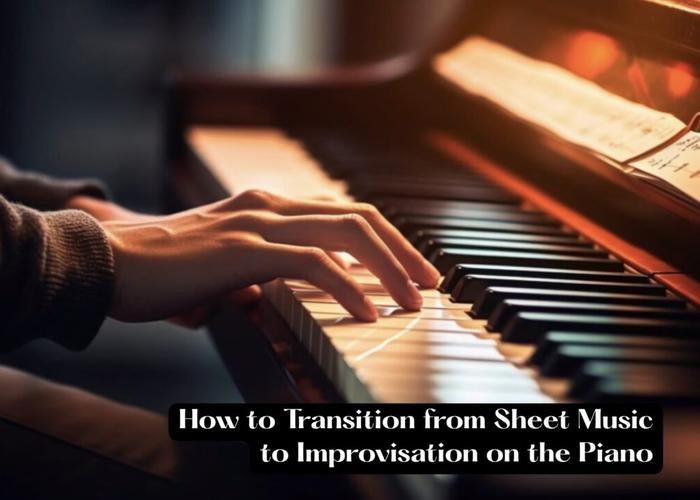
The contemporary piano culture has experienced a silent change. Presents have increased the way in which pianists approach the instrument due to exposure to different styles of music, education via the internet and access to digital tools.
Improvisation does not seem threatening anymore. Pianists witness others playing around without trying to make anything out of it. This is openness that has eliminated fear and promoted exploration.
Piano is not perceived as an instrument of execution anymore. It is growing to be regarded as a place of discovery.
The reason behind Chord-Based Playing as the Trend
The revival in improvisation has been significantly contributed by chord-based playing of the piano. As opposed to working on individual notes, pianists deal with harmonic buildings that permit freedom in a framework.
It is an instinctive approach. Chords are directional and unrestricted. Pianists are also able to experiment with rhythm, melody and texture without the fear of playing the wrong note.
Improvisation using chord progression allows musicians to produce music on the spot, even without much technical ability.
The Impact of DMD and Contemporary Music
The contemporary genres, including pop, ambient, film music, and lo-fi have changed the expectations of playing the piano. These styles go against the complexity and tend to put emphasis on mood, harmony and texture.
Improvisation is an apt fit to this setting. Pianists are also advised to play with sound and not technique. This is in tandem with the contemporary music consumption where most people listen to it either as an emotional or a mood induction.
The piano readily changes with these contemporary music settings.
The reasons why Improvisation is attractive to Adults
A significant contributor to this trend is adult learners of the piano. Adults are not too keen on examinations and conventional advancement. They desire to play with the instrument.
Improvisation offers short-term gratification. It gives the adult the ability to express feeling without years of preparation in technicality. Such access eliminates frustration and creates confidence.
In the case of adults, improvisation can be more intimate as compared to learning predetermined works.
Improvisation as an Emotional Expressive Tool
The improvisation enables the pianist to express the emotions onto sound. It is not as constraining and predictable as written music. The music varies millennium by millennium, based on intuition.
This first-hand affective bondage renders improvisation highly therapeutic to most performers. The piano is made into a secure place of contemplation and letting go.
This component of improvisation finds a good echo in an era where emotional well-being is becoming a highly precious attribute.
Why Improvisation is Better than Total Musicianship
Improvisation enhances listening, awareness and flexibility. Pianists have to react to what they hear and not what they are reading.
It is a skill that enhances the timing, wording and harmony. Improvisers form a greater sense of flow in music since they are always creating sound on the spot.
These advantages are not confined to improvisation and cover all the fields of playing the piano.
Getting over the Fear of Making the Wrong Notes
Fear is one of the greatest impediments to improvisation. The fear of making a mistake or being unmusical is a concern to most of the piano players.
Contemporary improvisation redefines the errors as experimentation. Mistakes are passages instead of failures. This change of mind is very essential.
Creativity is brought about by the absence of fear.
The Supporting role of Technology in Improvisation
Technology has helped in this resurgence in rather minor yet significant ways. Pianists can play around with loops, backing tracks, and recording software and not experience any sense of pressure.
Players are able to capture ideas, replay and finesse intuitively. This is a feedback loop that promotes inquiry and not criticism.
Improvisation is facilitated by technology as it makes experimentation safe and repeatable.
The Reason Improvisation Is Suited to Contemporary Attention Managing
The current attention patterns are best served by brief and concentrated creative sessions. Improvisation is very suitable in this rhythm.
Pianists are capable of sitting at the piano and not having to prepare a piece, making something meaningful in ten minutes. Such flexibility is in line with the hectic schedules.
The fact that one can improvise makes practicing piano an adjustable thing instead of being a mandatory one.
The Relationship with the Piano changed by Improvisation
Improvisation makes the piano a conversational partner as opposed to a task oriented instrument. Pianists are in communication with sound and not instructions.
This interaction promotes long-term interaction. The piano is viewed as a research ground and not a performing ground.
This change brings happiness to many pianists.
The Reason Why Teachers are Retreating to Improvisation
The teachers are becoming aware of the importance of improvisation in creating self-reliant, confident musicians. Improvisation promotes active listening and innovativeness.
Reintroducing improvisation, teachers assist the students in building musical instinct, as well as technique.
This moderated method is more comprehensive in making musicians.
Improvisation in the Various Piano styles
Improvisation has various shapes. Classical improvisation is concerned with variation and development. Pop improvisation lays stress on chord progressions. Ambient improvisation is an experiment on texture and space.
This flexibility makes improvisation applicable to all pianists of any kind.
Improvisation is flexible to the performer as opposed to the vice versa.
The reason this trend is increasing at a high rate on the internet
The online platforms prefer originality and truth. Raw and authentic improvised piano play appeals to the listeners.
Perfection is not responded to by viewers compared to creativity. This will make more improvised performance by pianists.
The virtual world is conducive to exploration.
Musical Identity and Improvisation
This is achieved through improvisation which enables the pianists to form their individual voice. Players find their own voice, and not interpret the thoughts of another person.
This identity building process enhances trust and commitment.
Music is made personal as opposed to comparative.
The Future of improvisation in the piano
As a result of increased flexibility of the culture of piano, improvisation will be on the increase. Learning models based on the use of theory, creativity and technology will increase.
Improvisation is no longer a skill niche. It is being made an element of contemporary piano musicianship.
The piano will have its future with liberty and also with control.
The reasons why improvisation is important nowadays
Improvisation provides the presence and exploration in a world that highly regards productivity and results. It enables the pianists to take their time and to be mindful of sound.
This is not restricted to music. Improvisation is the sign of a more cultural change towards authenticity and self expression.
The piano is still a strong medium of this change.
Conclusion
Piano improvisation is a revival of creativity in the core of the music-making. The new generation of pianists is taking away fear and exploring by doing so, has made the playing of the piano to be redefined.
Improvisation gives musicians of every level the ability to create, express and relate on sound. This custom is not an anti-traditional trend. It completes it by giving it counterbalance between form and free will.
Piano improvisation is not an infatuation. It is a re possession of musical voice.
More from the blog
Keep exploring new ideas
Piano: Psychological Development.
How Piano Learning Improves Memory Over Time
The process of learning, adaptation, and growth of people is mainly driven by memory. Learning Piano has emerged as one of the effective techniques of memory reinforcement via formal repetition, auditory, coordination and recalling over time. This article discusses the process by which practicing piano develops various forms of memory, reasons why these advantages become increasingly more effective, and how the benefits of learning a piano help to retain in the minds of non-musical areas.
Piano & Skill Development
How Piano Practice Builds Consistency and Self-Discipline
Self-discipline and consistency are crucial personal qualities in the contemporary life but are becoming more challenging to master. The learning of piano provides a natural and effective method of developing both in a structured form of learning, in a progressive manner and through long term commitment. This paper will examine how practice in the piano will develop the consistency over the time, why the self-discipline will develop naturally at the instrument and the applicability of these abilities far beyond music in the life.
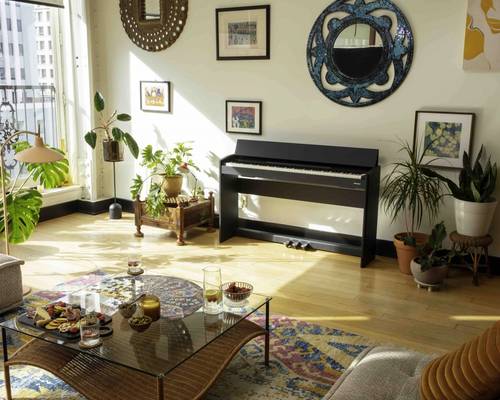
Piano & Lifelong Learning
The Reason behind the Rise of Piano Learning among Mature Beginners in the world.
The world has witnessed a potent surge in piano learning among adult learners. More individuals are learning the piano later in their lives and this is due to the flexibility of digital tools, lifestyles and now people are more focused on their personal development. The article discusses the reasons why this trend is being experienced, how adult learners treat piano differently, and why this trend is transforming the contemporary culture of the piano.
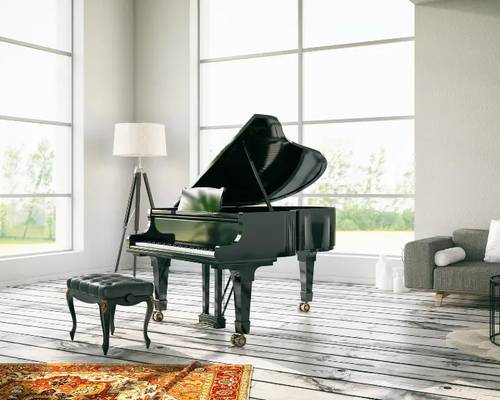
Piano & Modern Skills
The reason Learning Piano Is Better than Multitasking in a Distracted World.
Piano learning is becoming an effective tool to reconnect attention and deep thinking in a day and age where we are bombarded with notifications and do not spend enough time in deep contemplation. The mental clarity ensured by years of discipline in the practice of the piano may be that which is afforded by very few activities because it demands constant focus, physical coordination and active listening. This paper discusses the connection between learning the piano and attention, the level of cognitive and mental discipline and the reason why more and more individuals are turning to the piano to overcome distraction in the modern world.
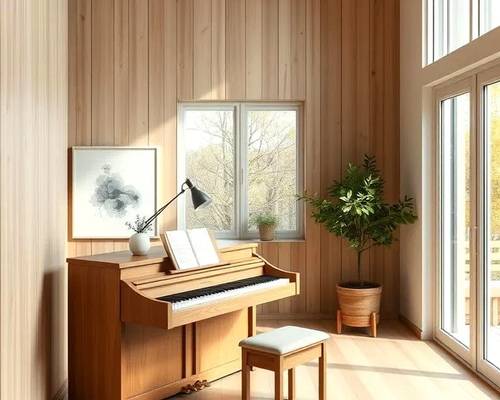
The Culture of Piano and Contemporary Music.
The reason why Minimalist Piano Music is becoming a sound of this decade.
The minimalist piano music has come out as one of the most effective sounds of the modern age. The style is marked by its simplicity, repetition, and restraint, and they are defining the manner in which individuals listen, create, and relate to piano music nowadays. This paper delves into the reasons behind the growth of minimalist piano in popularity all over the world, its reflection of the contemporary life, and why it is a simply a new voice of this decade.
Piano & Future Learning
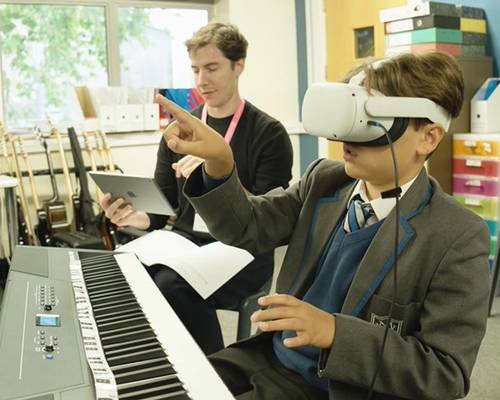
The Way AR is beginning to transform Piano Learning.
The concept of augmented reality is gradually presenting itself in the business of piano study, providing a fresh interpretation of music, technique, and practice. AR is transforming the interaction between pianists and the keyboard by combining digital guidance and physical instruments to create a new approach to playing the piano. This paper discusses the reasons behind the growing interest in augmented reality learning of piano, its functionality as well as its potential future impact on the teaching of piano.The concept of augmented reality is gradually presenting itself in the business of piano study, providing a fresh interpretation of music, technique, and practice. AR is transforming the interaction between pianists and the keyboard by combining digital guidance and physical instruments to create a new approach to playing the piano. This paper discusses the reasons behind the growing interest in augmented reality learning of piano, its functionality as well as its potential future impact on the teaching of piano.