
Piano Musicianship
The reason why piano accompaniment is among the most effective skills that a pianist can master.
Piano accompaniment is more than supportive playing it is a skill that transforms musicianship. By focusing on listening, collaboration, and real-time musical response, accompaniment reshapes how pianists understand rhythm, harmony, and expression. This article explores why accompaniment builds deeper musical awareness, creates more opportunities, and helps pianists grow into confident, flexible, and collaborative musicians.
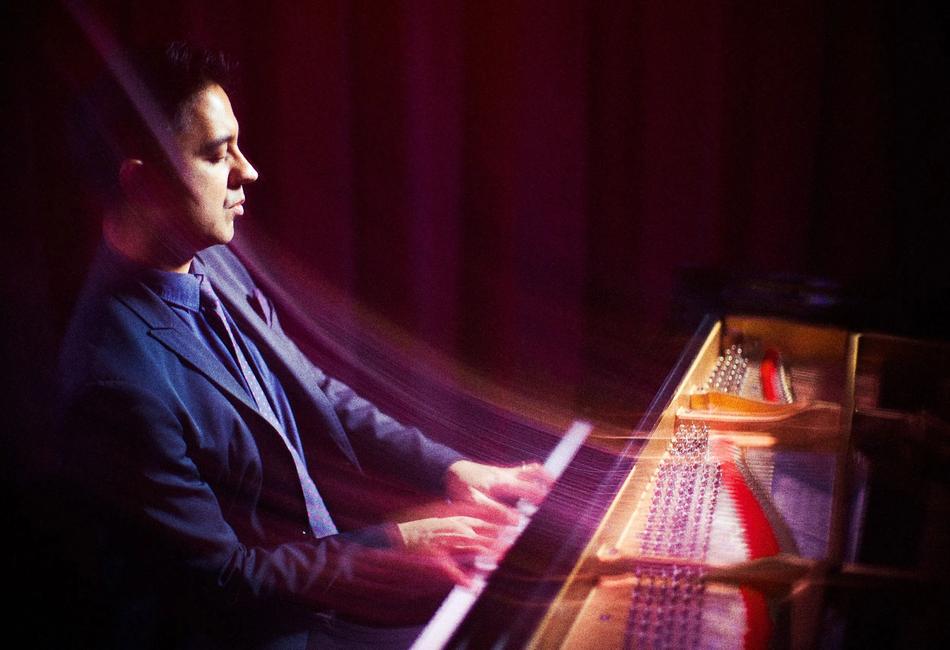
The first thing that comes to mind when someone thinks of playing a piano is either a solo performance, an intricate classical composition, or even emotional music that is performed on stage by a single individual. However, not all solo performers are some of the most versatile, confident, and in demand pianists. They are accompanists. Piano-companion is an art that subtly develops firm music, profound hearing and veratility of music but it has been greatly underrated.
Accompaniment makes a pianist listen to music, react to others, and perceive music structure differently. It shifts the emphasis on the personal presentation to teamwork. That way, it develops the abilities that cannot be developed through solo practice. Accompaniment is not an extra-curricular activity to pianists who wish to develop musically. It is transformative.
The Real Piano Accompaniment
Piano accompaniment refers to the art of accompanying another musician, ensemble or a musical line and still guarantee musical integrity. It is not background playing, and it is not secondary musicianship. An effective accompaniment defines the rhythm, harmony and environment in such a manner that complements the primary voice in music.
Authentic following demands being conscious. The pianist should be a good listener with ability to foresee the changes in balance and to be able to adapt. This forms an interactive musical relationship other than an ad hoc performance. In comparison to solo playing, accompaniment is never the same. It responds in real time.
It is this responsiveness that makes accompaniment difficult and very satisfying.
The reason why Accompaniment Builds better listening skills
The practice of being left alone tends to turn inward. The sound, technique, and interpretation that the pianists listen to are mostly their own. Companion drives attention away. The pianist has to hear the timing, breathing, phrasing and expression of another musician.
This external consciousness heightens musical consciousness. Accompanists are open to fine changes in tempo and articulation. They are taught to act in a reflex manner instead of pursuing a pre-conceived plan. In the long run, such listening enhances general musicianship, which also includes solo performance.
Listening transforms to not passive, but active, which is one of the greatest changes a pianist could be subjected to.
The Playing with vs. Playing with Unlike
Most of the piano players are under the impression that they are accompaniment but they are merely playing along with another musician. Authentic accompaniment is more than the coordination. It includes premeditated encouragement.
A good accompanist is able to adjust the volume in such a way that the melody is distinct. They influence harmony so as to suit phrasing. They look forward to the changes and establish a sense of stability in challenging periods. Such awareness changes accompaniment into collaboration.
Time together with a person is a game. It is a collaborative activity of playing with someone.
How Rhythmic Awareness is Altered by Accompaniment

As the accompaniment occurs, rhythm is complicated. The pianist has to have pulse and be loose. Some moments they might have to be on top and others they may have to be at the bottom.
The rhythmic control is enhanced by this dual responsibility. Companies are taught to rebound swiftly on the change of time and not quit musical rhythm once the lost- track alterations arise. This ability enhances inner time and rhythmic assurance.
A number of piano players find the rhythm very difficult to play with in solitude and they are greatly better after they have to play with others.
The reasons Why Accompaniment Builds Musical Humility and Confidence, Both at the same Time
Accompaniment also teaches humility since the focus of the attention is not on the piano player. The music is successful when it is shown in the light of the soloist or ensemble. The change eliminates pressure based on ego and puts it in the place of purpose.
Meanwhile, accompaniment develops confidence. The pianist is held in charge of harmonic structure, stability of tempo and emotional basis. This duty builds confidence in his or her musical judgment.
Humility and confidence develop hand in hand and bring about balanced musicianship.
The Accent of Harmony in Italian Piano Accompaniment
Secondary accompaniment puts harmony in the centre of music knowledge. To support in an effective manner, Pianists need to know about the chord progression, direction of tones, and tension of harmonic.
Instead of being preoccupied with melody alone, accompanists are also vertical and structural. They are taught the influence of harmony in emotion movement. The awareness increases the level of understanding music and enhances interpretation in any style.
Harmony ceases to remain some abstract theory and turns itself into living functional element.
The reason behind Why Accompaniment Makes Sight-Reading easier
Quick adaptation is necessary in accompaniment. In many cases, piano players have to read music with little or no preparation. This is a natural way of enhancing sight-reading.
Fate pushing towards feeling the pressure to continue drives one on. The end is no longer as acceptable and so the pianist learns to put more emphasis on flow rather than perfection. Fluency in reading is achieved unconsciously with time.
Sight-reading is a reality and not a challenge.
More Furnishing and Musical Expression
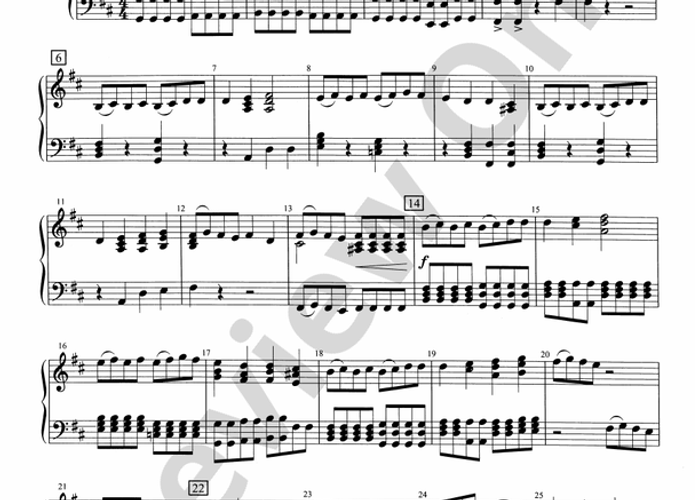
One of the forms of communication is accompaniment. Timing, articulation, shaping of dynamics are used to communicate by the pianists. They react to visual stimuli, respiratory rhythms and movements.
This non musical communication develops musical intuition. Pianists get to know when to be bold and when to be restrained. Ensemble playing and performance awareness is enhanced by this sensitivity.
Communication is made musical instead of being verbal.
The Reason So Many Pianists Fleece Accompaniment
Various pianists shun accompaniment although this has its advantages. The causes are quite explainable. Weaknesses are revealed in accompaniment. It requires malleability as opposed to domination. Errors are not only to the player, but to others as well.
But it is these challenges that make accompliment of such value. It reveals what is hidden in the solo practice and speeds up development through actual interaction.
Avoidance postpones development. Engagement strengthens it.
Accompaniment With Various Musical setups
Piano accompaniment takes a lot of forms. It promotes singers, instrumental players, choirs, dancers, and groups. The skills required in each setting are different, and the principles are the same.
Breathing and phrasing are used in the timing in vocal accompaniment. Arbitration and balance is important in instrumental accompaniment. Pianist in choruses is usually like a conduit between the conductor and singers.
These diverse contexts diversify music.
The Strengthening of Music Memory by Accompaniment
In memorization, accompanists usually do not depend as much and more on understanding. They are taught how to maneuver scores effectively, identify patterns and foresee structure.
This long term memory enhances retention. Pianists recollect music in the form of a series of harmonic and rhythmic phenomena not in individual notes. This knowledge is extended to solo repertoire also.
Memories are musicalized and not mechanicalized.
The Scattered Intelligence That Takes Accompaniment
Accompaniment needs emotional awareness. Pianists have to feel mood, tension and intention in real-time. They modulate sound and time to facilitate emotional guidance.
This is sensitivity which creates emotional intelligence of music. Pianists are also better achieved musicians who can respond and not dictate.
This sense of emotion is the enhancement of music life in every aspect.
The reason Accompaniment Provides More Musical Opportunities
In a practical sense, accompaniment is an opening. Accompaniment of pianists is required in schools, studios, choirs, events, and performances.
In contrast to the opportunities in solo performances, the opportunities in accompaniment work are regular and diverse. It enables pianists to work together on a regular basis and to be active in music.
A lot of professional pianists establish their careers based on the accompaniment not on the solo performance.
Flexibility of Musical Accompaniment and Musical Flexibility
Solo practice tends to promote fixed interpretation. There must be a degree of accommodation. The pianist has to fit to the various tempo, styles and characters.
This flexibility enhances resilience to issues and music. Pianists are taught how to feel calm, not to be stressed and how to adapt.
A lack of rigidity would turn into a strength instead of a weakness.
Why Accompaniment is Good to play Solo
Intriguingly, piano accompaniment artists can go back to solo performance with a deeper level of interest. Their timing, balance and phrasing get better.
They are aware of their place in a greater musical arrangement. This view expands the process of interpretation and makes it less rigid.
The accompaniment polishes the solo musicianship, but indirectly but strongly.
The Psychological Change between Performing and Collaborator
Accompaniment assumes an alternate form. The piano players cease to regard themselves as performers only but start to view themselves as partners.
This change lessens anxiety of performance. It is not all about self-representation but a collective performance. Music is shared as opposed to being an individual challenge.
Such attitude can introduce new pleasure.
The reason why Accompaniment is a Long-term Musicianship Investment
The skills of accompaniment are developed by experience. Every joint venture is a lesson. The accompaniment is also dynamic, as compared to repertoire which is acquired and stored.
Pianists have the instincts which are not learnt in books. These instincts form grown-up music.
Accompaniment is not a short-cut. It is a long-term investment.
Finding a Middle Ground between Support and Leadership
Powerful accompanists understand when they should be in charge and when they should be in the shadow. They are stable without being demoting. Such balance is a matter of judgment and sensitivity.
The acquisition of this balance makes music mature. Pianists begin to be aware of musical hierarchy and collective responsibility.
This is a vital skill in the team environment.
The reason why Accompaniment is part of every Pianist
The specialization of accompaniment is not an esoteric one. It is a basic artistry ability that contributes to development on all levels.
Accompaniment enhances the comprehension and attachment to music whether the pianist is a performance, teacher, as well as an enjoyer of music.
By disregarding it, one narrows vision. By its embrace, musicianship is broadened.
Conclusion
One of the skills that a pianist can develop, though it is underestimated, is piano accompaniment. It enhances listening, rhythm, harmony, communication and emotional awareness besides opening up collaboration and opportunity.
Not just a practical ability, accompaniment redefines the perception of music by pianists. It makes playing not a personal process but a collective one. Accompaniment is a must to a pianist who wants to be rich, dynamic and grow over the long term. It is essential.
More from the blog
Keep exploring new ideas
Piano: Psychological Development.
How Piano Learning Improves Memory Over Time
The process of learning, adaptation, and growth of people is mainly driven by memory. Learning Piano has emerged as one of the effective techniques of memory reinforcement via formal repetition, auditory, coordination and recalling over time. This article discusses the process by which practicing piano develops various forms of memory, reasons why these advantages become increasingly more effective, and how the benefits of learning a piano help to retain in the minds of non-musical areas.
Piano & Skill Development
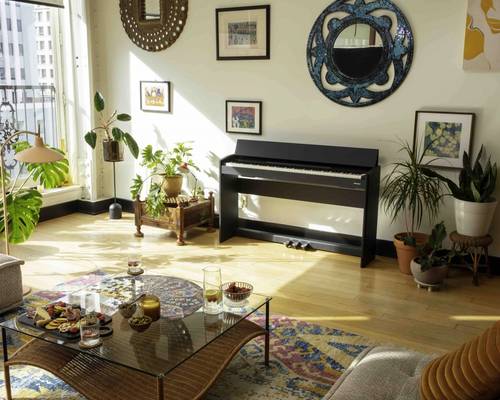
How Piano Practice Builds Consistency and Self-Discipline
Self-discipline and consistency are crucial personal qualities in the contemporary life but are becoming more challenging to master. The learning of piano provides a natural and effective method of developing both in a structured form of learning, in a progressive manner and through long term commitment. This paper will examine how practice in the piano will develop the consistency over the time, why the self-discipline will develop naturally at the instrument and the applicability of these abilities far beyond music in the life.
Piano & Lifelong Learning
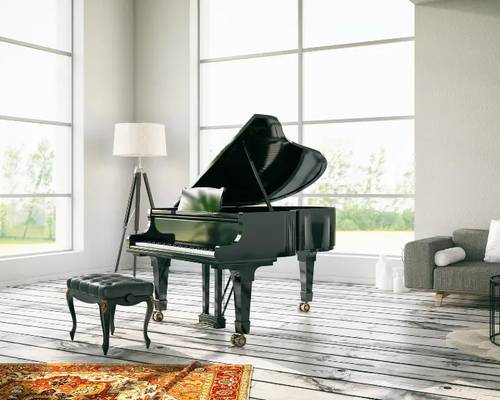
The Reason behind the Rise of Piano Learning among Mature Beginners in the world.
The world has witnessed a potent surge in piano learning among adult learners. More individuals are learning the piano later in their lives and this is due to the flexibility of digital tools, lifestyles and now people are more focused on their personal development. The article discusses the reasons why this trend is being experienced, how adult learners treat piano differently, and why this trend is transforming the contemporary culture of the piano.
Piano & Modern Skills
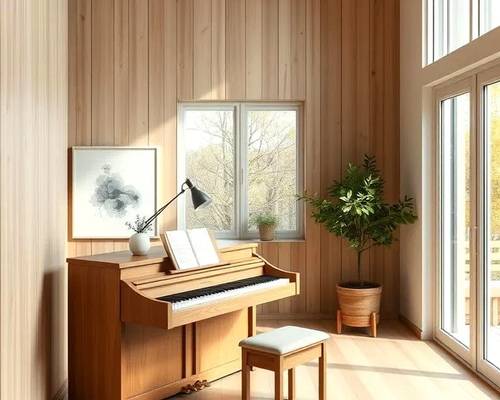
The reason Learning Piano Is Better than Multitasking in a Distracted World.
Piano learning is becoming an effective tool to reconnect attention and deep thinking in a day and age where we are bombarded with notifications and do not spend enough time in deep contemplation. The mental clarity ensured by years of discipline in the practice of the piano may be that which is afforded by very few activities because it demands constant focus, physical coordination and active listening. This paper discusses the connection between learning the piano and attention, the level of cognitive and mental discipline and the reason why more and more individuals are turning to the piano to overcome distraction in the modern world.
The Culture of Piano and Contemporary Music.
The reason why Minimalist Piano Music is becoming a sound of this decade.
The minimalist piano music has come out as one of the most effective sounds of the modern age. The style is marked by its simplicity, repetition, and restraint, and they are defining the manner in which individuals listen, create, and relate to piano music nowadays. This paper delves into the reasons behind the growth of minimalist piano in popularity all over the world, its reflection of the contemporary life, and why it is a simply a new voice of this decade.
Piano & Future Learning
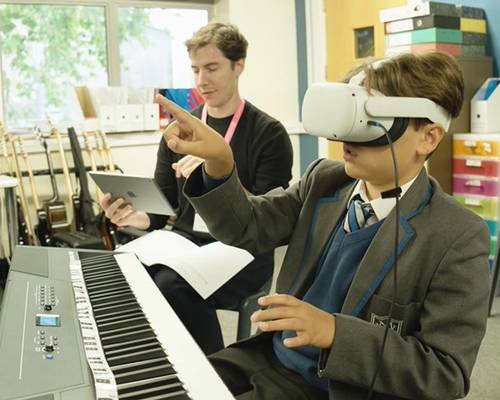
The Way AR is beginning to transform Piano Learning.
The concept of augmented reality is gradually presenting itself in the business of piano study, providing a fresh interpretation of music, technique, and practice. AR is transforming the interaction between pianists and the keyboard by combining digital guidance and physical instruments to create a new approach to playing the piano. This paper discusses the reasons behind the growing interest in augmented reality learning of piano, its functionality as well as its potential future impact on the teaching of piano.The concept of augmented reality is gradually presenting itself in the business of piano study, providing a fresh interpretation of music, technique, and practice. AR is transforming the interaction between pianists and the keyboard by combining digital guidance and physical instruments to create a new approach to playing the piano. This paper discusses the reasons behind the growing interest in augmented reality learning of piano, its functionality as well as its potential future impact on the teaching of piano.