
Piano & Deep Learning
The reason why learning piano gives a person profound concentration in a world that is incessantly distracting is explained.
The ability to see deep and far is now one of the most difficult in the contemporary life. Frequent disruptions, rapid content, and fractured attention do not allow one to concentrate in the long term. The learning of piano provides a strong counterbalance that requires one to be present, patient, and have long-term interaction. This paper discusses the role of learning the piano in restoring profound concentration, the reasons this ability is developed through rehearsal, and how the cognitive processes acquired at the piano keyboard affect attention far beyond the music.
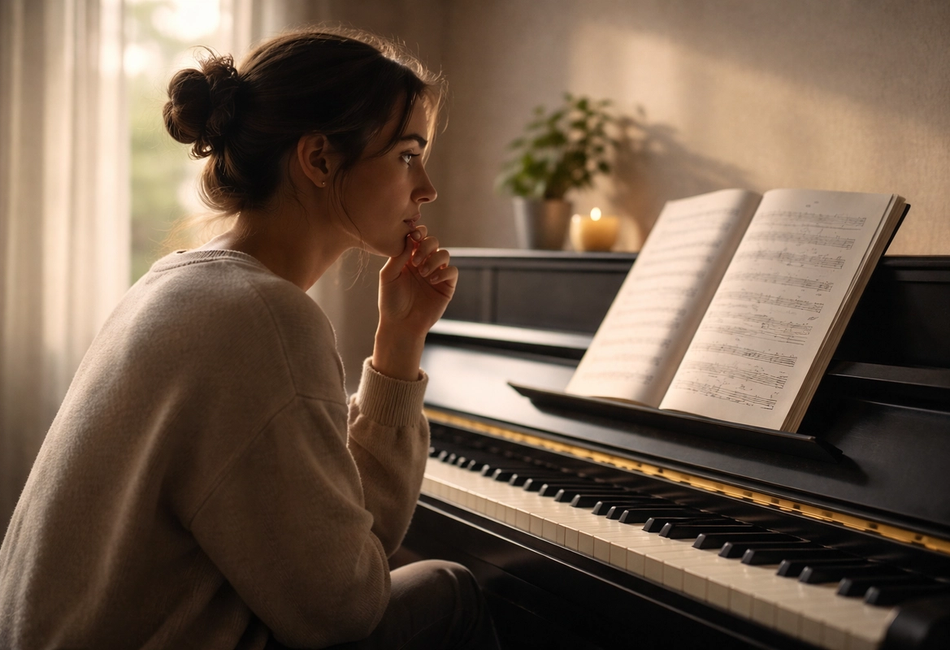
When it comes to the capacity of paying much attention to one task over a long period of time, it is getting less and less common. The contemporary conditions promote multi-tasking, constant interruption, and superficial interactions. Although this rate is productive, it can usually result in a scattered and exhausted mind but not an effective one.
Deep focus does not involve brief concentrations. It takes time, psychological strength and capacity not to be distracted. This ability is lost over time unless it is practiced.
The opposite of this culture of fragmented attention is Piano learning. It cannot be hurried, multi-tasked or passively eaten. Each time at the piano must involve sound, gesture, timing and purpose. This practice gradually restores the ability to look intensely prior to a few other activities.
The way Attention Has evolved in the Modern Age
No one today ever fully pays attention. The majority of activities rival with secondary inputs like background media, alert, or message. Even the learning space is usually disrupted by digital equipment that is designed to help and not distract.
The brain is conditioned by this continual disruption. Consequently, long concentration starts becoming uncomfortable. Patience and persistence are avoided or in a hurry with tasks that demand them.
The process of rebuilding attention involves an activity that demands constant attention and yet has to be meaningful. Piano education offers this condition precisely.
Why Piano Learning Requires Intense Concentration by Nature
The learning of Piano is participatory in nature. Sound changes with time and errors are heard instantly. They need to have an accurate coordination of hands and active listening.
Piano playing is distracting and unlike other activities where one can partially pay attention, all distracting factors are revealed immediately. Failure to keep up with attention causes irregular timing, indistinct tone or interrupted flow. The imperative of presence is supported by this immediate feedback.
Our learners overtime develop a correlation between concentration and stagnation with concentration. This connection habitually restrains attention.
The Physical Engagement Role in Sustained Attention
Piano education involves the use of the body in learning. Sound is produced through fingers, hands, posture and breathing.
This involvement is physical thus anchoring attention. The feeling of keys, movement resistance and sound vibration ensure that the learner remains in the here and now.
Physical activity lowers mental proliferation. One is focused on doing and not lost in thinking.
Why Sound Trains the Mind to Be Here
Sound exists just in terms of its occurrence. It is impossible to stop and review it at a later stage. It is this feature that compels one to stay in the present.
Learners listen all the time at the piano. They look ahead into what to expect in the next note as they react to the one that has been played. This anticipation and awareness equilibrium enhance time focus.
The mind becomes accustomed to being with the unfolding experiences instead of making a leap with time.
The Piano Practice and the Mental Endurance
Deep focus has to be persistent. It feels exhausting at first to continue with the sustained attention. Piano students tend to become mentally exhausted at the beginning of the drills.
As something is consistent, endurance builds up. Students are able to pay more attention with ease. The point of attention is constant and not fluctuation.
This endurance is not forced. It occurs over a period of time when the brain gets used to constant involvement.
The reason why Piano Learning discourages Multitasking
Multitasking is something that impairs concentration by splitting the attention. Learning of the piano renders multitasking ineffective.
Attempts to multitask at the keyboard lead to instant loss of control. Timing falters. Coordination breaks down.
The implication of this is that complete focus leads to improved results. The habit of single-task concentration develops with time.
The Correlation between Slowness and Focus
When the tempo is slowed, progress at the piano may be advanced. A deceleration stunts locomotion and audition.
This slowness helps to focus on details. The mind is able to think through every action. The need to rush is eliminated.
Students start appreciating depth rather than speed, which is transferred to other activities automatically.Why Repetition Makes Attention Stronger but Not Weaker.
The repetition is usually confused with dullness. Repetition is used at the piano to intensify concentration
The repetition itself calls on a closer hearing and more sophisticated adjustment. Learners perceive minor variations in sound and movement.
This focus on detail does not make one lose focus, as it reinforces it.
The way Piano Learning Trains the Brain to Resist Distraction.
The distraction is evident at the piano. Failure to focus on a note, or an unregulated beat, comes as a result of a wandering thought
By understanding how to alert their concentration when it is lost, learners slowly become very aware of their levels of attention and they refocus without losing their temper. This soft diversion assists in taking control of the attention.
With time, it is difficult not to get distracted.
Why Focus at the Piano Makes a Difference
Attention becomes good when it is meaningful. There are definite motivations to be involved in piano learning.
Listening is enhanced through listening. The presence intensifies the expression. Progress rewards are always constant.
Such valuable feedback renders deep focus fulfilling and not tiresome.
The distinction between Passive and Active Focus
Passive attention gulfs information. Attentive concentration determines results.
The study of piano needs attention. Sound is directly influenced by learners by way of attention and intention.
This constructive participation intensifies the agency and the price of concentration.
The time-altering effect of Piano learning
As concentration increases, time perception alters. The practice sessions are usually shorter than they seem to be.
This condition is an absorption, as opposed to distraction. Attention remains unified.
It is this experience of time that enhances the advantages of deep focus.
The reasons why Piano Learning is a good practice
Reflective practice substitutes mindless practice. Students listen, assess and readjust.
The reflection enhances focus and becomes efficient. Intelligence is not fixed but smart.
Curiosity helps the mind to remain active.
The Deep Focus and the musical expression
With intensification of attention, expression comes to play. Students formulate articulating sound.
Attention and not effort are shown in expression. This is a character that comes out of constant concentration.
The musical outcome justifies the importance of intense listening.
The Transfer of Focus at the Piano Out of Music
Deep focus that grew up at the piano is likely to be observed in everyday life. Students report that they are able to concentrate better when reading, working and studying.
They can remain with tasks easier without interruption checking.
The sustained attention habit is generalized naturally.
The reasons why Deep Focus is in favor of Emotional Balance
Lack of concentration leads to more stress in most cases. Intense concentration lowers the mind clutter.
Practice in the piano brings the focus together making it calm and clear. The mind levels and emotional responses become soft.
Attention is a kind of control and not tension.
The Effects of Routine in Enhancing Focus
When the piano is practiced regularly it brings about rhythm. Rhythm is beneficial in that it adds to attention by making it less resistant.
The mind gets conditioned to concentrate and relaxes more.
Focus is better made when consistent than when intense.
The reason why Piano Learning is in tandem with contemporary cognitive requirements
The contemporary problems demand thoughtfulness and not immediate response. This change is facilitated by piano learning.
It is attention that is trained not taught.
This applicability is the reason why the learning of the piano remains an increasingly popular activity.
The Piano Learning Process of Reconstructing Attention
The attention is not regained immediately. Learning of piano shows a gradual improvement.
Difficulty at the beginning is replaced by stability. Repetition enhances the attention.
This slow process instills the trust in the capacity to concentrate profoundly once again.
The reason why Piano is an effective tool in training focus
Sound, movement, timing, and feedback are all harmoniously incorporated in the piano.
Not many activities require as much attention as it is not under pressure.
This combination renders the study of the piano a single-handedly efficient method of re-establishing profound attention.
Prolonged Effect on Cognitive Style
The cognitive style of the piano learners is more calm and deliberate over a period.
They do things patiently and presently unlike in an urgent way.
The style helps in making wise decisions and being creative.
The reason why Deep Focus Will Continue to be a necessity
With the growth of information, the capacity to take deeper concentration becomes more applicable.
Piano studies enhance this capacity in a long-term fashion.
It will continue to gain significance.
Conclusion
Practicing piano restores deep focus with the use of sustained attention, contemplating repetitions as well as active listening. Learners, with a habitual exercise, recondition the mind to be where it is and stay involved even in a world where distraction takes place.
Instead of combating distraction head-on, the learning of piano substitutes divided attention with substantial attention. This change is not just beneficial to musical development, but also cognitively adequate thought, psychological stability, and cognitive resilience in the long term.
At the time when all the attention is being pulled away, learning the piano is a unique chance to bring the depth, presence and concentration indoors.
More from the blog
Keep exploring new ideas
Piano: Psychological Development.
How Piano Learning Improves Memory Over Time
The process of learning, adaptation, and growth of people is mainly driven by memory. Learning Piano has emerged as one of the effective techniques of memory reinforcement via formal repetition, auditory, coordination and recalling over time. This article discusses the process by which practicing piano develops various forms of memory, reasons why these advantages become increasingly more effective, and how the benefits of learning a piano help to retain in the minds of non-musical areas.
Piano & Skill Development
How Piano Practice Builds Consistency and Self-Discipline
Self-discipline and consistency are crucial personal qualities in the contemporary life but are becoming more challenging to master. The learning of piano provides a natural and effective method of developing both in a structured form of learning, in a progressive manner and through long term commitment. This paper will examine how practice in the piano will develop the consistency over the time, why the self-discipline will develop naturally at the instrument and the applicability of these abilities far beyond music in the life.
Piano & Lifelong Learning
The Reason behind the Rise of Piano Learning among Mature Beginners in the world.
The world has witnessed a potent surge in piano learning among adult learners. More individuals are learning the piano later in their lives and this is due to the flexibility of digital tools, lifestyles and now people are more focused on their personal development. The article discusses the reasons why this trend is being experienced, how adult learners treat piano differently, and why this trend is transforming the contemporary culture of the piano.
Piano & Modern Skills
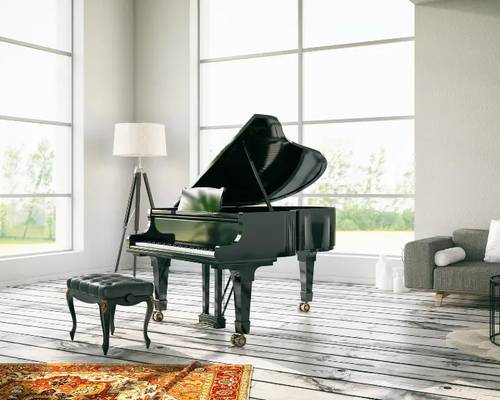
The reason Learning Piano Is Better than Multitasking in a Distracted World.
Piano learning is becoming an effective tool to reconnect attention and deep thinking in a day and age where we are bombarded with notifications and do not spend enough time in deep contemplation. The mental clarity ensured by years of discipline in the practice of the piano may be that which is afforded by very few activities because it demands constant focus, physical coordination and active listening. This paper discusses the connection between learning the piano and attention, the level of cognitive and mental discipline and the reason why more and more individuals are turning to the piano to overcome distraction in the modern world.

The Culture of Piano and Contemporary Music.
The reason why Minimalist Piano Music is becoming a sound of this decade.
The minimalist piano music has come out as one of the most effective sounds of the modern age. The style is marked by its simplicity, repetition, and restraint, and they are defining the manner in which individuals listen, create, and relate to piano music nowadays. This paper delves into the reasons behind the growth of minimalist piano in popularity all over the world, its reflection of the contemporary life, and why it is a simply a new voice of this decade.
Piano & Future Learning
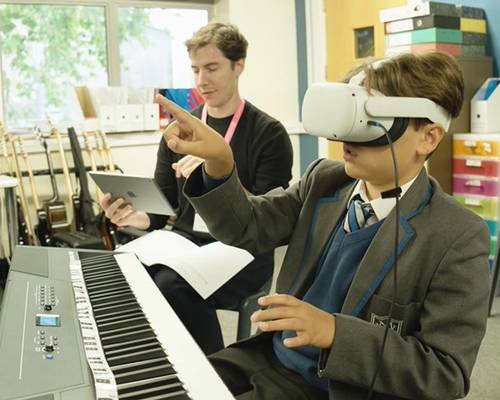
The Way AR is beginning to transform Piano Learning.
The concept of augmented reality is gradually presenting itself in the business of piano study, providing a fresh interpretation of music, technique, and practice. AR is transforming the interaction between pianists and the keyboard by combining digital guidance and physical instruments to create a new approach to playing the piano. This paper discusses the reasons behind the growing interest in augmented reality learning of piano, its functionality as well as its potential future impact on the teaching of piano.The concept of augmented reality is gradually presenting itself in the business of piano study, providing a fresh interpretation of music, technique, and practice. AR is transforming the interaction between pianists and the keyboard by combining digital guidance and physical instruments to create a new approach to playing the piano. This paper discusses the reasons behind the growing interest in augmented reality learning of piano, its functionality as well as its potential future impact on the teaching of piano.