
Piano & Focus Development
The Piano Lessons of Deep Attention in a divided World.
Attention span has become very rare in a world that is full of notifications and divided attention. Piano studying provides an excellent means of reconstructing profound attention by focusing on deliberate practicing, listening and physical skills. This paper will discuss the role of learning the piano in enhancing concentration, the way to focus becomes more natural at the piano, and how these abilities can be applied in life in other areas other than music.

The state of being distracted has become the norm amongst a number of individuals. The focus switches quickly among activities, the screen and mind, and no one can be able to remain concentrated on one activity for an extended period of time. Even a meaningful work can become typical with the desire to hear something else, interrupted by the desire to check something.
Piano produces an alternate mind state. At the instrument, concentration should not be switched. Sound, timing and movement require presence and soon disruption shows itself in an error or loss of control. This is not an external requirement. It is incorporated into the experience.
Attention is re-trained with time in learning the piano. Attention gets more concentrated, more fixed and can be maintained easier.
The Reason Deep Focus is so Hard Nowadays
The contemporary systems are meant to create attention again and again as opposed to retaining it. The frequent stimulation of the mind is what short content cycles, alerts, and consistent updates are setting the mind up to.
Such conditioning undermines the capacity to think intensively. The discomfort is manifested quickly when there is a need to work on something that involves prolonged participation. Attention is aimed at escaping but not at persevering.
To restore the depth focus, the mind requires tasks that will reward them to remain in the present instead of changing directions. This is the reward which comes with piano learning.
The way Piano Learning Requires Uninterrupted Notice

There are several types of attention that are necessary during playing the piano. The learner is obliged to follow hand movement, sound quality, rhythm as well as to predict the next thing.
When attention is lost, it is reflected in sound at once. Notes are lost, time is lost and organization is lost. Such real-time feedback is a natural way of bringing focus back.
This is due to the fact that focus is a direct determinant of the outcomes which makes the learners eager to be present without coercing themselves.
The Distinction between Surface Attention and Deep Focus
Surface attention is a rapid change of attention between stimuli. Deep focus is maintained on a single task until it has become complex.
Piano education promotes critical thinking in that it necessitates extensive attention to developing content. It is impossible to play or listen to a piece in a short attention.
The deeper the concentration, the longer the duration the learners spend in deep focus and the more they become comfortable with it.
The reason why I should listen to reinforce my focus
The learning in piano involves listening. Learners are listening but the balance, clarity, and timing are what is expected as opposed to merely pressing keys.
This active listening makes one alert. As it happens, the mind is kept busy with sound.
This skill of listening improves over time and the capacity of focus without the mental exhaustion.
The role of mental wandering that Piano Learning helps to eliminate
Mental wandering normally arises when there is no definite engagement of tasks. The learning of piano consumes the attention.
The hands are busy and listening and time should be on point. Unless it is relevant, there is little time to think.
Such complete involvement conditions the mind to stay in one experience other than drifting away.
Why It Weds Better to Woo with Degain
Most of these concentration methods depend on hard work and discipline. The learning of piano enhances concentration indirectly.
Students give attention due to enhanced sound and not because they are asked to pay attention. This is an internal motivation and focus becomes natural and not imposed.
Consequently, the concentration becomes firm without opposition.
The construction of Attentional Endurance by Repetition
At the piano repetition is not mechanical. Every repetition must be taken care of.
Improvement in listening is followed by adjustment of movement by the learners. There is not passive attention but active attention.
This active attention forms a sustained attention in the long run.
The case of Why Piano Learning Promotes Single-Tasking
Multi tasking separates the focus. Piano education does not permit it.
Attempting to divide the attention leads to loss of control. The advantages of single-tasking are felt within a short period of time by learners.
This is an experience that makes me believe in doing one thing at a time.
The Transference of the Focus outside the Piano
The emphasis that is formed in the process of playing the piano tends to be reflected in life. Students will be able to read, work, or study without facing any problem.
When distracted they are more engaged and they recover faster.
Training on concentration in the world becomes learning piano.
Why Focus is Satisfying at the Piano
Intensive concentration brings more sound and movement. Focus is a rewarding experience as a result of this positive feedback.
Students correlate focus with achievement and not hard work.
This connection reinforces the tendency to pay much attention.
How Piano Learning brings about Mental Silence.
Deep focus suppresses mental noise of the background. In the process of practice, it all revolves around sound and motion.
This quiet is not emptiness. It is clarity.
This is why practice is mentally refreshing to many learners.
The reason why Deep Focus Helps Learning Quality
Quality learning involves participation. This is evident in learning of piano.
With high levels of concentration, things get faster. Once the concentration is strained, progress halts.
The significance of attention in any learning is strengthened by this relationship.
The way Piano Learning Supports Presence
Being present implies full engagement with the present. The learning of piano facilitates presence by default.
Sound is there as long as it gets played. Learners are not anticipating or replaying but they are tied in the present.
This existence reinforces concentration and emotion control.
The reason why Focus is better things with time
Emphasis is not built in one night. Gradual development is strengthened by learning piano.
Practice might be exhausting at the beginning. With time, it becomes less difficult to concentrate on things.
This slow learning creates long-lasting concentration.
The Correlation of Calm and Focus
Meditation helps in concentration. Piano education promotes serenity by making movements and pacing slow.
Stabilization of focus occurs as the learners relax into the practice.
Natural reinforcement exists between calm and focus.
The relevance of Piano Learning to the current cognitive requirements in the modern world
The challenges of the modern world demand profound thinking and concentration. These abilities are reinforced by studies of piano.
It does not deny modern life but gives a balance to split attention.
This compatibility is the reason of its increasing popularity.
The reason why Piano is particularly effective in training focus
The piano incorporates movement, sound and timing. This incorporation requires constant focusing.
There are not many activities that one needs to concentrate on so much.
The piano itself is one of the most useful instruments of restoring deep focus.
Lasting Effect on Attentional Patterns
Attention habits become stronger after some time among the piano learners. They are more aware of distraction and they are less likely to get distracted.
It makes attention a skill and not a challenge.
Such transformation is conducive to long term learning and health.
Conclusion
The deep focus used in learning piano involves requiring people to pay close attention, listen actively and make deliberate movements. With practice, learners recreate the capacity of concentrating all their attention in a distracted world.
The area of focus skills is not limited to music but is applicable in day-to-day activities to help with clarity, productivity and calm. Learning of piano does not require separation with the modern life. It provides an opportunity to approach it in a better manner.
Piano education is a viable and sustainable way of reconnecting with richness and immediacy in an era when attention is becoming progressively weaker.
More from the blog
Keep exploring new ideas
Piano: Psychological Development.
How Piano Learning Improves Memory Over Time
The process of learning, adaptation, and growth of people is mainly driven by memory. Learning Piano has emerged as one of the effective techniques of memory reinforcement via formal repetition, auditory, coordination and recalling over time. This article discusses the process by which practicing piano develops various forms of memory, reasons why these advantages become increasingly more effective, and how the benefits of learning a piano help to retain in the minds of non-musical areas.
Piano & Skill Development
How Piano Practice Builds Consistency and Self-Discipline
Self-discipline and consistency are crucial personal qualities in the contemporary life but are becoming more challenging to master. The learning of piano provides a natural and effective method of developing both in a structured form of learning, in a progressive manner and through long term commitment. This paper will examine how practice in the piano will develop the consistency over the time, why the self-discipline will develop naturally at the instrument and the applicability of these abilities far beyond music in the life.
Piano & Lifelong Learning
The Reason behind the Rise of Piano Learning among Mature Beginners in the world.
The world has witnessed a potent surge in piano learning among adult learners. More individuals are learning the piano later in their lives and this is due to the flexibility of digital tools, lifestyles and now people are more focused on their personal development. The article discusses the reasons why this trend is being experienced, how adult learners treat piano differently, and why this trend is transforming the contemporary culture of the piano.
Piano & Modern Skills
The reason Learning Piano Is Better than Multitasking in a Distracted World.
Piano learning is becoming an effective tool to reconnect attention and deep thinking in a day and age where we are bombarded with notifications and do not spend enough time in deep contemplation. The mental clarity ensured by years of discipline in the practice of the piano may be that which is afforded by very few activities because it demands constant focus, physical coordination and active listening. This paper discusses the connection between learning the piano and attention, the level of cognitive and mental discipline and the reason why more and more individuals are turning to the piano to overcome distraction in the modern world.
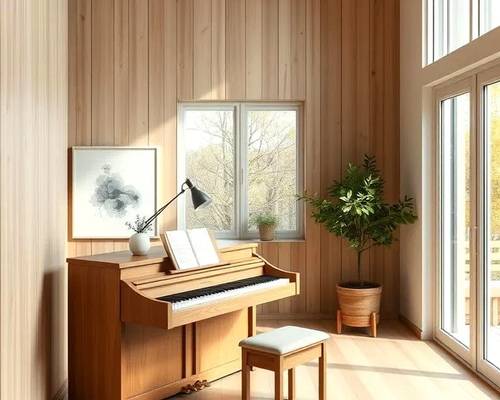
The Culture of Piano and Contemporary Music.
The reason why Minimalist Piano Music is becoming a sound of this decade.
The minimalist piano music has come out as one of the most effective sounds of the modern age. The style is marked by its simplicity, repetition, and restraint, and they are defining the manner in which individuals listen, create, and relate to piano music nowadays. This paper delves into the reasons behind the growth of minimalist piano in popularity all over the world, its reflection of the contemporary life, and why it is a simply a new voice of this decade.
Piano & Future Learning
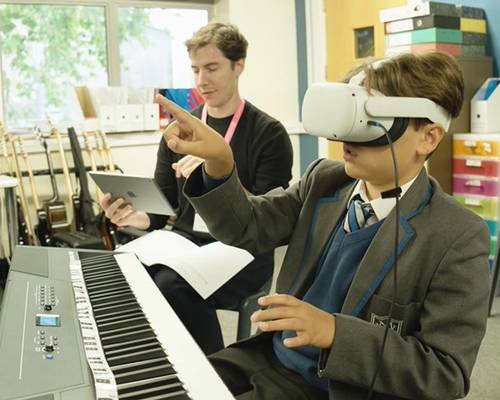
The Way AR is beginning to transform Piano Learning.
The concept of augmented reality is gradually presenting itself in the business of piano study, providing a fresh interpretation of music, technique, and practice. AR is transforming the interaction between pianists and the keyboard by combining digital guidance and physical instruments to create a new approach to playing the piano. This paper discusses the reasons behind the growing interest in augmented reality learning of piano, its functionality as well as its potential future impact on the teaching of piano.The concept of augmented reality is gradually presenting itself in the business of piano study, providing a fresh interpretation of music, technique, and practice. AR is transforming the interaction between pianists and the keyboard by combining digital guidance and physical instruments to create a new approach to playing the piano. This paper discusses the reasons behind the growing interest in augmented reality learning of piano, its functionality as well as its potential future impact on the teaching of piano.