
Piano & Music Technology
The Influence of AI on the process of learning Piano today.
The learning of piano is being quickly automated by artificial intelligence, which is changing the way a beginner learns and also the way an expert learns to perfect their virtuosity. Piano applications based on AI have the potential to transform practice routines, access, and inspiration, including real-time feedback and adaptive learning journeys. The article examines the reasons why AI-powered learning on the piano is such a widely-discussed phenomenon in the contemporary music education and what it can really signify to the contemporary pianists.

The acquisition of piano has always been a known course. A learner sits next to the teacher, rehearses the given passages, and works through repetitions and corrections. Although the model has been successful in creating generations of skilled musicians, it has equally not been changed much over decades. However, over the past few years, there has been a massive change which has started happening. Artificial intelligence is making the process of learning piano more accessible, personal, and adaptive than ever before.
It is not a change of replacing teachers or getting rid of discipline. It is regarding the improvement of the learning process with the help of the intelligent responsive technology that takes into consideration individual progress. It is now possible to have AI-driven piano applications listening, analyzing and instructing students in real time. This is the first time that learning of piano seems interactive to many students other than being in a lesson room.
Piano learning is a focal point of AI implementation in the field of music education as AI is increasingly integrated into the educational process.
The reason Piano Learning was prepared to enter the technological shift
There have been some challenges in the process of piano education. Availability of quality teaching is dependent on place and price. Practice is usually done in isolation, without the feedback, which may confuse or delay development speed. The lack of motivation may occur when the learners are not sure that they are moving in the right direction.
Video lessons and static apps have tried to solve these problems earlier with the use of technology. Nevertheless, these tools were not responsive. They were able to demonstrate what to play, but not to listen or respond. AI modifies this situation completely.
AI systems can now engage and communicate with learners and not passively teach them because they analyze pitch, rhythm, timing and dynamics. This sensitivity renders piano learning to be guided even during individual practice.
Why Ai Piano Learning is Better Than Traditional Apps.
Piano applications in the past were based on lessons and pre-recorded lessons. Artificial intelligence platforms work in a different way. They are flexible to the behavior of the learner as opposed to imposing a strict system on the learner.
AI devices hear the notes being played and identify errors immediately and modify the practice. When one of the learners may have a problem in timing, the system becomes slow. In case of accuracy improvement, the system becomes more challenging. Such a dynamic behavior is a reflection of the real-time reaction of a human teacher.
The outcome is an individualized and not a generic learning experience.
Real-Time Feedback and its Importance
Among the most important benefits of AI learning a piano, the real-time feedback should be mentioned. When traditional practice is used, students usually make errors that are not corrected or noticed till the next lesson. At this stage, bad habits could be already cemented.
The system of AI creates errors when they occur. They point out missed notes, bad rhythm and timing immediately. This instant reaction eliminates the possibility of bad habits and makes practice activities effective.
To most learners, this feedback brings out clarity. They are not given an opportunity to guess whether something sounds right, but rather they are directly confirmed or corrected.
The ways AI Drives Skill Customization
All people who play the piano learn differently. Others are rhythmically challenged, some lack coordination or are unable to read music. The conventional instruction usually encompasses conventionalized approaches which might not be flawlessly fitting to the requirements of every student.
AI systems evaluate performance data in the long run. They follow the developmental trends, strengths, and weaknesses. According to this information, lessons adapt automatically. A learner with left hand coordination difficulty might be given more specific exercises whereas another learner may be given more sight-reading exercises or tempo regulation.
This degree of individualism renders learning easier and less aggravating.
Accessibility and the Global Piano Learning Boom

Artificial intelligence (AI) in learning the piano has increased opportunities of acquiring musical education tremendously. Students with no teachers may now be guided in a systematic manner. Adults who are in a hectic schedule can practice at their convenient time. Young learners that find formal lessons to be daunting may commence privately.
This has increased learning of the piano all over the world due to this accessibility. Piano is now more than ever being taught to more people later in life frequently via AI platforms that do not appear threatening.
Geography has ceased to constrain the piano and strict time schedules.
The way AI Modifies the Practice Habits
Most of the piano development occurs during practice, but this is where the learners have their most drastic problems. Without direction, practice might be repetitive, unconcentrated or depressing.
AI reforms practice through creating structure without coercion. The sessions are usually shorter and more productive as learners are directed on what to improve. Development can be quantified instead of being abstract.
Such transformation promotes uniformity. Motivation will automatically be boosted when learners realize a tangible improvement.
The Psychological Effect of AI Learning
A psychological impact of AI learning a piano is one of the aspects that have not been properly addressed. Most students drop piano because of self-doubt or nervousness. The AIs eliminate the human factor.
Learners do not experience an evaluation by someone but instead by a system that helps them grow. Errors are considered as data, rather than failures. This provides a less threatening learning experience, particularly among the adults who are afraid of being embarrassed.
Confidence is enhanced when one feels it is progressing.
Is AI a Substitute of Piano Teachers?
It is one of the questions that come up when considering AI in the field of music education. The reality is more nuanced. AI does not supersede teachers, it alters their usage.
The teachers are still required in the areas of interpretation, musicality, emotional expression, and artistic guidance. AI is good in repetition, feedback and structure. On the combination, the two form a strong learning ecosystem.
The use of AI in teaching is now becoming common in many schools, with lessons being more expression-oriented as AI assists in daily application.
The effectiveness of AI among beginners is why it is particularly effective
Novices can use AI guidance the most. Habits are formed fast and once it is late it is hard to reverse the errors. AI supports novices to develop proper habits.
It is less intimidating to learn by having someone to give you guidance on the course of action. Novices do not feel confused between classes or clueless about the way to practice.
This support at an early age raises retentions and lowers the levels of dropouts.
Limitations and Worries of AI Piano Learning
Although it has many benefits, there are a few drawbacks associated with AI learning of the piano. AI is not able to comprehend music or art emotion and nuances. It can have some problems with expressive rubato or style interpretation.
Also, excess use of AI may cause mechanical playing in case learners do not focus on musicality. This is the reason why there is a need of balance. AI cannot replace musical cognizance as it is a useful tool.
Learning these limitations can result in improved health.
The reason why this trend is increasing at such a high rate
Noise, convenience, and quantifiable outcomes contribute to the rapid development of AI learning of the piano. The learners of today do not see technology getting adjusted to them but rather the vice versa.
The use of AI in the field of piano education is growing as it is more precise and affordable. The trend portrays the wider transformation in the learning skills of people in the digital era.
The education of the piano is changing in line with the current demands.
The Future of Piano With AI
In the future, AI learning of piano is probably going to be more immersive. The voice input, emotional recognition, and more profound musical explanation can be incorporated in the nearest future. It is probable that hybrid learning systems will be implemented to incorporate both teachers, AI, and community systems.
The AI might enhance the tradition of piano, instead of diluting it by ensuring it is easier and more sustainable to learn.
The piano has endured the test of time but the manner in which it is being learnt is evolving.
The reason why Pianists must accept this change
Resistance is not uncommon when change is introduced particularly in conventional areas. But history indicates that instruments and training go hand in hand. The adoption of AI does not imply that we must ignore the tradition; it is about increasing the opportunity.
Adaptive pianists become flexible. Educators that embrace AI become efficient. Those learners who adopt it acquire confidence and consistency.
The objective is the same: an effective musical development.
Conclusion
The learning of piano is being transformed through AI. Its use can help to overcome the perennial problems of music education through personalization, real-time feedback, and accessibility. Although it does not substitute human teachers or the artistic interpretation, it contributes to the learning process in a manner that it has never been before.
With this trend ever increasing, the pianists get one chance to learn smarter, practice better and remain engaged longer. The future of learning the piano is not digital or traditional. It is intelligently blended.
More from the blog
Keep exploring new ideas
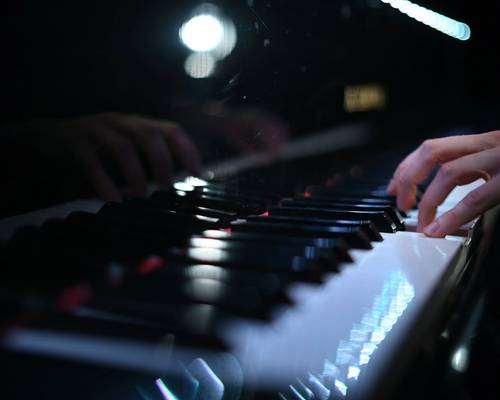
Piano: Psychological Development.
How Piano Learning Improves Memory Over Time
The process of learning, adaptation, and growth of people is mainly driven by memory. Learning Piano has emerged as one of the effective techniques of memory reinforcement via formal repetition, auditory, coordination and recalling over time. This article discusses the process by which practicing piano develops various forms of memory, reasons why these advantages become increasingly more effective, and how the benefits of learning a piano help to retain in the minds of non-musical areas.

Piano & Skill Development
How Piano Practice Builds Consistency and Self-Discipline
Self-discipline and consistency are crucial personal qualities in the contemporary life but are becoming more challenging to master. The learning of piano provides a natural and effective method of developing both in a structured form of learning, in a progressive manner and through long term commitment. This paper will examine how practice in the piano will develop the consistency over the time, why the self-discipline will develop naturally at the instrument and the applicability of these abilities far beyond music in the life.

Piano & Lifelong Learning
The Reason behind the Rise of Piano Learning among Mature Beginners in the world.
The world has witnessed a potent surge in piano learning among adult learners. More individuals are learning the piano later in their lives and this is due to the flexibility of digital tools, lifestyles and now people are more focused on their personal development. The article discusses the reasons why this trend is being experienced, how adult learners treat piano differently, and why this trend is transforming the contemporary culture of the piano.
Piano & Modern Skills
The reason Learning Piano Is Better than Multitasking in a Distracted World.
Piano learning is becoming an effective tool to reconnect attention and deep thinking in a day and age where we are bombarded with notifications and do not spend enough time in deep contemplation. The mental clarity ensured by years of discipline in the practice of the piano may be that which is afforded by very few activities because it demands constant focus, physical coordination and active listening. This paper discusses the connection between learning the piano and attention, the level of cognitive and mental discipline and the reason why more and more individuals are turning to the piano to overcome distraction in the modern world.

The Culture of Piano and Contemporary Music.
The reason why Minimalist Piano Music is becoming a sound of this decade.
The minimalist piano music has come out as one of the most effective sounds of the modern age. The style is marked by its simplicity, repetition, and restraint, and they are defining the manner in which individuals listen, create, and relate to piano music nowadays. This paper delves into the reasons behind the growth of minimalist piano in popularity all over the world, its reflection of the contemporary life, and why it is a simply a new voice of this decade.
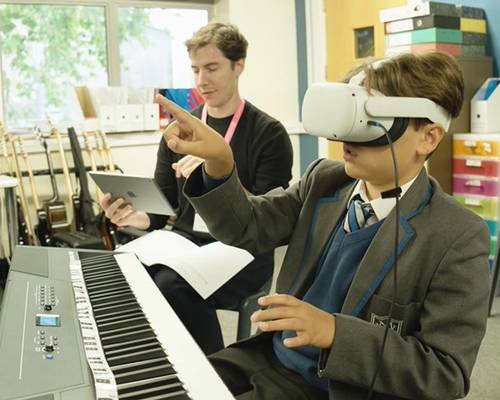
Piano & Future Learning
The Way AR is beginning to transform Piano Learning.
The concept of augmented reality is gradually presenting itself in the business of piano study, providing a fresh interpretation of music, technique, and practice. AR is transforming the interaction between pianists and the keyboard by combining digital guidance and physical instruments to create a new approach to playing the piano. This paper discusses the reasons behind the growing interest in augmented reality learning of piano, its functionality as well as its potential future impact on the teaching of piano.The concept of augmented reality is gradually presenting itself in the business of piano study, providing a fresh interpretation of music, technique, and practice. AR is transforming the interaction between pianists and the keyboard by combining digital guidance and physical instruments to create a new approach to playing the piano. This paper discusses the reasons behind the growing interest in augmented reality learning of piano, its functionality as well as its potential future impact on the teaching of piano.