
Piano & Mindful Living
The article How Learning Piano is a Good Way to Live in a Busy World is an encouragement to live mindfully.
Conscious living is becoming more significant in this era of a busy and accelerated life. Learning the piano provokes a natural way of reaching mindfulness through the encouragement of presence, attention and deliberate action. This paper will address the question of how learning piano can help people live mindfully, the reason why it helps people to slow down and not stop progress, the way habits developed playing the instrument affect life outside of music.

The contemporary life tends to be hectic and ruthless. Calendars are full, there is not enough time to pay attention and it seems that there is less time to spend in silence. People also change their tasks without living in any of them, which gives them the impression of constant movement without depth. This trend brings frustration and alienation as opposed to satisfaction over time.
Mindful living aims to rebuild balance by promoting the preservation of what is happening in the present. Mindfulness is somehow equated with stillness, but mindfulness can also be trained by engaging in active activities. One of the most effective active routes to the state of mindfulness is provided by piano learning.
When playing the piano it should be sound, movement, and timing. This concentration subtly leads the learner into the present moment with the creation of awareness in a non-coercive way. Mindful living is not something one has to struggle with, but it is something one should do habitually.
The Real meaning of Mindful living in the present day
A mindful living is not about evading responsibility and stagnating life to a crawl. It has to do with complete involvement with what is going on in the present instead of running on autopilot.
Confusion is substituted by awareness. Reaction is substituted by intention. This change gives individuals a chance to perceive the everyday events in a more pronounced and meaningful way.
Piano learning is inherently connected with this approach. It does not need a philosophical teaching. Mindfulness is brought out during action.
Why the contemporary life draws away attention

The environment in the contemporary world is made to be attention grabbing. Thought can never find a rest in the face of notifications, updates and streams of information.
This disintegration renders the ability to be in long-term awareness challenging. Even when people are resting, they are usually engaged in passive consumption.
The process of reconnecting is purposeful and cannot be achieved without a pleasurable activity that requires all the attention. Piano education is a solution to this requirement.
The role of Piano Learning in Holding Attention in the Now
Sound anchoring is achieved by playing the piano. Every note subsists solely in the playing of it. Focus can not be lost without being immediately paid.
Listening needs to be coordinated with hands. The intention must be met by timing. This assimilation draws consciousness into the present.
Piano learning does not demand much presence as opposed to activities that permit the wandering mind.
Sound and awareness Relationship
Sound unfolds in time. There is no way it can be hurried or skipped, meaning it will not make sense.
This present condition promotes patience. Learners not only listen to what they play, but the development of sound.
By listening, there is greater awareness. The attention becomes receptive and not reactive.
The reasons why practicing the piano is a good idea to slow down
When the speed is low, the development at the piano is enhanced. Pacing makes it clear of movement, timing and tone.
This decelerates the whole experience. Breathing steadies. Thoughts settle. There is a reaction of the nervous system to the slowing down.
Avoiding haste is a realistic decision and not a discipline taken.
The Origins of Mindfulness without Teaching
Mindfulness is not taught in piano learning. It develops circumstances in which mindfulness is manifested.
Attention is required. The absence of concentration is felt. The creation of awareness is not theorized but through feedback.
Learners are mindful as opposed to struggling to be so.
Why Piano Learning Fells Grounding
Grounding means that one feels related to the body and the present moment. This is reinforced by learning piano with the physical involvement.
The feel of keys, the heaviness of movement and the feel of sound bring consciousness home.
This grounding is opposed to the abstractness of most of the modern tasks.
The way Repetition Enhances Mindful Attention
Monotony on the piano brings about sensitive consciousness. Each time it is repeated there are minor variations in sound and motion.
Repetition does not make things dull but it sharpens thought. Students observe subtlety and are selective.
Such care enhances conscious involvement.
And the reason why Piano Learning Coerces Acceptance
Mindfulness is the process of not judging and being conscious of what is going on. This attitude is supported by the learning of piano.
Errors are educative and not personal. Students are learners who see results and change gradually.
Frustration is substituted with acceptance. Resistance is substituted with awareness.
The Piano and the Piano Practice: The Role of Silence
The silence is a key element of music. Breaks define speech and articulation.
Learners learn to be comfortable with silence through learning piano. It is meaningful as opposed to uncomfortable.
This ease of silence is in favor of conscious lives outside music.
The way Piano Practice Forms Mental Space
Mental space enables thoughts to emerge and flow without congestions. The space is achieved in the practice of piano through concentration.
The focus is on sound as opposed to racing thoughts. Mental rubbish subsides naturally.
This is clear and helps in balance of emotions and tranquility.
Why Mindful Attention is better than Music in expressing it
With the increased awareness, expression becomes deliberate. Students do not think automatically but develop sound.
Presence is reflected in expression. Sound does not have tension it has clarity.
The quality of music improves due to mindfulness.
How Piano Learning Sources Mindfulness to Everyday Life
The care taken in the piano usually has its manifestation elsewhere. During their everyday activities, learners get to be more conscious of their posture, breathing, and attention.
They observe attention lapse and help bring attention to them.
Mindfulness is an integrated not separate thing.
The way Piano learning favors Emotional Awareness
Sound is affected by emotional states instantaneously. There is tension, hesitation, calm and confidence.
This response prompts emotional sensitivity. Students observe internal conditions without having to interpret them.
Being conscious is a contributor of equilibrium and not domination.
The way Piano Learning Promotes Time intentionality
The time spent at the piano is purposeful. Exercising sessions have distinct starting and finishing points.
This transparency is opposite to time spent in the realm of the Internet, when minutes become confused.
Intense practice would enable learners to have a more healthy relationship with time.
The need of Mindful Living to Be Engaged, Not to Escape
Being mindful does not mean being irresponsible. It is concerning being in the present.
This engagement is supported by piano learning through aspect of challenge and focus.
Mindfulness is activated instead of being passive.
The Routine in the mindful practice
Rhythm is formed when practice on a piano is regular. Rhythm helps in creating awareness through organization.
Mental resistance is decreased by routine. When it is familiar, it becomes easier to be aware.
Resilience reinforces conscious behaviors.
The reason Piano Learning Fits the Current Well-Being Requirements
The current happiness demands harmony between action and consciousness. Piano is a combination of the two.
It requires hard work and advocating composure. Growth occurs without rush.
This correlation is the reason why it has become increasingly relevant.
The ways through which Piano Learning fosters Reflection
This reflection will be seen as a natural progression of practice. Students take breaks, tune in, and tune out.
This reflective practice makes it stronger in terms of awareness and intentionality.
Reflection promotes learning as a process.
The reason why Mindfulness Growth Thru Piano Is Sustainable
Effort-based mindfulness tends to pass. Mindfulness based on piano is maintained by custom.
Due to the fact that awareness is activity-related, it is dynamic.
This sustainability promotes sustainability.
The Cultural Change to Presence
Presence is useful as the distraction enhances. Actions that assist in raising awareness become significant.
This cultural change can be traced in piano learning.
It rejuvenates mind by participation as opposed to evading.
The reason why Piano is exceptionally effective towards mindful living
The piano amalgamates sound, motion and time. Awareness is required in this integration.
There are not many activities that need to be present so much.
Piano is still singly matched to conscious interaction.
Long-term Effect on Life Quality
In the long run, learners of piano complain less of bewilderment, unintelligibility, and lack of concentration in their everyday lives.
Activities that are mindful are not just limited to practice. Consciousness is incorporated in identity.
These modifications contribute to well-being.
The reasons why Mindful Living is more than ever
With the increase in the speed of life, it becomes necessary to be capable of being present.
Piano education provides a sure way to this skill.
It promotes experience-based awareness as opposed to teaching.
Conclusion
Practicing piano leads to mindfulness because it grounds oneself in the auditory, bodily, and existential. Awareness in the form of practicing comes automatically without the strains of force.
The piano instructs one to slow down and stay interested, to accept and not to resist, as well as to be a listener. These practices are carried into life with the aim of maintaining sanity and stability.
Piano learning provides more than music in the hectic world. It provides a means of living consciously, deliberately and fully.
More from the blog
Keep exploring new ideas
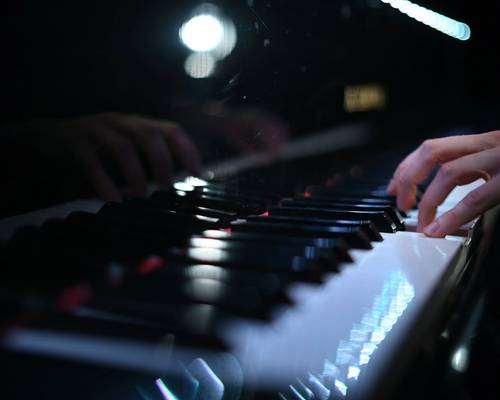
Piano: Psychological Development.
How Piano Learning Improves Memory Over Time
The process of learning, adaptation, and growth of people is mainly driven by memory. Learning Piano has emerged as one of the effective techniques of memory reinforcement via formal repetition, auditory, coordination and recalling over time. This article discusses the process by which practicing piano develops various forms of memory, reasons why these advantages become increasingly more effective, and how the benefits of learning a piano help to retain in the minds of non-musical areas.
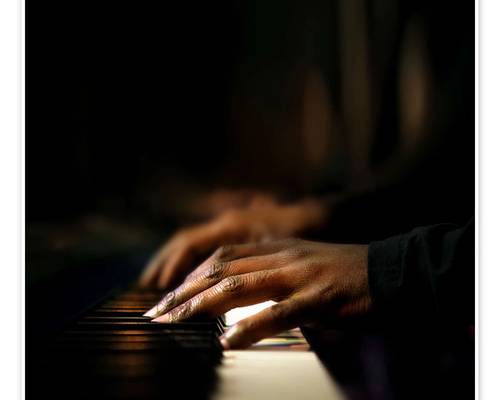
Piano & Skill Development
How Piano Practice Builds Consistency and Self-Discipline
Self-discipline and consistency are crucial personal qualities in the contemporary life but are becoming more challenging to master. The learning of piano provides a natural and effective method of developing both in a structured form of learning, in a progressive manner and through long term commitment. This paper will examine how practice in the piano will develop the consistency over the time, why the self-discipline will develop naturally at the instrument and the applicability of these abilities far beyond music in the life.
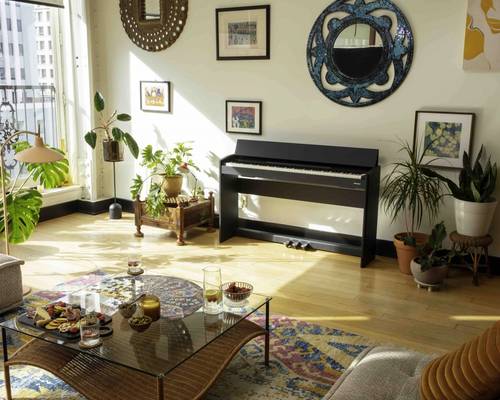
Piano & Lifelong Learning
The Reason behind the Rise of Piano Learning among Mature Beginners in the world.
The world has witnessed a potent surge in piano learning among adult learners. More individuals are learning the piano later in their lives and this is due to the flexibility of digital tools, lifestyles and now people are more focused on their personal development. The article discusses the reasons why this trend is being experienced, how adult learners treat piano differently, and why this trend is transforming the contemporary culture of the piano.
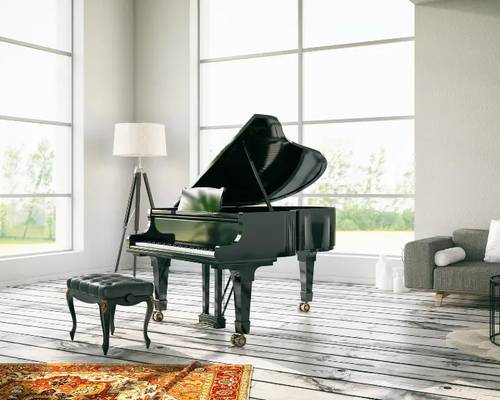
Piano & Modern Skills
The reason Learning Piano Is Better than Multitasking in a Distracted World.
Piano learning is becoming an effective tool to reconnect attention and deep thinking in a day and age where we are bombarded with notifications and do not spend enough time in deep contemplation. The mental clarity ensured by years of discipline in the practice of the piano may be that which is afforded by very few activities because it demands constant focus, physical coordination and active listening. This paper discusses the connection between learning the piano and attention, the level of cognitive and mental discipline and the reason why more and more individuals are turning to the piano to overcome distraction in the modern world.
The Culture of Piano and Contemporary Music.
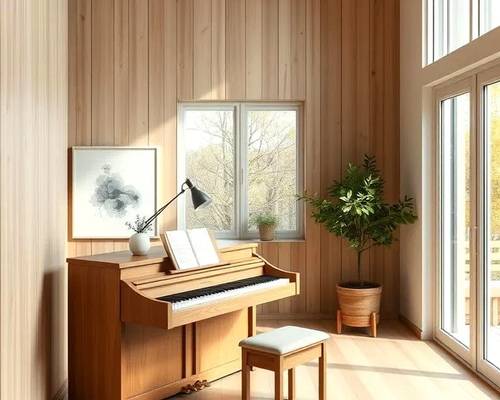
The reason why Minimalist Piano Music is becoming a sound of this decade.
The minimalist piano music has come out as one of the most effective sounds of the modern age. The style is marked by its simplicity, repetition, and restraint, and they are defining the manner in which individuals listen, create, and relate to piano music nowadays. This paper delves into the reasons behind the growth of minimalist piano in popularity all over the world, its reflection of the contemporary life, and why it is a simply a new voice of this decade.
Piano & Future Learning
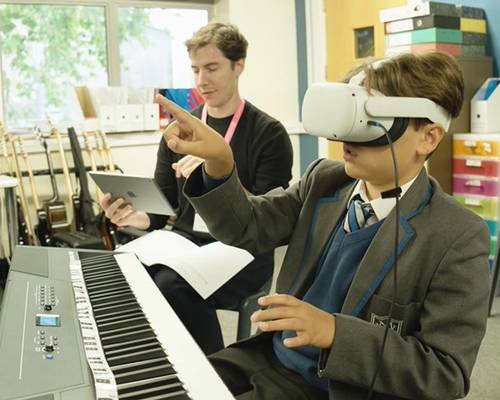
The Way AR is beginning to transform Piano Learning.
The concept of augmented reality is gradually presenting itself in the business of piano study, providing a fresh interpretation of music, technique, and practice. AR is transforming the interaction between pianists and the keyboard by combining digital guidance and physical instruments to create a new approach to playing the piano. This paper discusses the reasons behind the growing interest in augmented reality learning of piano, its functionality as well as its potential future impact on the teaching of piano.The concept of augmented reality is gradually presenting itself in the business of piano study, providing a fresh interpretation of music, technique, and practice. AR is transforming the interaction between pianists and the keyboard by combining digital guidance and physical instruments to create a new approach to playing the piano. This paper discusses the reasons behind the growing interest in augmented reality learning of piano, its functionality as well as its potential future impact on the teaching of piano.