
Techniques for Beginners
Piano Finger Techniques for Beginners
Piano Finger Techniques to improve the speed, control, accuracy, and hand strength in beginners. Fire the drills, drills, and tricks to play without problems.
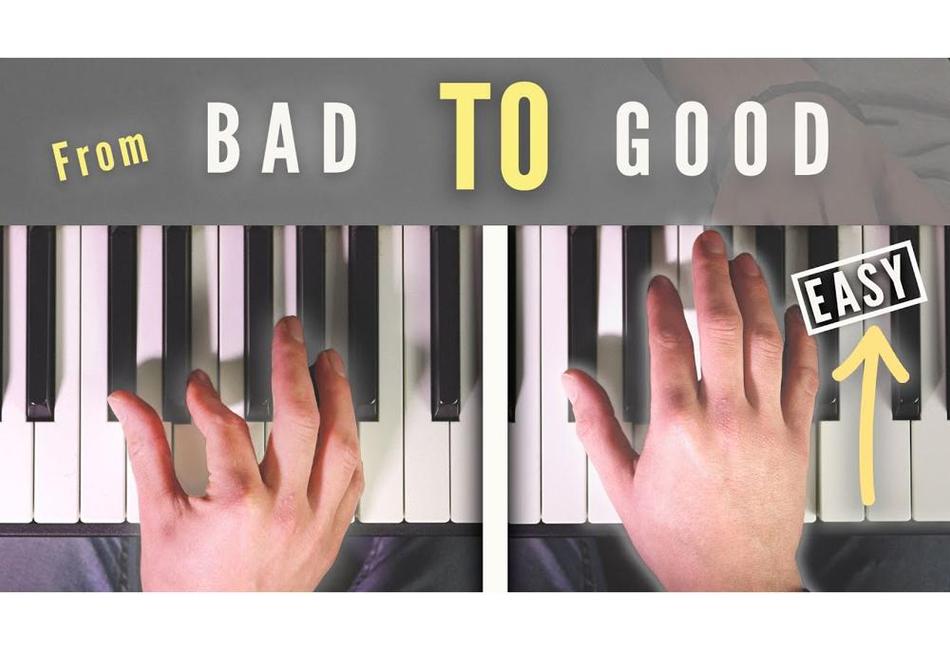
Beginner Piano Finger Techniques - Make Your Finger Playing Faster, Controllier, and More Accurate.
Piano Finger Techniques Beginners allow new players to develop strength, coordination and precision.
Once you learn to move your hands the right way at an early age, bad habits are avoided and all melodies become easier to play.
This handbook describes the essential skills, practices, and drills to make the fingers stronger and the hands more in control.
The Importance of Finger Technique to all Beginners.
The playing of the piano is based on the finger technique.
A beginner usually finds it difficult since the hands are stiff or weak.
A correct technique will assist you in playing smoothly, tension will be lowered and mastering of songs will be quicker.
Once you learn the right movements at the early stages, there is no need to worry about the rest.
Strong fingers enhance precision whether you are learning chords, learning beginning melodies, or scales.
Viable technique can also avoid fatigue and ensure the comfort of long practice periods.
Proper Hand Position: What a Newcomer Needs to Know.
Effective playing of the piano requires a free hand posture.
Your fingers need to be curved in such a way that they hold a small ball.
This enables you to access keys without inflexibility.
Your wrists must be straight, not so high or so low that they are too uncomfortable.
Do not press the keys hard.
Allow your fingers to drop softly, but in control.
Novices should keep in mind that free motion results in quicker learning.
The daily practice in the right position will assist in the development of automatic coordination.
Advantages of Learning to Master Piano Fingers as a Beginner.
- Helps develop finger muscles and go faster.
- Plays better and more accurately.
- Decreases tension and stiffness of hands.
- Eases the learning of chords and scales.
- Helps achieve the developmental progress and trust.
Strengthening Your Fingers Exercises.
The most appropriate way of improving finger technique is to do simple exercises.
Begin slowly and then gradually increase.
Putting the emphasis on accuracy initially creates the confidence and minimizes errors.
Tapping each finger on a flat surface is one of the exercises that are useful.
Hold up only one finger and hold the rest of the fingers loose.
This is useful to practice being independent and you are ready to play more advanced.
Number List: Advanced Finger Technique Steps.
Your fingers should be naturally curved and then you should put them on the keys.
- Hold your practice with the wrist relaxed.
- Practice at a slow speed with each finger separately.
- Small patterns, like C-D-E-F-G, should be practiced.
- Slow tempo gradually and increase it when accuracy increases.
Scales Practice To Enhance Finger Movement.
- One of the best possible tools that can be used by beginners is scale.
- Begin with C major scale as it comprises of white keys only.
- Slow play with emphasis on transitions between each finger.
- This assists in creating accuracy and hand coordination is enhanced.
- Get used to climbing and descending a number of times every day.
- A metronome can be used to be steady.
- Scales are practiced regularly and this enhances confidence and timings.
- The fingers will become more natural with time to move across the keyboard.
Clarifying Simple Patterns to Enhance Finger Control.
- Predictable finger movement develops in beginners through common patterns of notes.
- Such patterns as 1-2-3-2 or 1-3-5 reinforce coordination in both hands.
- These patterns result in muscle memory and enhance smoothness.
- Short sections practice.
- Use your right hand first then your left hand.
- When you feel at ease, play one hand with the other.
- This gives you well-rounded ability and prepares you to actual songs.
- Finger Numbering is a better technique to use.
- Finger numbers indicate the correct positioning of hands.
- Thumb = 1, index = 2, middle = 3, ring = 4 and little finger = 5.
This system facilitates easy tutorial and sheet music reading, as well as online lessons
- In beginners, interdigital transitions are an issue.
- You are able to learn faster by using finger numbers and less confusion.
- Further, with time, you will be able to react to every number with your fingers.

Training Left-Hand Finger Technique.
- Most novices have a weaker left hand as opposed to the right one.
- Left-hand exercises are a separate exercise which assists in achieving balance.
- Single patterns such as C-E-G enhance rhythm and precision.
- Hand control is reinforced by repeating these patterns on a daily basis.
- Left-hand exercises should not be hurried.
- Concentrate on the even motion and equal pressure on each key.
- This guarantees that the hands are well built and they work together well.
FAQs
- Piano Finger Techniques: The best beginner techniques.
- The most effective of them are curved fingers, loose wrists, finger independence, and easy scales such as C major.
- What is the frequency of practice of Piano Finger Techniques Beginners?
- It is effective when practiced 10 to 15 minutes a day.
- The power and control are developed through short and regular practice.
- Piano Finger Techniques for Beginners help you to be fast.
- Yes, proper technique will advance speed as it makes fingers stronger and less tense in movement.
Conclusion
Piano Finger Techniques beginners are conducive towards fast advancement, greater control and better accuracy.
Through easy exercises, right posture and daily practice, beginners are able to establish a good ground.
Take it slow and steady, loosen your hands, and have fun as your fingers grow more and more competent and proficient.
More from the blog
Keep exploring new ideas
Piano: Psychological Development.
How Piano Learning Improves Memory Over Time
The process of learning, adaptation, and growth of people is mainly driven by memory. Learning Piano has emerged as one of the effective techniques of memory reinforcement via formal repetition, auditory, coordination and recalling over time. This article discusses the process by which practicing piano develops various forms of memory, reasons why these advantages become increasingly more effective, and how the benefits of learning a piano help to retain in the minds of non-musical areas.

Piano & Skill Development
How Piano Practice Builds Consistency and Self-Discipline
Self-discipline and consistency are crucial personal qualities in the contemporary life but are becoming more challenging to master. The learning of piano provides a natural and effective method of developing both in a structured form of learning, in a progressive manner and through long term commitment. This paper will examine how practice in the piano will develop the consistency over the time, why the self-discipline will develop naturally at the instrument and the applicability of these abilities far beyond music in the life.

Piano & Lifelong Learning
The Reason behind the Rise of Piano Learning among Mature Beginners in the world.
The world has witnessed a potent surge in piano learning among adult learners. More individuals are learning the piano later in their lives and this is due to the flexibility of digital tools, lifestyles and now people are more focused on their personal development. The article discusses the reasons why this trend is being experienced, how adult learners treat piano differently, and why this trend is transforming the contemporary culture of the piano.
Piano & Modern Skills
The reason Learning Piano Is Better than Multitasking in a Distracted World.
Piano learning is becoming an effective tool to reconnect attention and deep thinking in a day and age where we are bombarded with notifications and do not spend enough time in deep contemplation. The mental clarity ensured by years of discipline in the practice of the piano may be that which is afforded by very few activities because it demands constant focus, physical coordination and active listening. This paper discusses the connection between learning the piano and attention, the level of cognitive and mental discipline and the reason why more and more individuals are turning to the piano to overcome distraction in the modern world.

The Culture of Piano and Contemporary Music.
The reason why Minimalist Piano Music is becoming a sound of this decade.
The minimalist piano music has come out as one of the most effective sounds of the modern age. The style is marked by its simplicity, repetition, and restraint, and they are defining the manner in which individuals listen, create, and relate to piano music nowadays. This paper delves into the reasons behind the growth of minimalist piano in popularity all over the world, its reflection of the contemporary life, and why it is a simply a new voice of this decade.
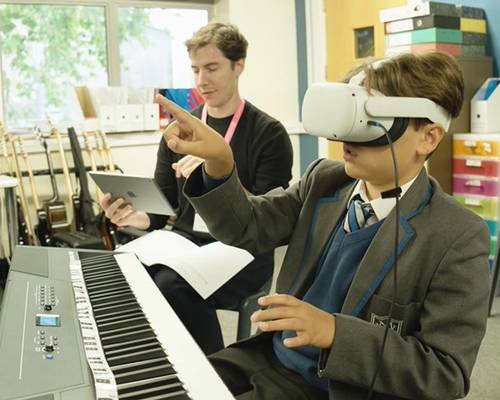
Piano & Future Learning
The Way AR is beginning to transform Piano Learning.
The concept of augmented reality is gradually presenting itself in the business of piano study, providing a fresh interpretation of music, technique, and practice. AR is transforming the interaction between pianists and the keyboard by combining digital guidance and physical instruments to create a new approach to playing the piano. This paper discusses the reasons behind the growing interest in augmented reality learning of piano, its functionality as well as its potential future impact on the teaching of piano.The concept of augmented reality is gradually presenting itself in the business of piano study, providing a fresh interpretation of music, technique, and practice. AR is transforming the interaction between pianists and the keyboard by combining digital guidance and physical instruments to create a new approach to playing the piano. This paper discusses the reasons behind the growing interest in augmented reality learning of piano, its functionality as well as its potential future impact on the teaching of piano.