
Piano Learning Guide.
How to Build Hand Coordination on Piano: A Complete Beginner's Guide
Hand coordination is one of the most challenging skills for piano beginners. This complete guide explains why coordination feels difficult, how the brain learns independent hand movement, and which step-by-step exercises help beginners develop smooth, confident hands-together piano playing.
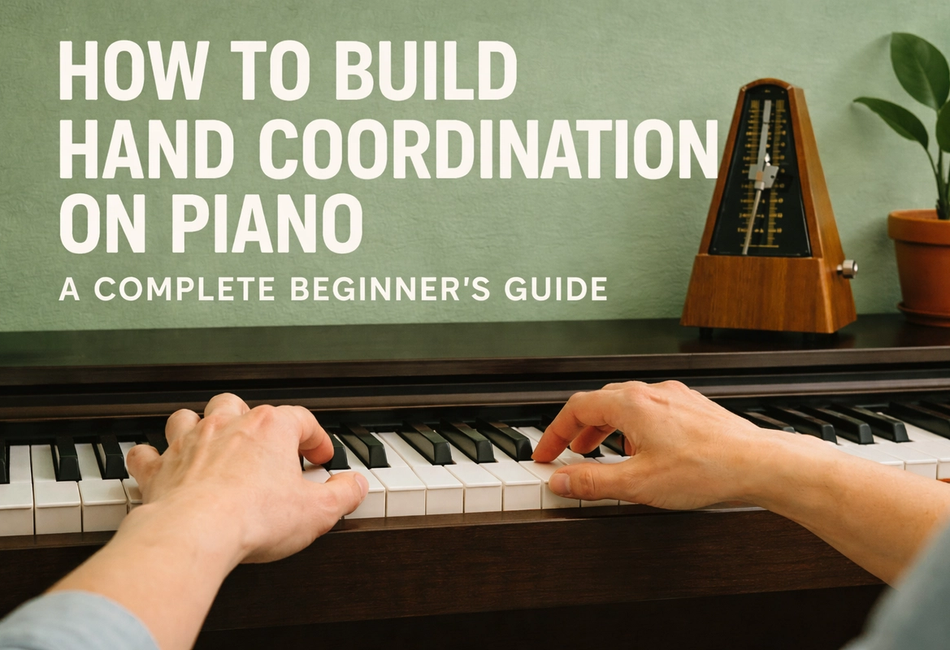
Hand coordination is the greatest challenge to most beginners of the piano. It is usually quite easy to play with one hand and once it is time to use both, the whole situation goes wrong. Notes collide, rhythm is actually disrupted, fingers are not cooperative. This experience is discouraging but it is also quite normal.
The coordination of hands on piano is not something that you are born with. It is something that you have to learn over time. When playing piano, your brain is requested to put in several tasks that are complicated and require doing them simultaneously: reading music, controlling fingers, keeping a rhythm, and coordinating two hands that might be performing completely different things. This is a new obstacle to newcomers.
The positive aspect is that hand coordination may be formed in case of the appropriate approach. Intense practice, patience and proper techniques can help beginners achieve good coordination and can begin to play in harmony with both hands together. This is the guide that will guide you on how to do just that step by step.
Why Hand Coordination Is Difficult To Understand
Another question that should be asked before making the coordination easier is why it seems difficult.
Human brain also favors symmetrical motion. This is the reason why it is natural to clap hands or raise both arms simultaneously. The playing of the piano however often involves an asymmetric motion where both hands play different parts. One hand could be playing a melody as the other played chords or bass notes.
In a novice, the brain is yet to develop the neural system that would enable it to control the hand independently. Those connections are weak and in such a case the brain gets over-saturated and mistakes are bound to happen as well as confusion. This does not mean inability to do it, it is just a part of the learning process.
This is because coordination gets better as your brain builds new pathways by repeating itself. The trick is to develop the correct pathways rather than hurry through challenging contents.
The Significance of Hands-Separate Practice
Attempting to play hands together too early is one of the largest errors that beginners commit.
Hands-separate practice is practice where each hand:
- Learn its role clearly
- Learn how to be strong and have a grip.
- Learn rhythm and timing on their own.
Handing over one hand with certainty is one thing but the ability to add the other is a lot easier.
Separate practising of hands
Begin with playing the right hand slowly till it is comfortable. Pay attention to precision, finger form and a fluent movement. Next and the same with the left hand. There is no need to be in a hurry yet.
Separate practice can be tedious, however, it is among the most effective to develop a sense of coordination.
Start With Simple Rhythms
Complex rhythms complicate the process of coordination of beginners.
Simple rhythms to be used by both hands at the beginning level include:
- Quarter notes
- Half notes
- Whole notes
The counting aloud playing assists the brain to associate rhythm with movement. The 1-2-3-4 is a saying which holds the hands time-true and avoids haste.
After simple rhythms have been stable, it is possible to add increasing rhythmic variation.
Slow Practice Is Essential
Speed conceals errors and kills co-ordination.
By playing slowly you give your brain time to:
- Fully communicate process information.
- Give correct signals to both hands.
- Build correct muscle memory
When something is tough to do, go even slower. It is of no use having fast without having some accuracy. Actually, the brain is conditioned to work wrong when one practices fast with errors.
A good rule to follow is this:
You cannot play it slowly and evenly, you are not prepared to play it fast.
Mirror Movement Exercises
Mirror exercises are also good when one is struggling with coordination.
In the case of mirror movement, both hands move simultaneously. This might include:
- Performing the same notes simultaneously.
- Counting the counts of the same finger.
- Going out or drawing in at the same time.
These practices decrease the load to the brain and train the brain to learn how to balance both hands equally. Mirror practice helps develop confidence and tension and makes playing in hands-together less frightening.
The introduction of Contrary Motion
The opposite motion is whereby the hands move in opposite directions. This may seem challenging; however, it is very efficient when it comes to training coordination.
Why Contrary Motion Helps
- It enhances independence of hands.
- It enhances hand-brain communication.
- It trains amateurs with actual patterns of music.
Play very simple scales or patterns very slowly. Do not rush. With time, contrary motion will become more appropriate and managed.
Locked- Timing using a Metronome
One of the most effective devices that can be used in developing coordination is the metronome.
When both hands have to remain in time with a constant rhythm, the brain comes to move together with better coordination.
Introduction to Metronome Rules
- Start at 50-60 BPM
- Play evenly, not loudly
- Continue despite occurring errors
Training discipline and consistency are the necessary qualities of playing the playing music through the metronome.
Subdivision of Music into Small Musical Sections.
Massive portions of music drown beginners.
You should not practice a whole piece:
- Focus on one measure
- Then connect two measures
- Lengthen up in bits.
This will help ease the strain on the mind, as well as allow your brain to concentrate on coordination and not survival.
Minor triumphs translate to the long term gains.
Learning to use the Left Hand
The left hand is less responsive and weaker than the right hand in the case of many beginners.
This is due to the fact that everyday things are more convenient with the dominant hand. This can be counterbalanced through piano practice as this improves non-dominant hand.
Novice Left-Hand Techniques.
- Single bass notes
- Broken chords
- Reciting rhythmic repetitions.
Having the left hand plain in terms of learning the coordination enables the right hand to be expressive without any form of confusion.
Position of the Body and Relaxation
The body is tense making coordination to be poor.
Monitor your posture:
- Sit upright but relaxed
- Keep shoulders loose
- Allow wrists to move freely
Tension inhibits the free movement and complicates coordination. Resting enhances precision, quickness and comfort.
Developing a Routine of Daily Coordination
Uniformity is even better than practicing hours.
Sample 20-Minute Routine
- 5 minutes practice, hands separated.
- 5-minute slow work hands-together.
- 5 minutes metronome practice
- 5 minutes rehearsing with a simple song.
Brief and concentrated sessions make the brain not fatigued with the information processed.
The application of Coordination to Simple Songs
When coordination is used with music then real progress takes place.
Choose songs that:
- Have predictable patterns
- Use simple rhythms
- Change of hand role frequently should be avoided.
Songs of children, books of method starting with easy hymns are best at this stage.
It should not be attempted until hands-together playing is comfortable and under control.
Conclusion
Development of hand coordination in piano is not an overnight event, but it can be developed by all beginners. The thing is that coordination does not involve the speed or talent, it is a question of the right practice, patience, and consistency. Practicing one hand at a time, playing at a slow pace, playing with a metronome, working with simple patterns, etc. will all help your brain to learn to coordinate the two hands simultaneously.
It might seem that the progress is slow but each repetition done correctly enhances coordination. Over time, playing in hands-together becomes a way smoother, more confident and more pleasant.
More from the blog
Keep exploring new ideas
Piano: Psychological Development.
How Piano Learning Improves Memory Over Time
The process of learning, adaptation, and growth of people is mainly driven by memory. Learning Piano has emerged as one of the effective techniques of memory reinforcement via formal repetition, auditory, coordination and recalling over time. This article discusses the process by which practicing piano develops various forms of memory, reasons why these advantages become increasingly more effective, and how the benefits of learning a piano help to retain in the minds of non-musical areas.
Piano & Skill Development
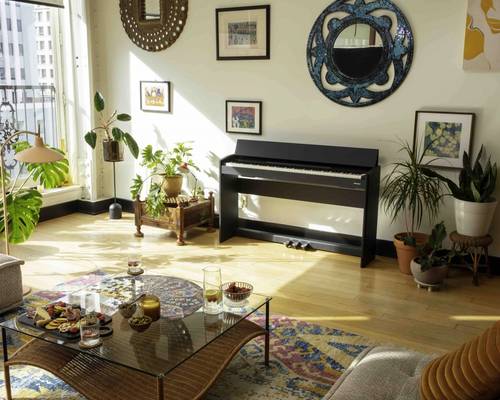
How Piano Practice Builds Consistency and Self-Discipline
Self-discipline and consistency are crucial personal qualities in the contemporary life but are becoming more challenging to master. The learning of piano provides a natural and effective method of developing both in a structured form of learning, in a progressive manner and through long term commitment. This paper will examine how practice in the piano will develop the consistency over the time, why the self-discipline will develop naturally at the instrument and the applicability of these abilities far beyond music in the life.
Piano & Lifelong Learning
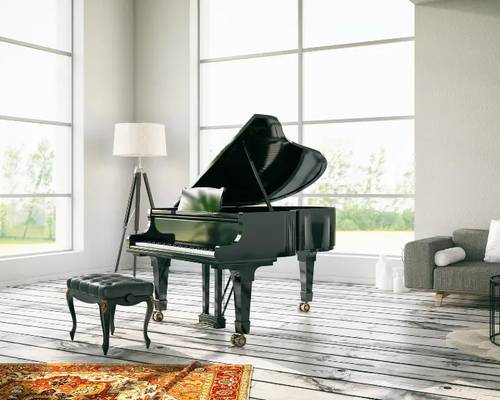
The Reason behind the Rise of Piano Learning among Mature Beginners in the world.
The world has witnessed a potent surge in piano learning among adult learners. More individuals are learning the piano later in their lives and this is due to the flexibility of digital tools, lifestyles and now people are more focused on their personal development. The article discusses the reasons why this trend is being experienced, how adult learners treat piano differently, and why this trend is transforming the contemporary culture of the piano.
Piano & Modern Skills
The reason Learning Piano Is Better than Multitasking in a Distracted World.
Piano learning is becoming an effective tool to reconnect attention and deep thinking in a day and age where we are bombarded with notifications and do not spend enough time in deep contemplation. The mental clarity ensured by years of discipline in the practice of the piano may be that which is afforded by very few activities because it demands constant focus, physical coordination and active listening. This paper discusses the connection between learning the piano and attention, the level of cognitive and mental discipline and the reason why more and more individuals are turning to the piano to overcome distraction in the modern world.
The Culture of Piano and Contemporary Music.
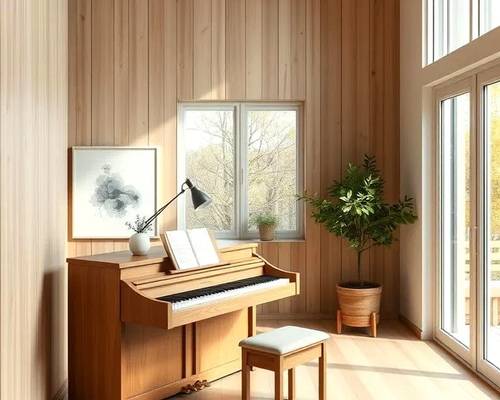
The reason why Minimalist Piano Music is becoming a sound of this decade.
The minimalist piano music has come out as one of the most effective sounds of the modern age. The style is marked by its simplicity, repetition, and restraint, and they are defining the manner in which individuals listen, create, and relate to piano music nowadays. This paper delves into the reasons behind the growth of minimalist piano in popularity all over the world, its reflection of the contemporary life, and why it is a simply a new voice of this decade.
Piano & Future Learning
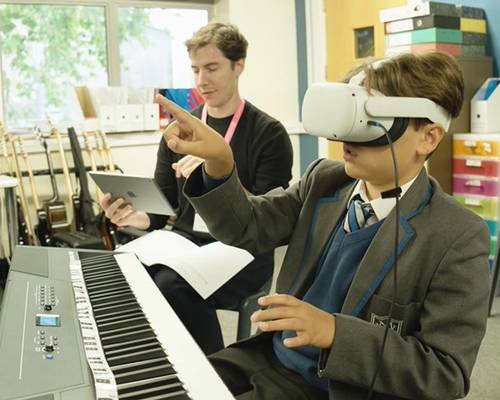
The Way AR is beginning to transform Piano Learning.
The concept of augmented reality is gradually presenting itself in the business of piano study, providing a fresh interpretation of music, technique, and practice. AR is transforming the interaction between pianists and the keyboard by combining digital guidance and physical instruments to create a new approach to playing the piano. This paper discusses the reasons behind the growing interest in augmented reality learning of piano, its functionality as well as its potential future impact on the teaching of piano.The concept of augmented reality is gradually presenting itself in the business of piano study, providing a fresh interpretation of music, technique, and practice. AR is transforming the interaction between pianists and the keyboard by combining digital guidance and physical instruments to create a new approach to playing the piano. This paper discusses the reasons behind the growing interest in augmented reality learning of piano, its functionality as well as its potential future impact on the teaching of piano.