
Piano & Creative Growth
How Learning Piano Revitalizes Innovativeness in Daily living.
Inefficiency in creativity is very likely to dissipate with routine and responsibility and a persistent mental load. Learning piano is increasingly being known as an effective means of restoring creative thinking by using imagination, emotion, and concentration of attention. The article examines the effects of learning the piano to gain creativity, reasons creative confidence builds up during music practice, and how the revived creativity can be applied in daily life even outside music.
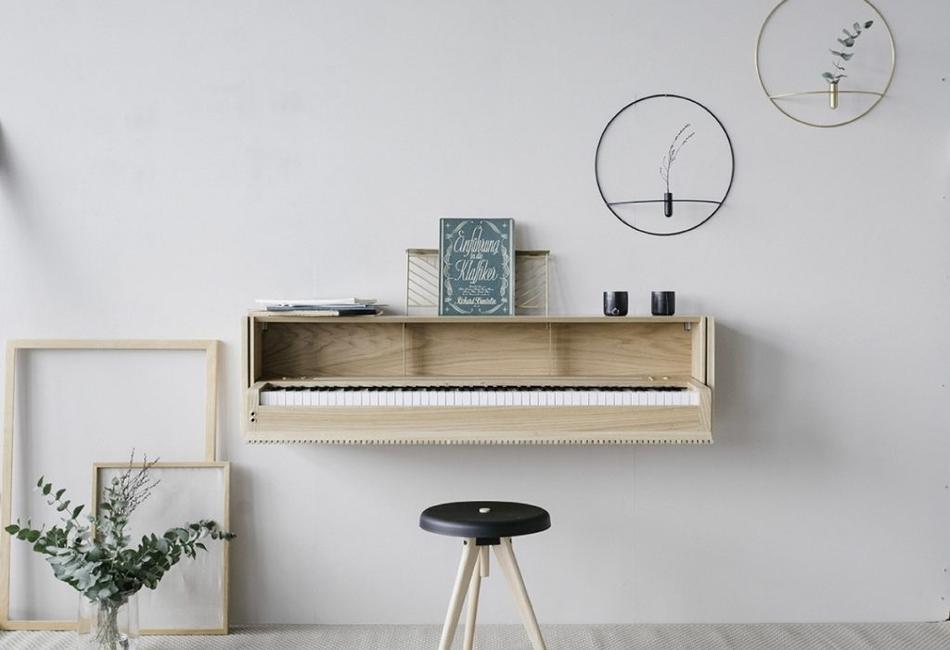
Creative practices are not restricted to the artistic careers. It influences the problem-solving processes, the expression of ideas, and the way of handling everyday problems. But most people seem to think that creativity is getting gradually drained out of people when routines become institutionalized and obligations come on. In the course of time, imagination is replaced by repetition, and expression is limited by habit.
The learning of piano provides an avenue of returning to creative involvement. The practice of piano is a matter that is focused on exploration, curiosity, and patience as opposed to the activities that require continuous output or immediate outcomes. It allows room to experiment freely.
This freedom of imagination is the reason why the learning process of piano is more and more related to the revitalized imagination and creative courage.
Why Being Creative Tends to Fall Out of Favor
Curiosity and openness are the virtues of creativity. Nevertheless, efficiency, predictability, and speed are frequently more advantageous in the daily life. Such priorities do not leave much room to explore.
Most individuals get used to the patterns of doing things instead of coming up with fresh ones. This in the long run lowers creative confidence. Creativity is either dangerous or irrelevant.
The creative process needs to be reinstated by an activity that involves exploration without coercion. It is this environment that is given by piano learning.
The way Piano Learning Promotes Creative Exploration

Since the beginning of the learning process, piano education promotes experimentation. The students play with sound, rhythm and movement. Even the most basic tunes can be moulded in numerous forms.
This discovery is directed, and not random. The keyboard provides form and gives versatility. Students learn that even minor variations have various emotion-related impacts.
This way, creativity is a learned art as opposed to a secret.
Sound in Creative Expression
Sound is a first-degree form of expression. It is spontaneous like words do not convey feeling.
Learners at the piano find out the effect of touch on tone. The light movement brings in the warmth. The solid action generates intensity. Timing shapes mood.
This sensitivity creates awareness of creativity. Students are sensitized to subtlety and potentiality.
The reason why Piano Learning is a safe place to be creative
When the fear of evaluation is experienced, creativity tends to halt. Privacy and freedom are provided through practice on piano.
Students are allowed to make experiments without being judged. Errors are a constituent of exploration and not failure.
This security promotes taking risks which are critical in the development of creativity.
The way Structure Promotes Creativity and Not Inhibition
The understanding of structure is usually misconstrued as restraining. Creativity in piano learning is based on structure.
Familiarity is created by scales, patterns and simple pieces. In this familiarity, learners are at ease to investigate variation.
The structure minimises confusion, and imagination comes out freely.
The Correlation of Creativity and Focus
Creativity needs to be maintained. Attention is not concentrated and ideas cannot develop when they are not.
Repetition and listening are used in the training of piano learning. Students are kept active with sound in the long-term.
This concentration helps in more creative thinking.
The reason why Piano Learning Promotes Original Thinking
The original thinking is developed when learners are no longer limited to imitation. Learning of piano moves in this direction.
Learners make interpretive decisions as skills enhance. They vary phrasing, dynamics and timing.
Individuality is strengthened by these decisions. The creativity of the person becomes individualized rather than on stage.
The Power of Repetition in Building creative Confidence
Familiarity is created through repetition. Knowledge minimizes reticence.
Repeating patterns and pieces helps the learners to feel safer trying out new things. Experience is what builds confidence not talent.
This trust is an encouragement to creative risk-taking.
Why Being Creative at the Piano Can be Grounded
Being creative may be abstract or encompassing. Piano instruction bases the sense of creativity on the physical action.
Hands move. Sound responds. Ideas take tangible form.
This background renders creativity not a far-fetched thing.
The way in which Piano Learning fosters Curiosity
Curiosity fuels creativity. Piano education has the virtue of encouraging curiosity by exploration.
Exploration is a form of question on the part of the learners. What is the effect of change in timing? What if sound softens?
A lesson is gained in every experiment. Curiosity becomes habit.
The need of creative growth being patient
The creative ability is a slow process. Learning piano sustains the virtue of patience by having slow but meaningful advancements.
Concepts are enhanced on repetition. The art of expression is perfected with time.
Patience is in favour of creativity as it helps ideas to grow.
The Sentimental Side of the Imaginative Expression
Emotional experience is usually expressed in the arts. Piano composition is a means through which this can be expressed.
Feeling is communicated without any explanation with sound. Learners experiment with emotion.
Such emotional attachment enhances the level of creativity.
The Question of the Transfer of Creativity at the Piano Beyond Music
The habits which were formed at the piano as creative are frequently found elsewhere. Students are open-minded when tackling problems.
They are trying out solutions instead of reverting to habit. The mindset becomes creativity.
This imparts learning piano with value outside music.
The Benefits of Piano Learning in Favor of Playfulness
Creativity is backed by playfulness. Learning of piano promotes play.
Sound invites interaction. Students do not have inflexible expectations.
Creativity is replenished by playfulness.
The Correlation between Creativity and Self-Trust
One has to trust their instincts to be creative. The learning of the piano reinforces such trust.
Students make decisions and listen to feedback. With time one develops trust in judgment.
Creative honesty is backed by self-trust.
The Piano Learning Innovation Strategy to Creative Burnout
Pressure and excessive exposure is the cause of creative burnout. The Piano learning provides balance.
The exercise is conscious yet relaxed. The process of creativity is a spontaneous one.
This is a balance that helps to avoid being exhausted.
Why Piano Learning Recovers Creative Identity
A lot of individuals cease to identify themselves as creative. Piano instruction refutes this notion.
The development of creativity is proved by progress. Identity changes to a flexible one.
Students recover their creativity as an identity.
Creative Renewal, the Cultural Significance.
Innovation is becoming an important aspect of modern culture. Innovativeness promotes flexibility and strength.
Learning piano also helps in this cultural requirement through enhancement of creative ability.
It is applicable outside of personal satisfaction.
The reasons why Piano is uniquely adapted to creative development
Harmony, melody, rhythm, and touch are incorporated with the piano. This integration is in favor of intense creative exploration.
The instruments are few and provide such instant feedback and expressive scope.
Piano is one of the most influential tools of creativity.
Creative thinking will be influenced long term
With time, learning of the piano redefines creative thinking among learners. Ideas are friendly instead of being threatening.
Imaginative thought turns into predictable, as opposed to irregular.
Such stability promotes lifetime creativity.
The Importance of Creativity in the Day-to-Day Life
The creativity improves the communication, problem solving and emotional expression.
Acquiring piano contributes to development of these skills by practicing.
Its influence is represented in everyday choices and communications.
The Future of Piano Learning and Creativity
Creativity becomes valuable as more processes get automated. This change is supported by piano learning.
It provides an environment of exploration, expression and development.
This position makes it remain relevant.
Conclusion
Creativity is revived through learning to play the piano as it promotes exploration, concentration and emotionality. Sound and movement restore curiosity and confidence in the learners.
Patience and practice are the ones that develop creativity. The learning of piano offers a secure and controlled atmosphere of this development.
Piano studies re-instill creativity in an otherwise imaginary world. It makes learners remember that innovativeness is not lost. It is waiting to be practiced.
More from the blog
Keep exploring new ideas
Piano: Psychological Development.
How Piano Learning Improves Memory Over Time
The process of learning, adaptation, and growth of people is mainly driven by memory. Learning Piano has emerged as one of the effective techniques of memory reinforcement via formal repetition, auditory, coordination and recalling over time. This article discusses the process by which practicing piano develops various forms of memory, reasons why these advantages become increasingly more effective, and how the benefits of learning a piano help to retain in the minds of non-musical areas.
Piano & Skill Development
How Piano Practice Builds Consistency and Self-Discipline
Self-discipline and consistency are crucial personal qualities in the contemporary life but are becoming more challenging to master. The learning of piano provides a natural and effective method of developing both in a structured form of learning, in a progressive manner and through long term commitment. This paper will examine how practice in the piano will develop the consistency over the time, why the self-discipline will develop naturally at the instrument and the applicability of these abilities far beyond music in the life.
Piano & Lifelong Learning
The Reason behind the Rise of Piano Learning among Mature Beginners in the world.
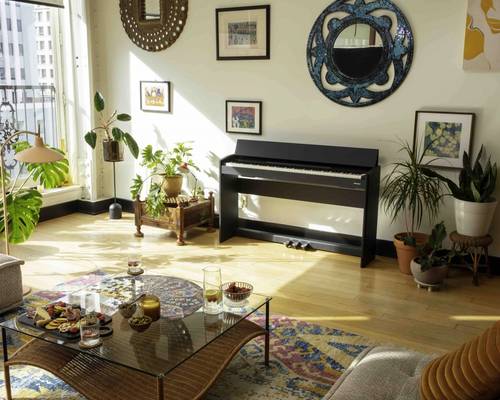
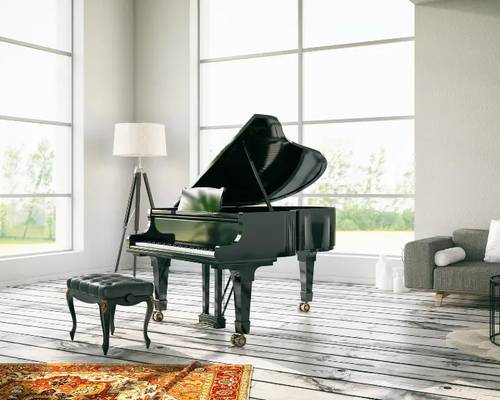
The world has witnessed a potent surge in piano learning among adult learners. More individuals are learning the piano later in their lives and this is due to the flexibility of digital tools, lifestyles and now people are more focused on their personal development. The article discusses the reasons why this trend is being experienced, how adult learners treat piano differently, and why this trend is transforming the contemporary culture of the piano.
Piano & Modern Skills
The reason Learning Piano Is Better than Multitasking in a Distracted World.
Piano learning is becoming an effective tool to reconnect attention and deep thinking in a day and age where we are bombarded with notifications and do not spend enough time in deep contemplation. The mental clarity ensured by years of discipline in the practice of the piano may be that which is afforded by very few activities because it demands constant focus, physical coordination and active listening. This paper discusses the connection between learning the piano and attention, the level of cognitive and mental discipline and the reason why more and more individuals are turning to the piano to overcome distraction in the modern world.
The Culture of Piano and Contemporary Music.
The reason why Minimalist Piano Music is becoming a sound of this decade.
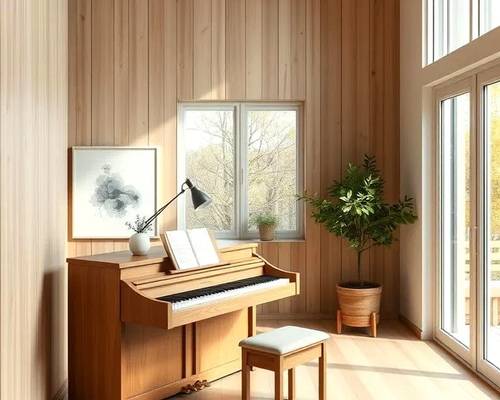
The minimalist piano music has come out as one of the most effective sounds of the modern age. The style is marked by its simplicity, repetition, and restraint, and they are defining the manner in which individuals listen, create, and relate to piano music nowadays. This paper delves into the reasons behind the growth of minimalist piano in popularity all over the world, its reflection of the contemporary life, and why it is a simply a new voice of this decade.
Piano & Future Learning
The Way AR is beginning to transform Piano Learning.
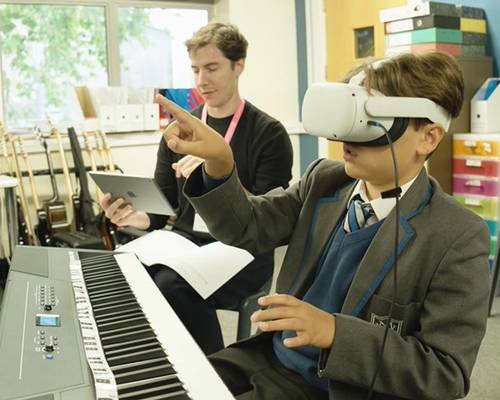
The concept of augmented reality is gradually presenting itself in the business of piano study, providing a fresh interpretation of music, technique, and practice. AR is transforming the interaction between pianists and the keyboard by combining digital guidance and physical instruments to create a new approach to playing the piano. This paper discusses the reasons behind the growing interest in augmented reality learning of piano, its functionality as well as its potential future impact on the teaching of piano.The concept of augmented reality is gradually presenting itself in the business of piano study, providing a fresh interpretation of music, technique, and practice. AR is transforming the interaction between pianists and the keyboard by combining digital guidance and physical instruments to create a new approach to playing the piano. This paper discusses the reasons behind the growing interest in augmented reality learning of piano, its functionality as well as its potential future impact on the teaching of piano.