
Piano & Mental Performance
How Learning Piano Enhances a Decision-Making and Mental Sharpness in the Long Run.
Focus, patience and the capacity to handle the information without being overwhelmed emotionally shapes clear decision-making. These skills are developed over time through structured learning, as the process of learning piano teaches the individual to listen and make a conscious decision. This article examines the process by which learning the piano enhances mental clarity, decision making habits, and how they can aid the individual in making daily choices more confident and well considered in the long run.

Decision-making is one of the most common mental activities that people do on a daily basis. Choices define results all the time, whether it concerns schedules or problem resolution or reaction to unforeseen scenarios. But most individuals have a problem of being mentally disoriented, in a hurry or lost in decision-making, particularly in places where there is a lot of stimuli and stress.
Learning piano presents a surprisingly good means of restoring sanity in decision-making. Decisions in the instrument are fixed but can be handled. Every word, every step, every note, every phrase must be planned. These are low-risk, immediate, and repeatable options, which form a secure circumstance to form self-confident judgment.
This repetitive process in the long-run remodels the mode of mind approaching decisions and these impulsive responses are substituted with conscious analysis.
The reason why it has become harder to make decisions
The contemporary world requires quick actions. Interruptions in thoughts are signaled by notifications, messages and information streams before thoughts can have time to settle. Such continuous stimulation has very little room to think.
Mental clarity is impaired when decisions are made in a haste manner. An individual tends to respond instead of react and this causes doubt and boredom. It is not stupidity that is the problem but the absence of a clear mental environment.
To enhance decision making, one has to slow down their thinking without stagnating. This balance can be achieved through learning piano.
The Piano Learning of Intelligent Choice

At the piano there are no evasions. Students determine how to deal with a text and when to read slowly and how to form sound. Every choice has a sound outcome.
This reinforcement of deliberate thought is promoted by this rapid feedback. In the event that a decision succeeds, the clarity is experienced immediately. When it fails, learners adapt peacefully as opposed to panicking.
This is a method of conditioning of the brain to relate decision-making process with observation and enhancement and not with fear.
The Part of Listening in the Clarity of Mind
The practice of piano is based on listening. Tone, balance and timing are to be listened to by the learners.
This active hearing makes one more alert. The basis of decision-making is informed by the reality on the ground and not supposition or custom.
In the long run, such a habit of listening enhances clarity of the mind. Students get more interested in listening and speaking, in planning and in problem-solving in everyday life.
The reason why Piano Learning lessens the anxiety of making a choice
Most individuals feel anxious about decisions as they are afraid of making a bad decision. This fear is re-expressed by piano learning.
Errors in the piano are not permanent. They offer information. Students listen to an outcome, make corrections and repeat.
Such experience lowers the emotional weight concerning decision-making. Confidence is built up by repetitions, but not reassurance.
Why Slowing Down Makes Judgment Better
Learning of piano often involves slowing down in order to gain control. Students slow down speed to get better knowledge of movements and time.
This slackening is passed on to thinking habits. Students do not rush into things; they assess available possibilities and take a calculated step.
By the extent to which one makes judgments, speed is substituted by clarity.
The benefits of Piano Learning in promoting devotion without fanaticism
Good judgments must be made, and not dogged. This balance is taught during the learning of piano.
When a musical decision is arrived at, indecisiveness interrupts. Learners make decisions and they are willing to be refined.
This equilibrium enhances resoluteness without being bound by a formula, which is an important ability in all life.
Organization of the mind by the musical structure
Music has an organized nature. Order is brought about by phrases, sections, and patterns.
Learners plan practice time, divide problems into smaller and solvable items, and work in logical order. This institution helps to think more clearly.
Ordering habits contribute to the reduction of mental clutter.
The Relation of Motion and Thinking
Through the piano, the lack of clarity in the mind leads to uncomfortable movement. Strong intention brings about harmonious coordination.
This personal experience shows the need of clarity of mind prior to action. The learners get to realize the impact of quality of thoughts on outcome.
Decision-making is enhanced because of this awareness.
Why Piano Learning Establishes Confidence in Individual Voting
Evidence increases the confidence in decisions. This is always evidence of Piano learning.
Students are able to perceive improvement, have a sense of greater greater control, and the value of considerate decisions. This elevates the faith in judgment.
Trust is based on experience and not assumption.
The way Piano Learning Enhances Evaluations
Decision-making is an activity that does not require overthinking. This skill is facilitated by learning piano.
Students experiment, see outcomes, and perfect methods. Assessment becomes workable and effective.
It limits intellectual overload and indecisiveness.
The reason why repetition enhances accuracy of decisions
Judgment is perfected by repetition at the piano. Learners are announced and repeat passages making a little decision every time.
These decisions allow making of improved choices. The judgment becomes powerful because of the experience as opposed to theory.
Consistent decision making is formed automatically.
Application of Decision Skills to Everyday Life
The skills acquired at the piano are transferred to real life. Students make decisions in a less stressful and more systematic manner.
They do some research, take a moment and make a commitment without being overly skeptical. Some confidence is gained and less regret is experienced.
The piano is a school of the day to day clarity.
Emotional Balance and Quality of Decisions
Emotional responses usually interfere with judgment. Learning of piano promotes emotional control.
Learners slow down when frustration is present as opposed to pushing forward. This reaction is in favor of equitable decision making.
Feeling is made information and not interference.
Stopping the Process of Overthinking
Philosophizing procrastinates. Piano training does not promote this because it focuses on action and feedback.
The learner makes a decision, listens to the outcome and corrects. This is a cycle that stops repetitive thoughts.
Rationality is effective instead of tiring.
Self-Reliance It is through independent practice
The practice of the piano is to a great extent independent. Students assess the progress and adjustments by themselves.
This autonomy enhances self reliance and an assertive belief in making decisions.
Confidence in individual opinion increases gradually.
Prolonged Impact on Cognitive Processes
Gradually, there is better mental clarity in piano learners. The thoughts are coherent and channeled.
Decisions are made with fewer efforts. Mental fatigue decreases.
Clarity is the skill made stable and not a temporary state.
Why These Skills are Important in the Current times
Decision making is necessary as life continues to get complex. Speed alone is not enough.
The learning of piano enhances the capability to make deliberate decisions in the face of pressure.
This ability is important in all spheres of life.
The secret why Piano is particularly effective as a decision training
Piano offers real-time and sincere response. Choice is articulated through sound.
Difficult to imagine more activities that render the implications of choices so conspicuous. This accelerates learning.
The piano is still an effective instrument of being able to perform mentally.
Conclusion
Piano enhances decision making in the sense that it boosts clarity, patience and confidence. Learners can acquire habits that aid in thinking by making conscious decisions, listening, and feedback.
These abilities grow with time into other areas of life such as music. Judgment is much cooler, clearer and more dependable.
Learning piano is a viable means of regaining a clear and confident mind in a world where noisy life and time constraint are the order of the day.
More from the blog
Keep exploring new ideas
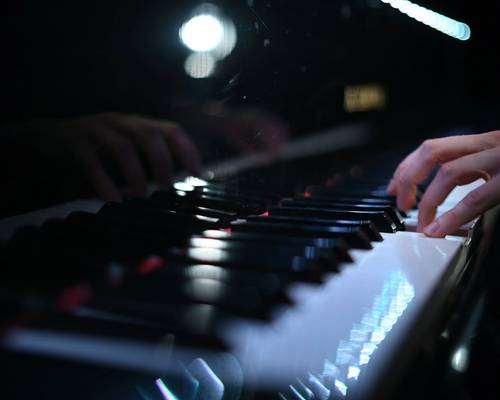
Piano: Psychological Development.
How Piano Learning Improves Memory Over Time
The process of learning, adaptation, and growth of people is mainly driven by memory. Learning Piano has emerged as one of the effective techniques of memory reinforcement via formal repetition, auditory, coordination and recalling over time. This article discusses the process by which practicing piano develops various forms of memory, reasons why these advantages become increasingly more effective, and how the benefits of learning a piano help to retain in the minds of non-musical areas.
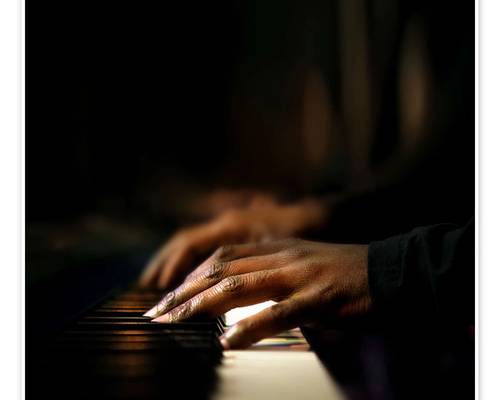
Piano & Skill Development
How Piano Practice Builds Consistency and Self-Discipline
Self-discipline and consistency are crucial personal qualities in the contemporary life but are becoming more challenging to master. The learning of piano provides a natural and effective method of developing both in a structured form of learning, in a progressive manner and through long term commitment. This paper will examine how practice in the piano will develop the consistency over the time, why the self-discipline will develop naturally at the instrument and the applicability of these abilities far beyond music in the life.
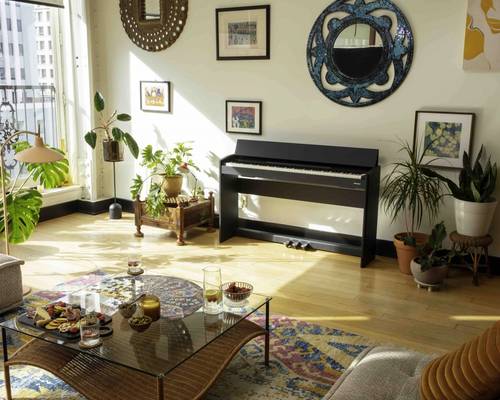
Piano & Lifelong Learning
The Reason behind the Rise of Piano Learning among Mature Beginners in the world.
The world has witnessed a potent surge in piano learning among adult learners. More individuals are learning the piano later in their lives and this is due to the flexibility of digital tools, lifestyles and now people are more focused on their personal development. The article discusses the reasons why this trend is being experienced, how adult learners treat piano differently, and why this trend is transforming the contemporary culture of the piano.
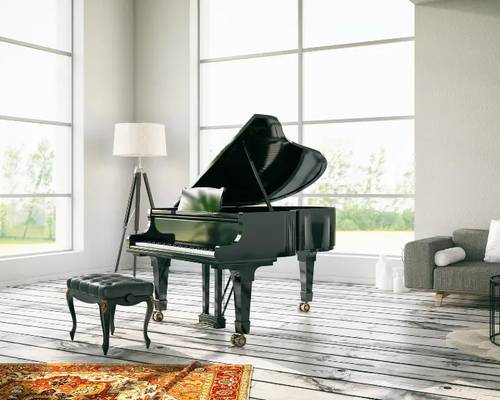
Piano & Modern Skills
The reason Learning Piano Is Better than Multitasking in a Distracted World.
Piano learning is becoming an effective tool to reconnect attention and deep thinking in a day and age where we are bombarded with notifications and do not spend enough time in deep contemplation. The mental clarity ensured by years of discipline in the practice of the piano may be that which is afforded by very few activities because it demands constant focus, physical coordination and active listening. This paper discusses the connection between learning the piano and attention, the level of cognitive and mental discipline and the reason why more and more individuals are turning to the piano to overcome distraction in the modern world.

The Culture of Piano and Contemporary Music.
The reason why Minimalist Piano Music is becoming a sound of this decade.
The minimalist piano music has come out as one of the most effective sounds of the modern age. The style is marked by its simplicity, repetition, and restraint, and they are defining the manner in which individuals listen, create, and relate to piano music nowadays. This paper delves into the reasons behind the growth of minimalist piano in popularity all over the world, its reflection of the contemporary life, and why it is a simply a new voice of this decade.
Piano & Future Learning
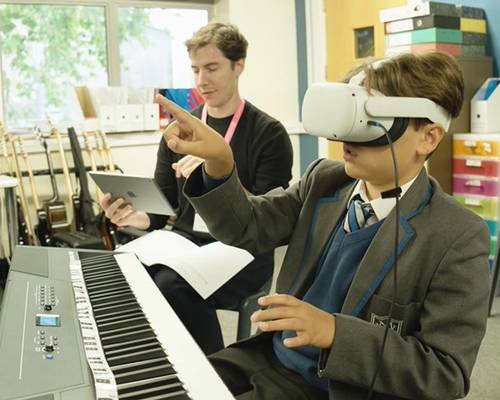
The Way AR is beginning to transform Piano Learning.
The concept of augmented reality is gradually presenting itself in the business of piano study, providing a fresh interpretation of music, technique, and practice. AR is transforming the interaction between pianists and the keyboard by combining digital guidance and physical instruments to create a new approach to playing the piano. This paper discusses the reasons behind the growing interest in augmented reality learning of piano, its functionality as well as its potential future impact on the teaching of piano.The concept of augmented reality is gradually presenting itself in the business of piano study, providing a fresh interpretation of music, technique, and practice. AR is transforming the interaction between pianists and the keyboard by combining digital guidance and physical instruments to create a new approach to playing the piano. This paper discusses the reasons behind the growing interest in augmented reality learning of piano, its functionality as well as its potential future impact on the teaching of piano.