Learn Sharps, Flats, and Natural Notes in Music
July 8, 2026
Learn Sharps, Flats, and Natural Notes in Music
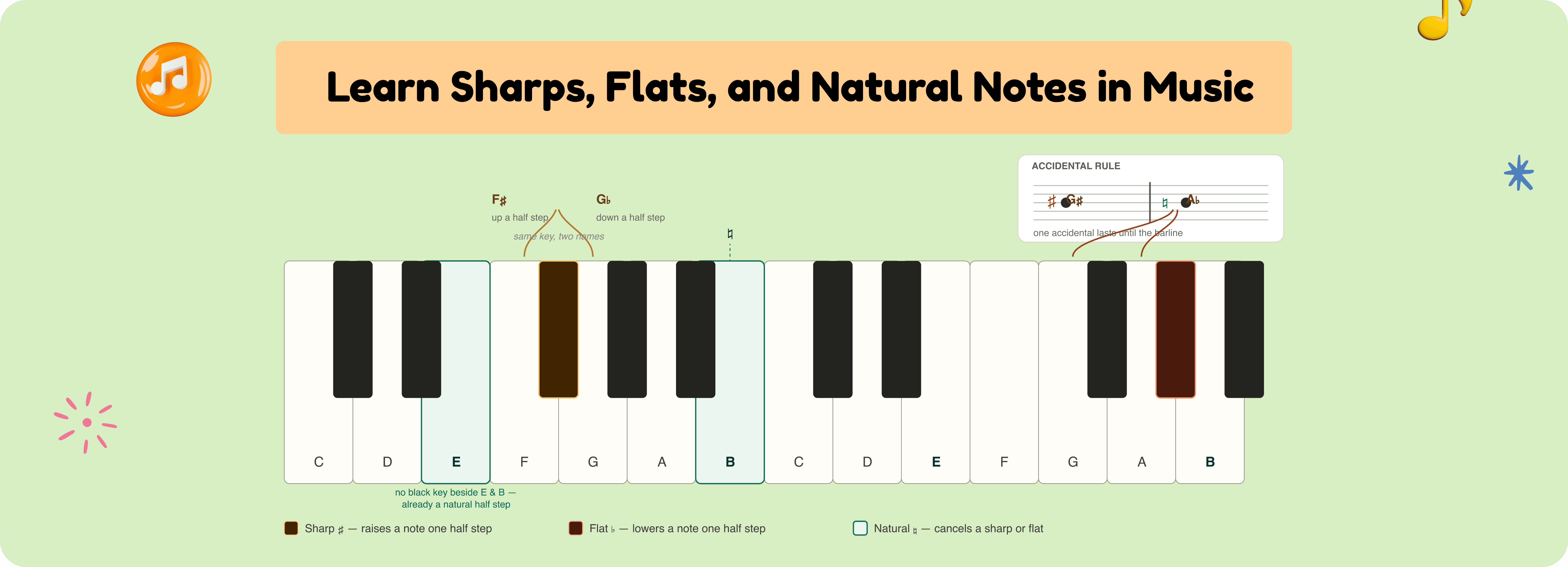
The more songs you start playing, the more you will discover that there are some notes that do not remain constant throughout the piece. It may become necessary for composers to increase or decrease the pitch of certain notes by composers when they are trying to construct specific melodies or harmonies. Rather than revising the entire scale, they utilize accidentals, which are symbols showing these modifications. Sharps and flats will help you to learn about the pitch modification in music when reading the musical notation of music. Once you have learned how each accidental works, you will be able to play music accurately.
Sharp Signs Raise the Pitch
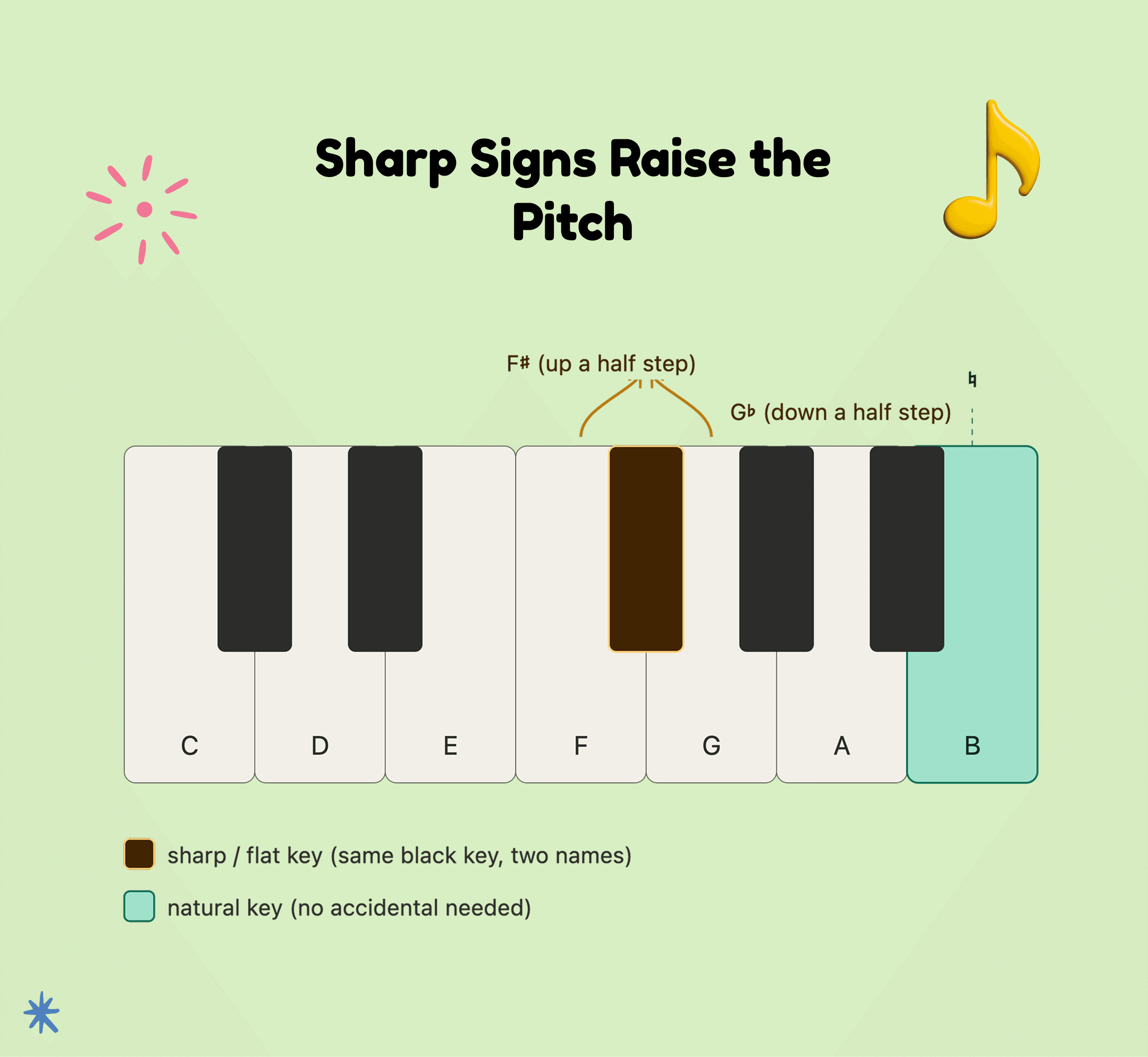
The sharp symbol (♯) increases the pitch of a note by one half step, placing it on the very next higher key of the piano. The slight increase in pitch gives a sharp sound and is often found in scales, melodies, and chords. In your ongoing study of sharps and flats on the piano, you will find that the sharp symbol gets easier to spot as you learn about it.
Flat Signs Lower the Pitch
The flat note (♭) reduces the pitch of the note by one half step in order to get the pitch of the next lowest note. The flats are just as frequent as the sharps and complement the music well because they match well with the key of the music. The difference between the sharps and flats will help you understand that piano keys can have different names in music.
Natural Signs Cancel Previous Changes
The natural (♮) sign nullifies the effect of any previously applied sharp or flat signs and brings the note back to its true sound. This is a sign that guarantees that there will be no signs of accidentals left from the past, in case the note is supposed to be in its natural condition again. When studying about sharps and flats, natural signs should not be overlooked either.
Accidentals Follow Simple Rules
There is much valuable information related to the rules concerning accidentals on the piano, which one must know. The most important of those is that usually an accidental will apply to all notes with the same name until the end of the bar. Once a new bar begins, the effect of the accidental will disappear unless some other accidental modifies it.
Practice Listening for Pitch Changes
Memorizing accidentals can be done best through listening to alterations of sounds. Play a sound on the musical instrument that is the natural note, and then play the same note but in its sharp and flat versions. Through listening to the different pitches, you develop an ear for accidentals and learn the meaning of natural notes in music. While practicing scales, melodies, and songs, you will no longer think of the meaning of accidentals since they will come naturally to you.
Frequently Asked Questions
Do sharps and flats always use the black keys?
Not really. While it is quite common for sharps and flats to indicate the black keys, they can also indicate white keys in some instances. It is not about the color of the piano key, but rather about the musical context and the key signature.
Why can one piano key have two different names?
Certain keys on a piano can be named differently based on the piece of music being played. For instance, the same key can be named either as C♯ or D♭. It is up to the composer to select which name suits the scale/key better.
Do accidentals affect every note in a song?
Not necessarily. Generally, an accidental only applies to the notes of the same letter that appear in the current measure. Once the next measure is reached, the note reverts to its normal pitch level unless otherwise changed by an accidental or the key signature.
How can beginners practice sharps and flats?
Begin by selecting one note that is not sharped or flatted, then compare it to its sharp and flat forms on the piano. Continue this process for other notes and say their names out loud at the same time.
Will I see accidentals in beginner piano songs?
Yes, there will be lots of simple accidentals in many beginner’s songs to introduce you to new note patterns. It will be much easier for you to learn complicated piano music in the future.
What should I learn after understanding accidentals?
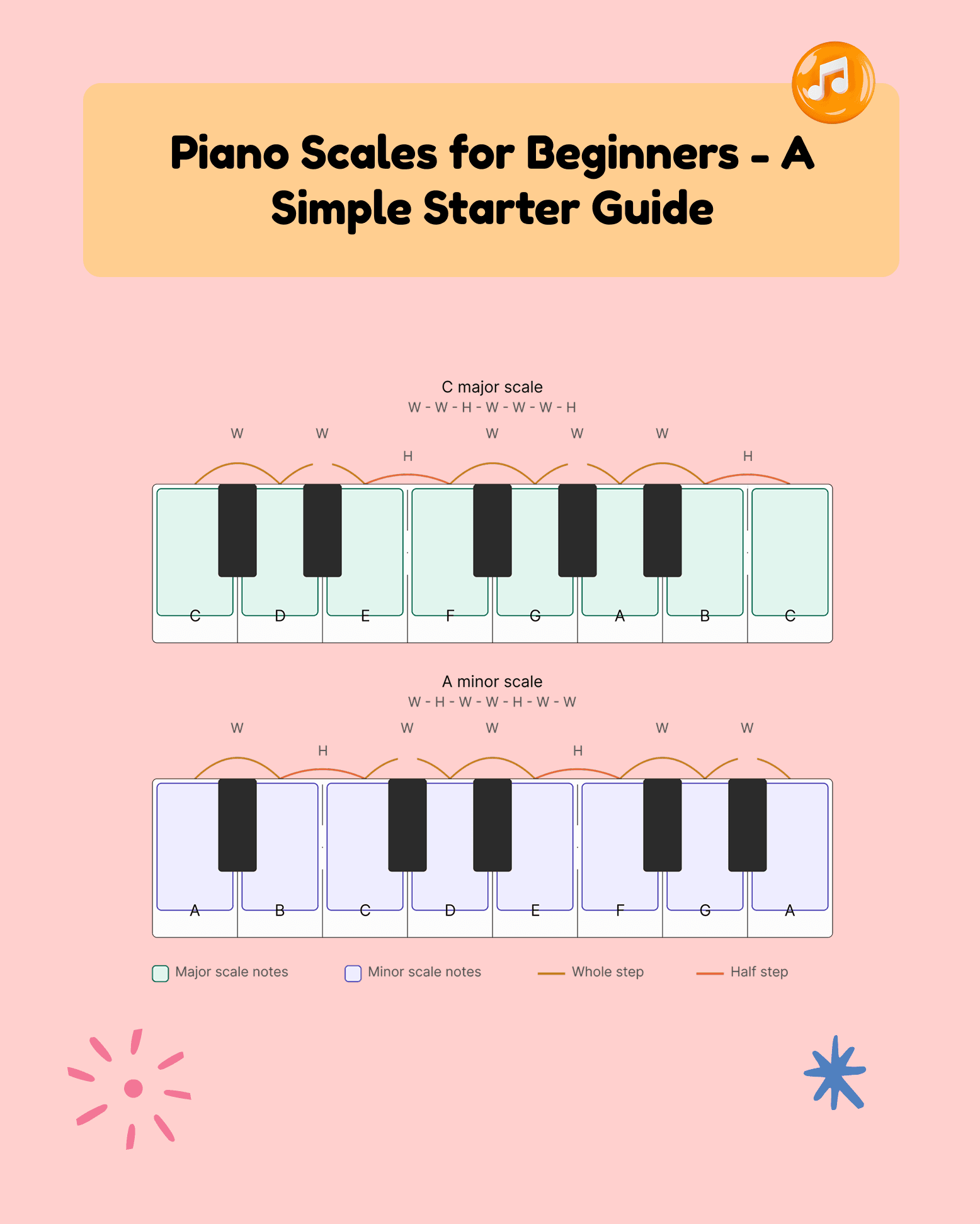
After mastering the knowledge of accidentals such as sharps, flats, and naturals, go on to learn Major and Minor Piano Scales. Studying scales enables one to understand accidentals in relation to each other in various musical keys.
Related Lessons
View All Lessons
Ready to Play?
Go ahead and start practicing with our online piano right in your browser. Have fun playing songs, lessons, and more.
Play Now