
Piano Learning Guide.
How to Learn Piano by Yourself at Home Guide
Learn how to learn piano by yourself at home with a clear step-by-step plan, beginner techniques, practice routines and free online resources designed to help you progress confidently.
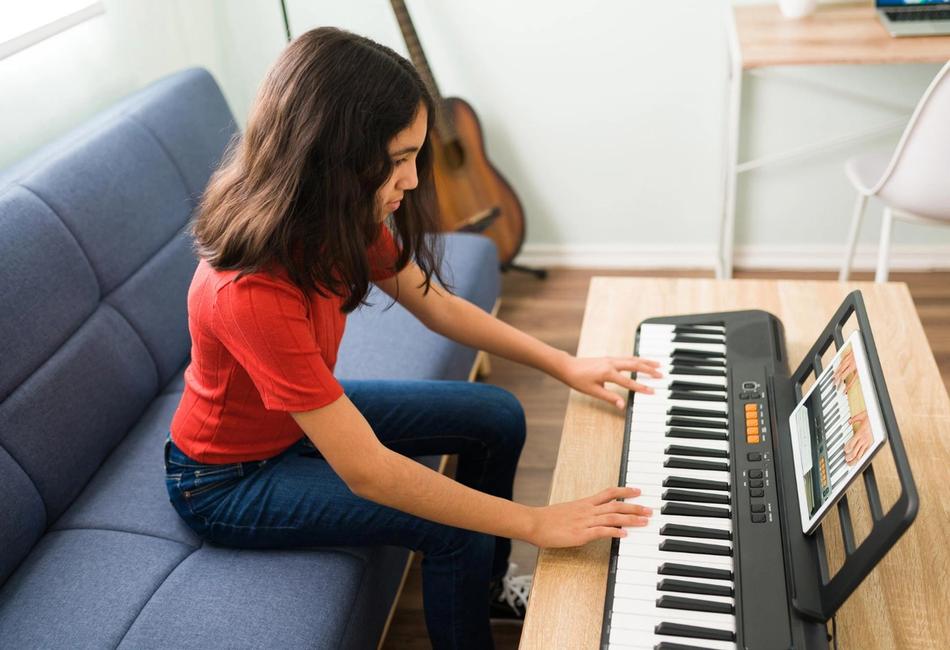
How to Learn Piano by Yourself at Home: A Step-by-Step Beginner’s Guide
It is a common fact that many individuals aspire to play the piano, but they are afraid to do so because they think that they would have to spend a lot of money in lessons, or that they need a teacher to guide them. The reality is that it is entirely possible to learn at home as long as the structure and attitude are appropriate. If you are wondering how to learn piano by yourself at home, you are not alone. There are thousands of amateurs who enter this field annually with no training.
Self-learning is not about making guesses and stumbling in the dark in the music. It is adhering to a straightforward, sensible system where the skills are developed step by step. You can go through gradual improvement with consistency, smartness and proper materials. This guide will walk you through exactly how to learn piano by yourself, even if you are starting from zero.
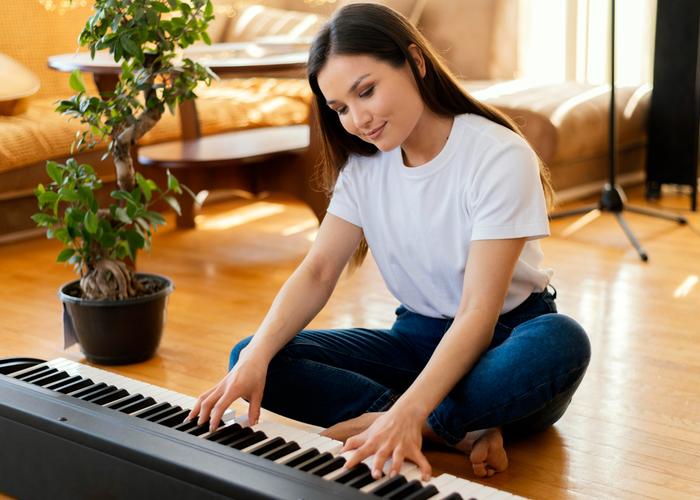
Understanding What It Really Takes to Learn Piano by Yourself
There is sheer misconception about what the real process of learning really entails before one plunges into exercises and techniques. Most of the beginners are concentrated on songs initially however success begins with attitude, organization and discipline. If you want to understand how to learn piano by yourself properly, you must approach it as a long-term skill rather than a short experiment.
The Importance of Consistency Over Talent
The greatest myth is that one needs natural talent in playing the piano. Although individuals have a higher rate of improvement, through repetition and practice, improvement is mostly through practice. A two-hour session once a week is not as effective as 20 to 30 minutes a day. Practice makes your fingers steady and coordinates and develops muscle memory. That is how beginners steadily learn to play piano with confidence.
Setting Realistic Expectations
During the initial weeks, you will feel that you are not making any progress. You will apply finger moves, simple rhythm and simple note reading. Such foundations are not very impressive, yet, they are necessary. When learning how to self teach piano, patience matters more than speed. Mastering basics before rushing into complicated songs is a sure way of getting frustrated and developing bad habits.
Developing Self-Discipline Without a Teacher
Home schooling does not involve any teacher to correct you on your posture or timing. It implies that you have to be more conscious of your method. Watch the placement of hands, tempo and accuracy. It is also possible to record your practice sessions to spot your mistakes at an early stage. In self-learning, one has to remain honest and straight about any progress. The learning of these principles forms a firm foundation. With this knowledge of what it really takes, the next thing will be to make the right practice set up at home.
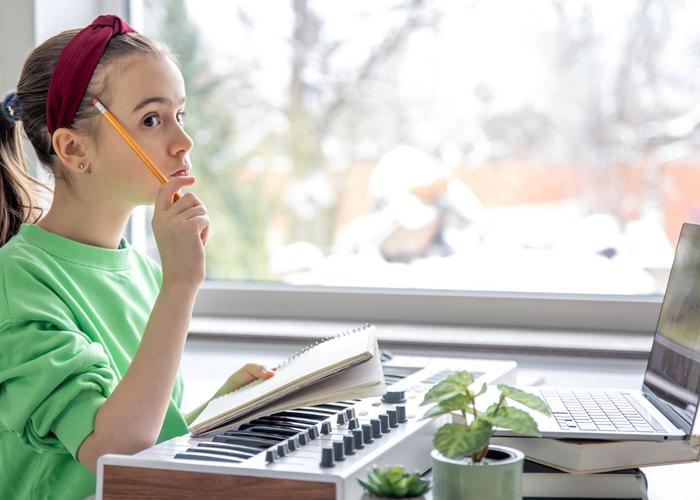
Setting Up the Right Environment at Home
Another aspect of learning piano on your own that has been ignored is the creation of the right environment. When you are uncomfortable or distracted by what you are set up in, then you will make slow progress. An adequate practice room assists you in concentrating, develops proper technique and consistency as time goes by. When learning how to learn piano by yourself at home, your physical environment matters just as much as your practice routine.
Choosing Between a Piano and a Keyboard
In case you are a beginner, a full-sized digital piano with weighted keys would be the ideal one to buy. Weighted keys are used to imitate the resistance of acoustic piano that aid in building the strength of fingers and control.
Even a simple keyboard is operational enough, provided you are not spending much. Nevertheless, ensure that it contains a minimum of 61 keys and is touch sensitive. That will enable you to train dynamics correctly and prepare more complex works in the future. If your goal is to truly learn to play piano with correct technique, investing in weighted keys makes a noticeable difference over time.
Creating a Dedicated Practice Space
It should be a quiet and well-lit area with no distractions that you are practicing in. It is advisable not to position your instrument in front of a television or in a crowded walkway. any little distraction will disrupt the focus and spoil your session.
Keep your sheet music, notebook and device -- especially if you use piano lessons online free resources -- within reach. An organised space makes life simpler, as friction is minimised and daily practising is more easily maintained. It is much easier to be consistent when you have the environment to incorporate it.
Adjusting Your Seating and Posture Correctly
Wrong posture may cause tension and slowness in progress. Sit in a position with forearms at the same level with the floor. You are not to lean your hips or straighten your back. Sitting too close to or too far away is not good. The elbows must be slightly forward but not against your body. Such minor changes eliminate tension and enhance management. Learning how to learn keyboard or piano properly starts with physical awareness. Proper posture will ensure that you do not adopt bad habits at an early age.
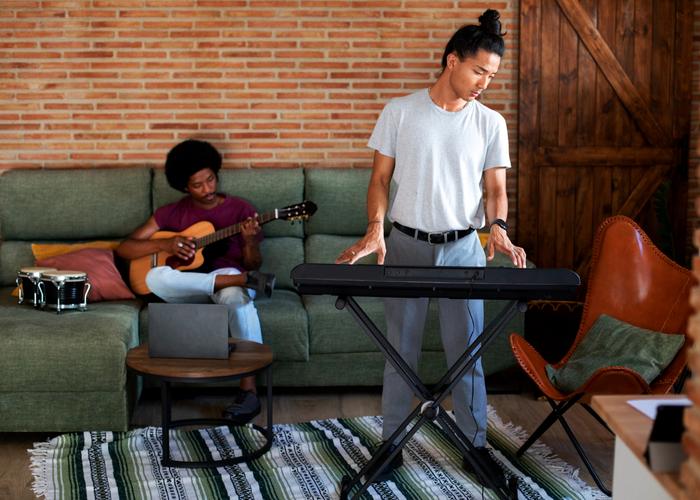
Learning the Basics Before Playing Songs
The most common mistake made by novices is the immediate initiation into songs. Although that is exhilarating, it is also frustrating. If you truly want to understand how to learn piano by yourself effectively, you must first build a technical and musical foundation. When the fingers, ears and eyes are on the right track, the songs become a lot easier. That foundation is formed by the following fundamentals.
Understanding the Piano Keys and Layout
You should be able to manoeuvre around the keyboard before playing anything. The piano is in a 12 note repeating pattern. The black keys are also grouped in two and three and these assist in finding the note positions easily.
Start by locating middle C. There, the practise in identifying other notes without referring to charts. This develops spatial knowledge and confidence. When learning how to play piano, knowing the layout instinctively saves time and prevents hesitation. Name notes randomly (spend a few minutes per day). This basic routine enhances the acquaintance with the instrument.
Learning Basic Music Theory and Note Reading
It does not require any sophisticated theory to start, but with the knowledge of the fundamentals, a person can self-learn easier. Get to know the workings of the treble and bass clefs and how notes are laid on the staff. Learn to read simple rhythms first: whole notes, half notes and quarter notes. Clap rhythm off the piano to build timing then merge both hands.
When you learn to play piano with reading skills, you become independent. None of just memorisation or tutorials will work. This is especially important when using piano lessons online free platforms, where structured progression may vary.
Developing Proper Hand Position and Finger Control
Excellent skills avoid future complications. Always hold your fingers in a curve and not flat. Wrists need to be relaxed, and not to be rolled down or rigid. Practise scales and exercises using the right finger numbers. This may be slow initially, but it develops a sense of coordination and muscle memory.
When people search for how to self teach piano, they often underestimate technique. Not the first thing to do, however, is the way you are going to hold your hands, it will decide how well you will be able to move on later. Although, complex pieces, practise simple five-finger exercises a day to gain control before trying complex pieces.
Building Coordination Between Both Hands
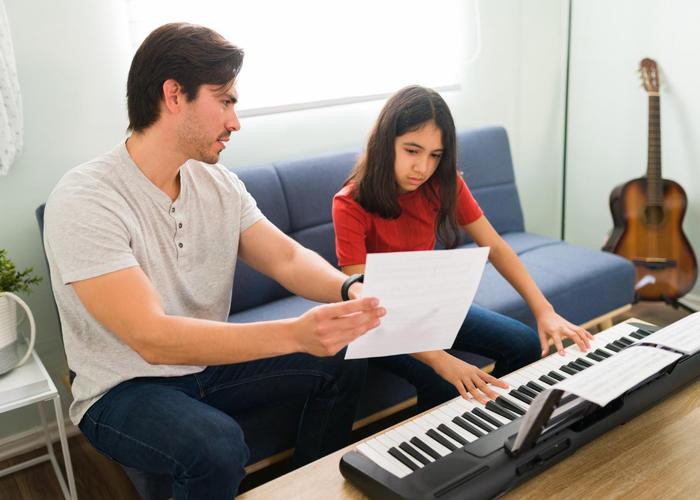
Playing both hands together is also one of the biggest challenges of the beginners. Begin by training each individual hand. After being comfortable, mix them gradually at a slower pace. Keep time steady using a metronome. Being a slow player is not a flaw, but a tactic. Once the ability to be accurate is acquired, speed is developed. If you are serious about how to learn piano by yourself, patience during coordination exercises will pay off significantly in the long run.
Following a Step-by-Step Self-Teaching Plan
As soon as you know the fundamentals, growth is determined by organization. Practice at random decelerates improvement. If you want real results when learning how to learn piano by yourself at home, you need a clear weekly plan. Formed method eliminates the element of guesswork and maintains your growth in balance between technique, theory and music itself.
Starting with Daily Warm-Up Exercises
Simple warm-ups should be used to start every practice session. The five-finger exercise and slow scales are used to activate the finger control and coordination. Play all notes equally and concentrate on the quality of the sound not on the speed. Keep the rhythm steady by use of a metronome. Warm-ups should not be considered as a waste of time because they work on your hands in preparation to challenging pieces. Failure to do this step can result in playing sloppily and irregular timing.
Practising Scales and Basic Chords
Finger movement patterns are learned through scales and harmony is introduced through chords. Origin with C major as it consists of white keys. Take time and work with the correct finger numbers. Then, acquire some major and minor chords. Early knowledge of chords aids in identifying patterns of songs. This makes it easier to learn to play piano without depending entirely on tutorials. When people search for how to self teach piano, they often focus only on songs. Scales and chords are however the ones that make future learning to happen faster.
Learning Simple Songs in Stages
Select easy to pick-up tunes that have slow tempos and easy rhythms. The piece should be divided into small portions rather than starting at the beginning and playing repeatedly. Learn to practise the right hand on its own. Then practise the left hand. Lastly, mix up both hands. You must first be able to play correctly before you can increase the tempo. This is a way of eliminating frustration and developing confidence. It also teaches discipline, which is essential when using piano lessons online free resources without a teacher guiding you.
Increasing Difficulty Gradually
Advancement must not be excessive. When working on simple melodies, add those pieces where more coordination or dynamic control is needed. Do not jump up a few levels. It is effective to take a slight challenge to yourself; however, playing music that is way above your level may demoralize you. Learning how to learn piano by yourself successfully depends on gradual progression. Minor yet regular gains have an accumulation effect.
Tracking Your Progress Weekly
Progress monitoring is very beneficial to self-learners. It is a good idea to have a plain notebook in which you will note what you practised and what you need to improve. Recording yourself every week also evaluates what mistakes you can make during play. In the long run, these records indicate the level of improvement. Your self-teaching plan will be more organized and quantifiable when you become accountable in tracking the progress.

Using Piano Lessons Online Free Resources Wisely
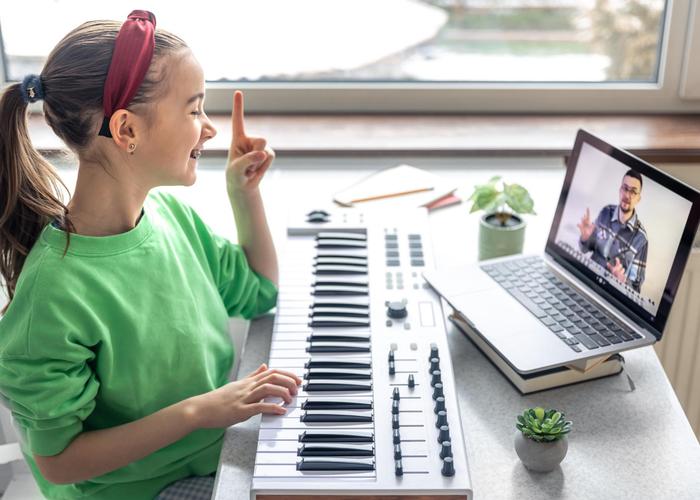
There are unlimited tutorials, applications and video tutorials on the internet. As much as this makes it easier to learn, this also may become overwhelming. If you are serious about how to learn piano by yourself at home, you must use online material strategically rather than randomly. When used to reinforce a planned structure rather than to substitute it, free resources are most effective.
Choosing High-Quality Free Lessons
Not all free content is equal. Seek teachers that expound concepts in a clear and slow manner then slow down. The lesson must not merely demonstrate where to put your fingers in a good way. Meanwhile, channels that hurry through the songs without describing rhythm or posture should be avoided. When selecting piano lessons online free, prioritise clarity and structured progression over flashy performances. The quantity does not matter than the quality.
Avoiding Tutorial Overload
Most of the beginners skip one video to the other without having seen through any lesson. This brings confusion and retards progress. Select one major resource and work on it regularly during a few weeks. Add it in times of need. Organised rehearsal enhances memorisation and coordination. If you are learning how to self teach piano, discipline in choosing content is just as important as practising regularly.
Combining Online Lessons with Independent Practice
The mere fact that you watch tutorials will not make you a better person. The true learning comes when one puts what is learned into practice. Once you have finished a lesson, practise without having to watch the video many times. This makes your brain re-enact patterns and enhances remembering. Learning how to play piano effectively requires active engagement, not passive watching. Your practice should not be in place of online lessons.
Using Technology to Support Progress
Metronomes, digital sheet music and slow-play, apps can be used to supplement your practice time. The recording devices aid you in the more objective analysis of timing and dynamics. Technology, however, is not supposed to take away fundamentals, but enhance them. One should not be dependent on features that make you correct yourself because this may make your listening ability weak. When used wisely, free digital tools make it easier to learn to play piano independently while maintaining structure.
Creating a Consistent Practice Routine at Home
Novices pay much attention to what to practise and neglect how to practise. If you truly want to master how to learn piano by yourself at home, consistency matters more than intensity. Short and concentrated sessions daily are more effective when compared to long sessions which are done once in a while. Such a regular practice gives you discipline and makes your brain remember musical patterns more effectively.
Determining the Ideal Practice Duration
Twenty or thirty minutes a day should be sufficient to a beginner. This is a period that helps to avoid burnout and ensures a consistent improvement. When you are mentally exhausted, then quality will decrease, and errors can grow. It would be preferable to expose the body to five days a week of 25 minutes than an hour of two days a week. Muscle memory and coordination is enhanced through repetition. This is because, as time goes by and your stamina gets better you can slowly increase the duration without losing concentration.
Structuring Each Practice Session
A balanced session does not lead to boredom and also provides a balance in the improvement. Create clear segments of your practice as opposed to repeating a single song.
It might have a straightforward framework as shown below:
- Warm-up activities: Train fingers and train coordination.
- Scales and chords: Enhance the acquaintance with keys and patterns.
- Song practice: Practice technique on music.
- Revision and amendment: Find and correct errors gradually.
Following this format keeps your development structured and supports how to self teach piano effectively.
Setting Weekly Goals for Steady Progress
Achievable objectives generate motivation. Rather than stating that I will practise more, stipulate results. E.g. Practice to play a scale smoothly at a specific tempo or play one part of a song in a proper way.
Confidence is created through little weekly successes. These milestones will add up to an observable change over the span of time. When you learn to play piano with structured goals, progress becomes visible rather than vague.
Avoiding Burnout and Maintaining Motivation
Daily practising does not imply overworking yourself. Have short breaks when stress sets in. In case of the rise in frustration, temporarily switch to an easier exercise. Practice is also interesting due to variety in structure. Alternate technical exercises with fun songs. Learning how to learn piano by yourself requires patience. Moderate practices are better than high-key practices that wear off soon.
Common Mistakes Beginners Make When Learning Alone
Studying alone provides you with freedom but at the same time exposes you to bad habits. Many people who search for how to learn piano by yourself feel stuck not because they lack ability, but because they repeat avoidable mistakes. These mistakes will cause you to lose months of frustration and move on more effectively by identifying them sooner.
Skipping the Fundamentals
Other amateurs jump directly into playing complete songs without learning how to read the note, rhythm or the hand placement. Although it can be initially productive, it leaves knowledge gaps. Good basics simplify higher music. In their absence, then you will always be at a loss of coordination and time. When learning how to self teach piano, foundations must come before performance. Slow construction in the initial stages enhances faster construction in the later stages.
Playing Too Fast Too Soon
Speed is a vice which is the bane of beginners. But rushing to play without being accurate results to uneven rhythm and duplication of errors. The slow practice will enable your brain to learn to move your fingers in the right way. When there is consistency in the accuracy, there is an automatic increase in speed. Difficult passages are usually practised by professional musicians at low tempo. If you want to learn to play piano properly, prioritise control over speed.
Ignoring Posture and Technique
Poor posture does not seem to be a problem, but with time, it influences the quality of tones and comfort. The flat fingers, collapsed wrists or rigid shoulders interfere with the movement of the fluid. Technique influences your growth in the long-term perspective. Minor alterations in the initial stages eliminate the need to make bigger amends in the future. This is especially important when using piano lessons online free resources, where posture may not be corrected personally. The knowledge of your location will save progress and comfort.
Practising Without Clear Goals
Being at the piano without a specific purpose will only result in repeating the same parts without having a better outcome. Development takes a will. You need to determine what you want to accomplish before every session. This may be learning a scale, playing with the right rhythm or learning to use hands. Structured focus supports anyone learning how to play piano independently.
Comparing Progress to Others
There is the establishment of unrealistic expectations with the social media and online performances. Each learner develops at a varying speed. Being compared to other, more sophisticated players can decrease motivation. Rather, compare your current to what you have done before. The best indicator of success is personal growth. Learning how to learn piano by yourself is a personal journey. Continuous advancement is more important than outward benchmarking.

How Long Does It Take to Learn Piano by Yourself?
The duration of time before a beginner can play with confidence is one of the most posed questions by beginners. The straightforward solution lies on your regularity, practice standards uand objectives. When learning how to learn piano by yourself at home, progress is not measured in days but in months. But, through disciplined practice, the level of improvement can be observed within a shorter period of time than most individuals anticipate.
What You Can Achieve in the First Month
The first four weeks should be devoted to familiarity. You shall know the names of notes, simple rhythm patterns and simple hand coordination. Several beginners are able to play short simple tunes with either one or both hands by the end of the month. You might still feel that you are moving slowly but control and confidence will begin to form. Coherence at this phase dictates the ease at which you sail along.
Progress After Three to Six Months
Through practicing regularly, coordination is enhanced in three to six months. You will probably play simple songs simultaneously with both the hands and keep even time. Scales become more instinctive at this point and chord progressions become smoother. If you are following a structured plan and using piano lessons online free wisely, progress can be steady and measurable. It is also during this time that most learners feel very at home at the keyboard.
Development After One Year of Consistent Practice
Within a year of hard practice, numerous amateur students are able to play at intermediate level competently. There is an improvement in hand independence, more expressive in dynamics, and higher reading speed. It is in this area that long-term consistency will pay. Learning how to self teach piano successfully requires patience, but the results become increasingly rewarding over time. It is not talent that is the major distinction between the one who advances and the one who fades. It is sustained practice.
Factors That Influence Your Learning Speed
The rate of improvement depends at least in part on several factors:
- Consistency in practice: Consistency in practice develops muscle memory effectively.
- Concentronation: Concentrated rehearsal makes errors less.
- Resources quality: Systematic instructions eliminate misunderstanding.
- Personal motivation: Specific purposes maintain the long-term effort.
When you approach how to learn piano by yourself with discipline and realistic expectations, progress becomes predictable rather than uncertain.

Staying Motivated When Learning Piano at Home
Motivation can be very vigorous but will die off after the slow progress is experienced. When learning how to learn piano by yourself at home, maintaining enthusiasm requires intentional effort. The distinction between the successful and the quitters is hardly talent. It consists of persistence in plateaus. Developing routines that promote motivation will make sure that you will keep on improving even when the enthusiasm goes down.
Setting Small, Achievable Milestones
Big objectives like being good at the piano are unclear and discouraging. Divide your path into attainable goals. An example would be to learn one scale easily or learn one small portion correctly in a week. Small wins create momentum. One milestone strengthens another and creates trust. When you learn to play piano through achievable steps, improvement feels tangible rather than distant.
Playing Music You Genuinely Enjoy
Training is necessary, but fun will make you continue. Select easy variants of songs that you prefer although you may need to practice them slowly at first. Burnout is avoided by balancing between discipline and enjoyment. Unless you alone do exercises without musical delight, the motivation can decrease. Learning how to play piano should include moments of creativity and fun alongside structured training. Intimate affiliation to music maintains long-term commitment.
Recording and Tracking Your Improvement
You can record your playing at every few weeks to make an objective assessment of progress. Small, everyday improvements would be seen as big when looked at through the long run. Record a basic book on what you practised and what you improved. This structured reflection supports how to self teach piano effectively, especially without a teacher providing feedback. Apparent signs of improvement boost self-confidence in the learning process.
Accepting Plateaus as Part of the Process
Any learner goes through stages when it seems to progress slowly. This is normal. Skills are also often formed inwardly and only become visible and conspicuous in the outside. Rather than giving up, reduce the complexity of exercises or go back to the basics. Developing skill at slower stages will create greater long-term skill. When you are consistent, plateaus ultimately result in breakthroughs. This mindset is essential when mastering how to learn piano by yourself independently.
Conclusion
Learning how to learn piano by yourself at home is completely achievable with structure, patience and consistency. Nothing is really achieved without successful mastering of basics, regular practising and a well orchestrated stepwise plan. By using piano lessons online free resources wisely and focusing on technique, you can steadily build confidence and skill. Difficulties are natural, yet with time, one can see positive change. With disciplined effort, you will not only learn to play piano but also develop a lifelong musical ability.
Frequently Asked Questions
The following are the typical queries that are represented by search results when one learns how to play the piano on his/her own.
How can I teach myself to play the piano at home?
Begin by mastering the keyboard layout and rudimentary reading. Do easy finger plays every day and adhere to a systematic program rather than using random songs. If you want to understand how to learn piano by yourself effectively, consistency and gradual progression are essential.
What is the fastest way to learn piano by yourself?
The speediest development is achieved through disciplined practice rather than short-cuts. Pay attention to scales, chords and easy songs with assistance of metronome. Do not get in a hurry trying tough bits. Learning how to self teach piano successfully depends on mastering fundamentals before increasing speed.
Can I learn piano online for free?
Yes, many platforms offer piano lessons online free through video tutorials and structured courses. Nevertheless, you have to use one regular programme rather than alternating through a variety of sources. The free resources are most effective when practiced with some discipline being independent.
Is it hard to learn piano as a beginner?
Piano has the initial feeling of difficulty as it involves the coordination of the hands and rhythm. Nevertheless, amateur trainees who train progressively get better. When learning how to play piano, patience and repetition make the process manageable and rewarding over time.
How long does it take to become good at piano?
The average beginner can find that he has improved significantly after between three to six months of practice. It can take one year or longer to become comfortable with intermediate pieces. When learning how to learn piano by yourself, progress depends primarily on practice frequency and quality.
Do I need a real piano to start learning?
You do not require an acoustic piano to start with. A touch-sensitive keyboard is also a good choice because it is easy to use even by beginners. However, weighted keys better develop finger strength and technique if you plan to learn to play piano seriously.
More from the blog
Keep exploring new ideas
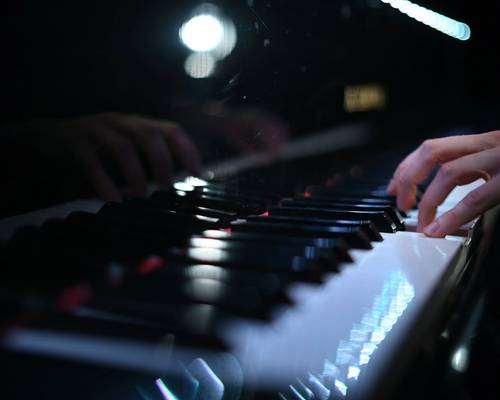
Piano: Psychological Development.
How Piano Learning Improves Memory Over Time
The process of learning, adaptation, and growth of people is mainly driven by memory. Learning Piano has emerged as one of the effective techniques of memory reinforcement via formal repetition, auditory, coordination and recalling over time. This article discusses the process by which practicing piano develops various forms of memory, reasons why these advantages become increasingly more effective, and how the benefits of learning a piano help to retain in the minds of non-musical areas.
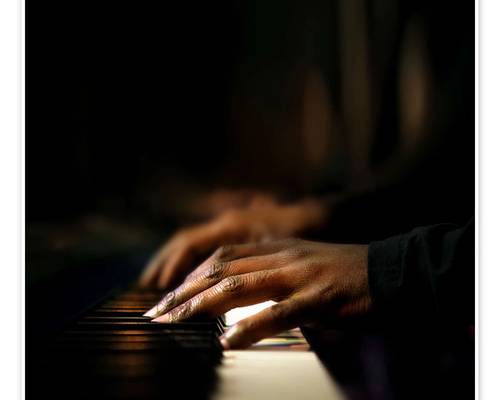
Piano & Skill Development
How Piano Practice Builds Consistency and Self-Discipline
Self-discipline and consistency are crucial personal qualities in the contemporary life but are becoming more challenging to master. The learning of piano provides a natural and effective method of developing both in a structured form of learning, in a progressive manner and through long term commitment. This paper will examine how practice in the piano will develop the consistency over the time, why the self-discipline will develop naturally at the instrument and the applicability of these abilities far beyond music in the life.
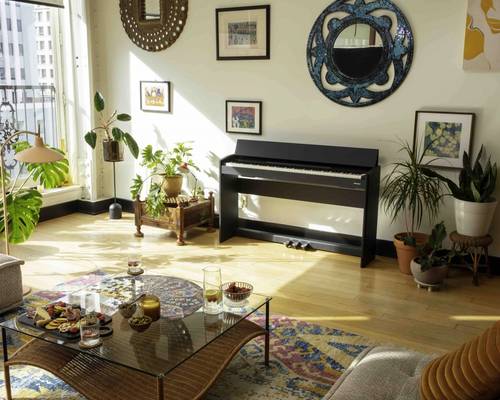
Piano & Lifelong Learning
The Reason behind the Rise of Piano Learning among Mature Beginners in the world.
The world has witnessed a potent surge in piano learning among adult learners. More individuals are learning the piano later in their lives and this is due to the flexibility of digital tools, lifestyles and now people are more focused on their personal development. The article discusses the reasons why this trend is being experienced, how adult learners treat piano differently, and why this trend is transforming the contemporary culture of the piano.
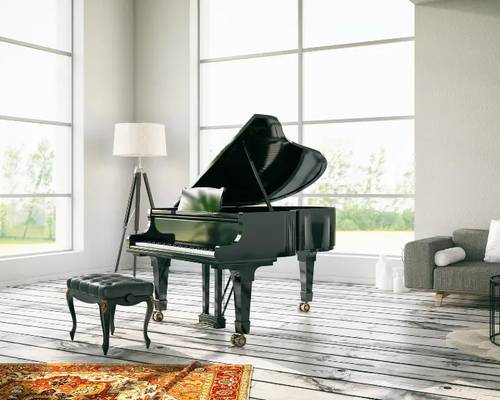
Piano & Modern Skills
The reason Learning Piano Is Better than Multitasking in a Distracted World.
Piano learning is becoming an effective tool to reconnect attention and deep thinking in a day and age where we are bombarded with notifications and do not spend enough time in deep contemplation. The mental clarity ensured by years of discipline in the practice of the piano may be that which is afforded by very few activities because it demands constant focus, physical coordination and active listening. This paper discusses the connection between learning the piano and attention, the level of cognitive and mental discipline and the reason why more and more individuals are turning to the piano to overcome distraction in the modern world.
The Culture of Piano and Contemporary Music.
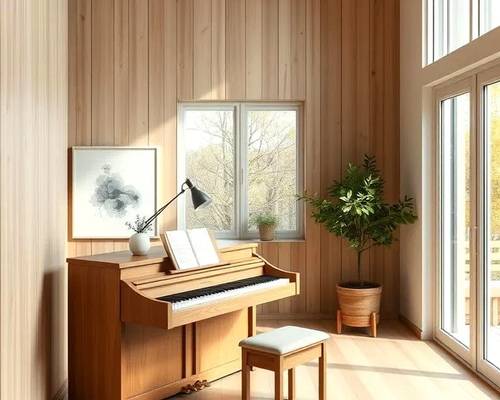
The reason why Minimalist Piano Music is becoming a sound of this decade.
The minimalist piano music has come out as one of the most effective sounds of the modern age. The style is marked by its simplicity, repetition, and restraint, and they are defining the manner in which individuals listen, create, and relate to piano music nowadays. This paper delves into the reasons behind the growth of minimalist piano in popularity all over the world, its reflection of the contemporary life, and why it is a simply a new voice of this decade.
Piano & Future Learning
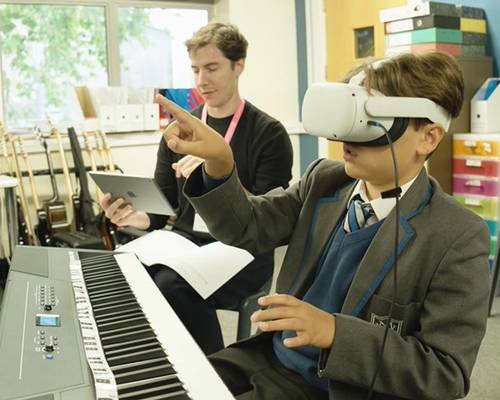
The Way AR is beginning to transform Piano Learning.
The concept of augmented reality is gradually presenting itself in the business of piano study, providing a fresh interpretation of music, technique, and practice. AR is transforming the interaction between pianists and the keyboard by combining digital guidance and physical instruments to create a new approach to playing the piano. This paper discusses the reasons behind the growing interest in augmented reality learning of piano, its functionality as well as its potential future impact on the teaching of piano.The concept of augmented reality is gradually presenting itself in the business of piano study, providing a fresh interpretation of music, technique, and practice. AR is transforming the interaction between pianists and the keyboard by combining digital guidance and physical instruments to create a new approach to playing the piano. This paper discusses the reasons behind the growing interest in augmented reality learning of piano, its functionality as well as its potential future impact on the teaching of piano.