
Piano & Brain Development
How Piano After-Practice Makes You Stronger and More Focused in an Attention Deficit Society.
Deep concentration and focus are now only a few admirable qualities in a world where everyone is stimulated and divided simultaneously. One of the most potent and useful methods to reestablish these skills is piano practice in which the ability to listen, move in a coordinated manner and engage in repetitive behaviors with purpose is vital. This paper discusses the effects of piano practice on concentration on the neurological and behavioral level, why it is particularly useful in contemporary life, why the results apply well beyond music to the work environment, learning, and personal sense of clarity.
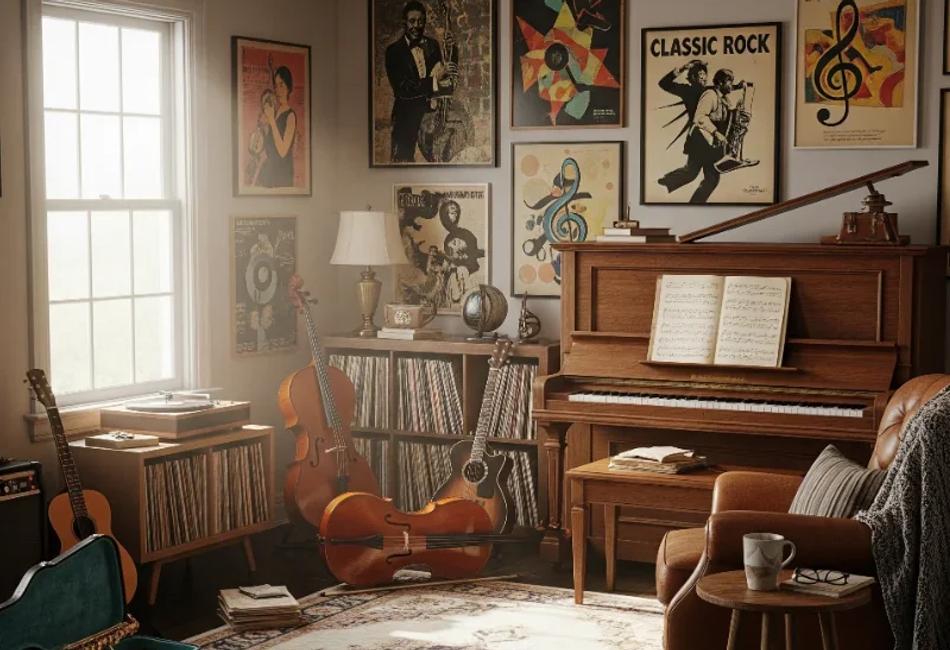
Concentrating intensively in one activity is no longer a criminal attribute. The fact that many individuals cannot focus on their work without becoming distracted even on a matter that is important to them is a challenge to many. The alerts, quick content, and continuous digital interaction have restructured the patterns of attention, which makes the fixed attention feel unnatural or even tiresome.
It is this change that has resulted in the increase in searches of activities that restore focus in a natural way. The most effective way of responding to this challenge has been found to be piano practice. Practices unlike passive activities where one can be distracted require attention throughout the time one practices the piano. Sound is instantly responsive to attention or lack thereof and, accordingly, mind is inevitable.
Consequently, learning music is not the only thing that occurs during piano practice. It teaches the brain to remain focused and does not distract easily and can be able to focus on things without much difficulty. The skills have been getting more important in the contemporary life, and this is why attraction towards the piano practice is continually gaining momentum every February as individuals reevaluate the objectives in regard to focus, productivity, and mental acuity.
Why Has It Lost Its Rare Case of Focus
The environments of the modern world are shaped in such a way that they are able to capture attention but not support it. A brief media, notifications and multitasking behaviors condition the brain to be frequently stimulated. In the long run, it lowers the capacity of bearing stillness and deep concentration becomes uncomfortable.
With lack of concentration, even basic activities become mentally exhausting. Individuals might conclude that this is laziness or the inability to be disciplined but the real problem in this case is usually attentional fragmentation. The brain is conditioned to alternate tasks as opposed to staying active.
The restoration of focus must be an activity that involves long term attention without being boring or meaningless. This environment is produced naturally by piano practice.
How the Piano Practice requires complete mental activity
There are several cognitive processes, which are activated when one plays the piano. The brain has to organize the movement of the hands, visual patterns reading and rhythm processing, assessment of sound in real-time. Compared to activities that can be practiced half-heartedly, with piano practice the distraction is revealed at the same time.
Lapses in attention are in the form of missed notes, inappropriate timing, or loss of control. This instant response conditions the brain to be present. Emphasis becomes an imperative and not an ideal.
With time, students become more aware of attention drift so that they can recall how to regain it without irritation.
The Difference Between Little Attention and Deep Concentration
Superficial attention switches swiftly amongst stimuli. It is hectic and not productive. Deep concentration on the other hand entails the focus on a single task over a period of time.
Practice in the piano develops intense focus since music is developed at a slow pace. Every word is reliant on the one before it. The inability to be focused interrupts continuity and clarity.
The practice helps the learners to feel more comfortable to remain in their minds longer. It is not forced but provided by experience.
Practicing the piano is more effective in training the brain as compared to passive activities
Passive activities have the least amount of sustained efforts. Piano practice is active. It involves making decisions, rectifying and constant revision.
The brain is alert since it is the one that produces sound and not a consumer of sound. This active play enhances attention networks better as compared to passive stimulation.
This is the reason why concentration on the piano is more readily translated to other challenging activities like studying, reading or solving problems.
The Listening Power in Enhancing Attention
Practice is all about listening. Learners should not merely listen but also to listen accurately, in balance, and timing.
It is a deliberate and prolonged type of listening. It conditions the brain to be alert without the assistance of external stimuli.
The better the listening skills, the more the concentration. The mind becomes less sensitive and more attentive, and this helps in clarity of music as well as life.
The Way Mental Noise is Reduced by Piano Practising
Mental noise is the continuous subliminal talk of thoughts that are competing to capture attention. Practicing the piano suppresses this noise by bringing the concentration together.
Intrusive thoughts can be spontaneously eliminated when the focus is made on sound and movement. There is the state of clarity and not suppression of the brain.
The lesson of this experience is that one can be calmly focused when engaged instead of avoiding.
Cognitive Control and Coordination
Practice of piano involves the independent but synchronized movement of hands. Patterns could be done simultaneously with each hand and required a high degree of control.
This arrangement enhances the cognitive control through training the brain to handle numerous information streams without getting lost.
Enhanced cognitive control helps concentration on most aspects of life such as intricate work to routine decision making.
The reason Tempo Control works better than other techniques
The use of tempo precepts patience. When one plays too quickly, the accuracy and clarity decrease whereas when one plays slowly, the control is regained.
The learners get to learn first hand the effects of decreased speed in enhancing focus. This lesson carries to the habits of thinking, where one should always move at a slow pace instead of rushing.
The pace also supports the relationship between patience and long attention.
Why Single-tasking Should be Promoted by Piano Practice
Attention is split in multitasking. Practicing piano rules out this alternative.
Playing can only be done effectively with full engagement. The moment of dividing attention causes the instant deterioration of the sound quality.
This is single task training imposed by multitasking conditions and reinforcing concentration by repetition.
The Training of Mental Endurance
Mental endurance can be defined as the capacity to be focused without getting tired. This stamina is developed as a result of piano practice.
Initial sessions can be taxing, but with time focus can be maintained with a lesser amount of effort. The brain gets used to prolonged interaction.
This perseverance is able to sustain complex jobs which need long time concentration.
How to Learn to Recover, Rather Than Maintain Focus
Losing focus is inevitable. The practice of piano is a lesson of recovery and not perfection.
Whenever attention is lost, the learners are able to notice and focus within a short period. This ability empowers one with a sense of resilience instead of feeling frustrated.
Focus recovery is as vital as focus and practice in the piano builds focus.
Relationship between the Emotion and the Focus
Emotional stress usually comes in the way. Regulation of emotions is promoted by practicing piano whereby a person learns to move and listen at the same time.
Learners do not push themselves forward when they are frustrated but rather slack. Emotion and attention are stabilised by this response.
Sustained concentration is facilitated by emotional balance.
The way Piano Practice Optimizes Learning
The concentration enhances learning. The relationship is reinforced by practicing the piano.
When engaged and occupied learners remember better. Repetition is significant and not mechanical.
This is efficiency that helps in learning not only in music.
Why Focus developed by practicing piano applies to my daily life
The concentration that is trained on the piano does not exist in isolation. The learners tend to feel that their focus is better when reading, studying, or working.
They are more active and they get back to their focus faster when distracted.
The practice of piano becomes the training of the demands of real-world focus.
The Routine in Strengthening Concentration
The focus is made predictable through regular practice. Routine eliminates resistance to initiation and aids consistency.
Attention comes as a result of practice. Emphasis does not need continuous work.
Routine helps in long term cognitive development.
Reflection Over Reaction
Practising the piano also teaches the learner to stop, listen and correct. Such a reflective practice substitutes a reactive habit.
Reflection enhances clarity and accuracy, and enhances musical and mental concentration.
The development of focus with long-term learning of piano
Focus improves gradually. Learners are sensitive to small changes prior to dramatic ones.
With time, the concentration is less disjointed. Distractions become less severe.
This progressive change forms permanent focus as opposed to short-term amelioration.
The reason behind the trainability of focus
The concentration is usually considered as an unchangeable feature. It is also trainable as evidenced by practice in piano.
Attention is built up like any other power through repetition and interest.
This understanding is able to give the learners the power to reconstruct focus deliberately.
Deep Focus and its Modern Applicability
The world today needs critical thinking as well as flexibility. Both are supported by the practice of piano.
It develops long term concentration and promotes flexibility and responsiveness.
This coincidence is how the practice of piano also holds the first position in search queries in February.
Why Piano Is More Particularly Effective in Training the Focus
The piano is a combination of sound, movements, and time into a single experience. This integration requires one to pay attention constantly.
There can be few activities in which one can keep paying attention so rhythmically without getting bored.
The piano is also the only instrument that is training in concentration.
Prolonged Effect on Mental Acuity
In the long run, the attention habits are transformed through piano practice. Aspects of thoughts are more definite and systematic.
Clarity of mind enhances with concentration, which contributes towards productivity and health.
The reason why Focus will become even more important in the future
The capacity to be deep in the focus will be more valued as the amount of information expands.
The practice in piano provides a long-term alternative to create this skill without using digital solutions.
Conclusion
Practice in playing the piano enhances concentration and deep thinking as it requires a certain level of attentiveness, deliberate listening, and coordination. As the brain is used to longer durations of clarity and minimal distraction, it becomes accustomed to it.
These advantages are not only limited to music in everyday life but they assist in learning, work and emotional balance. Piano practice is a formidable and enduring means of being able to reconnect with focus and depth of mind in a world that is characterized by constant interruption.
This is the reason why practicing the piano is still among the most requested and valuable activities every February and beyond.
More from the blog
Keep exploring new ideas
Piano: Psychological Development.
How Piano Learning Improves Memory Over Time
The process of learning, adaptation, and growth of people is mainly driven by memory. Learning Piano has emerged as one of the effective techniques of memory reinforcement via formal repetition, auditory, coordination and recalling over time. This article discusses the process by which practicing piano develops various forms of memory, reasons why these advantages become increasingly more effective, and how the benefits of learning a piano help to retain in the minds of non-musical areas.
Piano & Skill Development
How Piano Practice Builds Consistency and Self-Discipline
Self-discipline and consistency are crucial personal qualities in the contemporary life but are becoming more challenging to master. The learning of piano provides a natural and effective method of developing both in a structured form of learning, in a progressive manner and through long term commitment. This paper will examine how practice in the piano will develop the consistency over the time, why the self-discipline will develop naturally at the instrument and the applicability of these abilities far beyond music in the life.
Piano & Lifelong Learning
The Reason behind the Rise of Piano Learning among Mature Beginners in the world.
The world has witnessed a potent surge in piano learning among adult learners. More individuals are learning the piano later in their lives and this is due to the flexibility of digital tools, lifestyles and now people are more focused on their personal development. The article discusses the reasons why this trend is being experienced, how adult learners treat piano differently, and why this trend is transforming the contemporary culture of the piano.
Piano & Modern Skills
The reason Learning Piano Is Better than Multitasking in a Distracted World.
Piano learning is becoming an effective tool to reconnect attention and deep thinking in a day and age where we are bombarded with notifications and do not spend enough time in deep contemplation. The mental clarity ensured by years of discipline in the practice of the piano may be that which is afforded by very few activities because it demands constant focus, physical coordination and active listening. This paper discusses the connection between learning the piano and attention, the level of cognitive and mental discipline and the reason why more and more individuals are turning to the piano to overcome distraction in the modern world.

The Culture of Piano and Contemporary Music.
The reason why Minimalist Piano Music is becoming a sound of this decade.
The minimalist piano music has come out as one of the most effective sounds of the modern age. The style is marked by its simplicity, repetition, and restraint, and they are defining the manner in which individuals listen, create, and relate to piano music nowadays. This paper delves into the reasons behind the growth of minimalist piano in popularity all over the world, its reflection of the contemporary life, and why it is a simply a new voice of this decade.
Piano & Future Learning
The Way AR is beginning to transform Piano Learning.
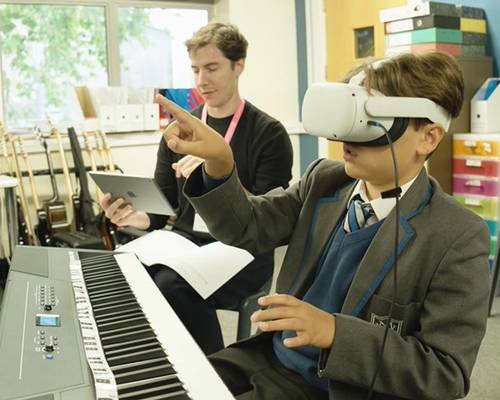
The concept of augmented reality is gradually presenting itself in the business of piano study, providing a fresh interpretation of music, technique, and practice. AR is transforming the interaction between pianists and the keyboard by combining digital guidance and physical instruments to create a new approach to playing the piano. This paper discusses the reasons behind the growing interest in augmented reality learning of piano, its functionality as well as its potential future impact on the teaching of piano.The concept of augmented reality is gradually presenting itself in the business of piano study, providing a fresh interpretation of music, technique, and practice. AR is transforming the interaction between pianists and the keyboard by combining digital guidance and physical instruments to create a new approach to playing the piano. This paper discusses the reasons behind the growing interest in augmented reality learning of piano, its functionality as well as its potential future impact on the teaching of piano.